tinyGS
· TinyGS Community · 6 min read
Weekly Newsletter - April 20, 2025
Welcome to the TinyGS community newsletter. This edition covers discussions from the past week on various topics including satellite transmission, antenna building, technical troubleshooting, and new satellite integrations.
Highlights
General
- Notsure7 mentioned that some stations have better signal due to better antenna, lower noise floor, placement, and small differences in chips, and asked about the antenna being used. 🔗
- Benjapieres asked if it’s possible for a station to get a satellite 12800 km away, and shared a link to their station. 🔗
https://app.tinygs.com/station/Bariloche2_LU1VEN@688664987 - Notsure7 responded that it’s not possible, suggesting a wrong TLE or attribution, and added that about 3000 to 4000 km is plausible. 🔗
- Notsure7 mentioned to check elevation, noting that negative elevation indicates the satellite is over the horizon unless there are special conditions. 🔗
- G4lile0 reported a successful reception of an FSK packet, sharing a link to the packet details. 🔗
https://app.tinygs.com/packet/204d5f35-9d77-4284-bdce-a7505615711a - DL2GJK mentioned the @tinygs_personal_bot. 🔗
- B asked if it is possible to transmit to satellites or if it is receive-only. 🔗
- Juan Pablo shared that during the holidays, empirical verification showed that the difference between radio noise levels in urban and rural environments significantly impacts the number of frames received by TinyGS (+35%) and the maximum distance at which satellite signals can be received (+18%). Also added that only RX is possible, mentioning that sometimes satellite owners allow test TX, citing HOD-HOD as an example. 🔗
- emptyTuple mentioned they are working on providing RX/TX access to their satellite and are in the early stages of development. They are using a Lilygo board and an amplifier module, but find the 0.3W TX power insufficient. They are seeking advice on suitable boards, antennas, and use cases the community envisions for such a device, providing a link to the Lora3 board and the amplifier module. What use cases does the community see for such a device? What would you like from it? 🔗
https://lilygo.cc/products/lora3
https://aliexpress.ru/item/1005006882249247.html?sku_id=12000038607735902&spm=a2g2w.productlist.search_results.0.74083bdcadlCm7 - B responded to emptyTuple, stating they are new to TinyGS and awaiting their Lilygo board. They noted the amplifier module has been reviewed on Amazon with users reporting 1W output using Meshtastic software, but are unsure if TinyGS is compatible or if the power is sufficient for the satellite. They also mentioned that amateur radio operators use 5W handheld radios for satellite communication and inquired about the satellite being used. 🔗
- Cole asked about the dataset being used. 🔗
- Juan Pablo reported an improvement in received frames after moving a station from the city to the country, noting an increase from 200-250 frames/day to 374 using a V-antenna, Lilygo ESP32 LoRa 32 433 MHz, and the TinyGS test version. 🔗
Technical Problems
- vtopolet reported that the web installer works correctly and the access point appears; the station connected to Wi-Fi after enabling all encryption key settings; the image is inverted after the first screen. 🔗
- Eugene reported that their GS was unable to connect to the MQTT server and checked their MQTT credentials. 🔗
- Helmi asked if the TinyGS could be seen on the local WiFi and suggested checking the MQTT credentials for trailing blanks or leading hyphens, recommending copy/pasting to avoid typos. 🔗
- AntonioEQuesada shared his experience resolving issues with a T-Beam V1.0 with SX1268 (433 MHz) that was showing a ‘Radio failed, code -2’ error. He found that setting the LoRa reset pin to GPIO 23 fixed the issue and shared the working template for the setup. 🔗
- Nico built a 868 station with a ESP32 dev kit and a RFM95W ( sx1276 ) without LCD and tried several configs, but found no communication with the radio module. They used their own template without a BUSY pin (as the RFM95W doesn’t have one) and checked with a scope, finding no signal on SPI pins. 🔗
- aspi3d reported issues accessing station settings on tinygs.com and inquired if others were experiencing the same problem. After Helmi asked if /weblogin was created at @tinggs_personal_bot, aspi3d confirmed the issue was resolved. 🔗
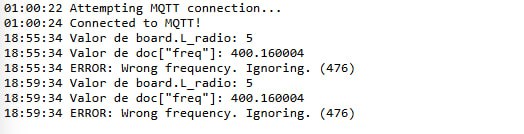
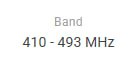
- aspi3d asked if any packets should be receivable with the E22-400S30 module (SX1268 TCXO) tuning from 410 to 493 MHz, even with a poor antenna. Helmi replied that a suitable antenna is necessary and suggested building a ground plane or dipole antenna, referencing the antenna section for DIY instructions. After that, aspi3d asked why ‘auto tune 433’ wants to tune to 400.160004 if the station is set between 410 and 493. Helmi responded that the system tunes to the 400MHz band when no other satellites are visible. 🔗
Antenna Building
- ccarapezza introduced himself as a developer with experience in IoT projects and expressed interest in building a TinyGS station using an existing radio amateur structure with a Yagi antenna at 18 meters height. He is seeking recommendations and tips for optimizing this setup, particularly regarding how height affects reception. An image of the antenna was also shared. 🔗
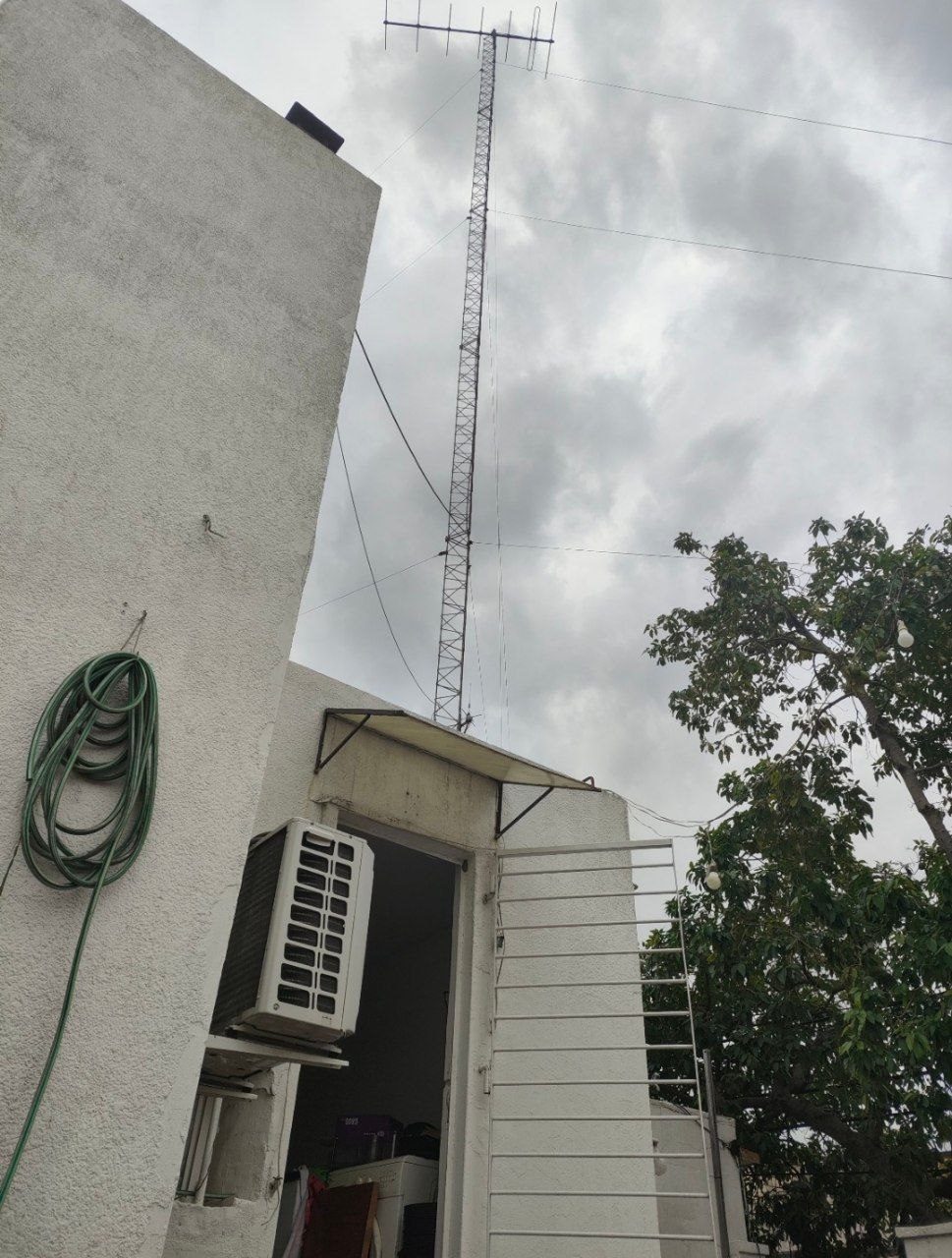
- Helmi advised that a directional antenna might not be suitable for receiving satellites and suggested an omnidirectional antenna would work better. He added that high gain isn’t necessary, focusing instead on path loss and recommending a simple ground plane to reduce man-made noise, keeping the antenna cable short with good quality. 🔗
Share your setup
- Benjapieres asked if it’s possible for a station to get a satellite 12800 km away, and shared a link to their station. 🔗
https://app.tinygs.com/station/Bariloche2_LU1VEN@688664987 - Guillem commented that some TLEs might not be correct (at least at 137 MHz) so it should be taken with a pinch of salt. 🔗
Beta Firmware Testing
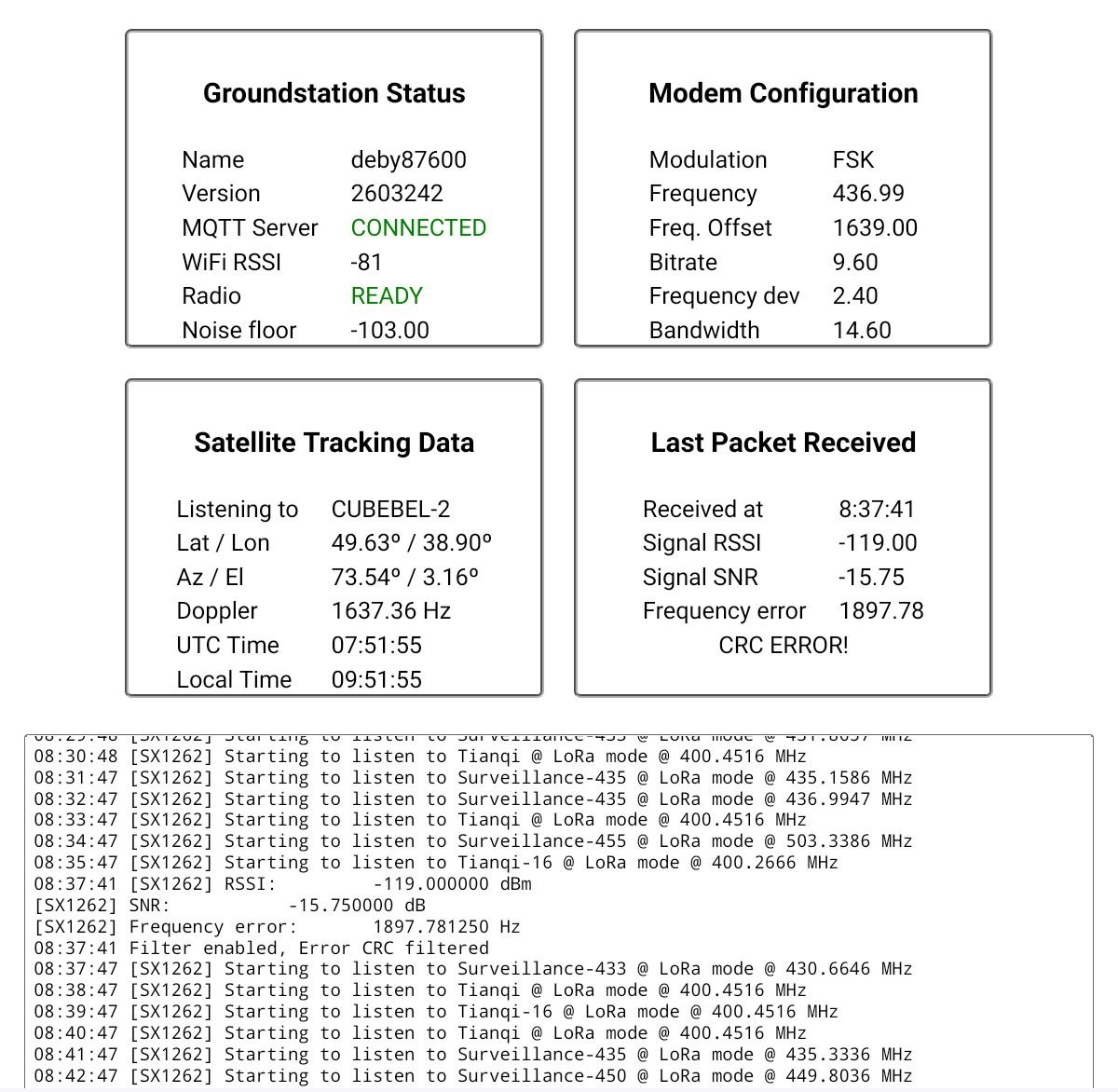
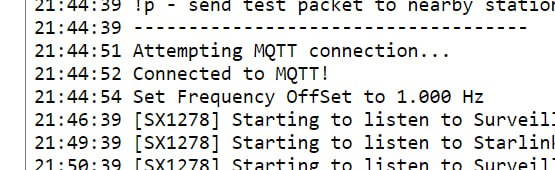
- G4lile0 announced a new beta version with RadioLib updated to 7.1.2 and espressif32 updated to 6.10.0. Also reported the addition of 6 new FSK satellites from the Geoscan platform, noting successful packet reception from StratoSat-TK1, TUSUR GO, Colibri-S, and RTU MIREA1, and expressed hope to receive signals from VIZARD-ION and HORIZON soon. Mentioned that receiving these FSK signals requires the beta firmware that includes local Doppler frequency compensation. 🔗
- Stefan/OE6ISP asked where the frequency offset comes from? 🔗
New Satellites
- G4lile0 announced the addition of 6 new FSK satellites from the Geoscan platform, reporting successful packet reception from StratoSat-TK1, TUSUR GO, Colibri-S, and RTU MIREA1. Expressed hope to receive signals from VIZARD-ION and HORIZON soon. Emphasized that receiving these FSK signals requires the beta firmware that includes local Doppler frequency compensation. 🔗
Featured Conversations
- The community discussed the possibility of transmitting to satellites, with updates on ongoing efforts to enable RX/TX capabilities and community members seeking advice on suitable hardware.
- Juan Pablo highlighted the significant impact of environmental radio noise on signal reception, noting a substantial improvement in frame reception and range in rural environments compared to urban settings. This underscores the importance of station placement.
- G4lile0 announced the integration of six new FSK satellites from the Geoscan platform, expanding the network’s tracking capabilities. The successful reception of packets from four of these satellites demonstrates the effectiveness of the updated beta firmware.
- Users shared experiences with antenna setups and troubleshooting, with recommendations for omnidirectional antennas and ground planes to optimize satellite signal reception, particularly for new stations.
- A user shared a solution for resolving a ‘Radio failed’ error on a T-Beam V1.0 with SX1268 by adjusting the LoRa reset pin configuration, providing a helpful template for others facing similar issues.
What’s next
Join the TinyGS community to share your experiences, get help with your setup, and contribute to the growing network of satellite ground stations. Explore the new FSK satellites and consider testing the beta firmware. Your participation helps expand our ability to track and monitor satellites around the globe!
Share: