tinyGS
· TinyGS Community · 10 min read
Weekly Newsletter - July 12, 2026
This week, the community rallied around the identification and decoding of signals from the newly activated PROVES-Electra satellite, while also tracking the first signals from the freshly deployed FossaSat-2E26. A major milestone arrived with the implementation of FSK AX.100 Mode 5 decoding in the beta firmware, opening up reception for a new class of satellites. Alongside these breakthroughs, members shared practical advice on antenna building, station troubleshooting, and the realities of uplink capabilities, making for a week rich in both discovery and collaboration.
Highlights
New Satellites
- K4KDR sought the group’s help to identify unknown packets on 437.485 MHz, noting the 130-byte size and ASCII payload ‘P1P’ did not match any known LoRa satellites. After community investigation, Dumbledore712 forwarded the findings to the PROVES team, who confirmed it was likely one of their satellites. David later confirmed the packets are from PROVES-Electra, which was commanded to activate after a timing/filesystem issue and is now beaconing a positive state of health. G4lile0 then shared additional packets and asked for the spacecraft ID byte to build a parser, with Dumbledore712 relaying that Electra’s ID is 0x3 (Alcyone is 0x1, Atlas is 0x2), located in the CCDS primary header. 🔗
https://app.tinygs.com/packet/019f345f-f125-7451-9855-401dc05fd83b
https://app.tinygs.com/packet/019f345f-76e4-7728-a9b6-87bef0693ef7
https://app.tinygs.com/packet/019f345f-060f-707a-98e2-d853bc97d60d - K4KDR reported that FossaSat-2E26 from the Transporter-17 deployment was already being heard on its first day in orbit, with CRC errors captured at low elevation and optimism for full decodes on higher passes. Later, XE3JCL shared a photo of a received signal, and K4KDR confirmed clean decodes in both smaller and larger packet sizes, indicating the satellite appears healthy. 🔗
https://app.tinygs.com/satellite/FossaSat-2E26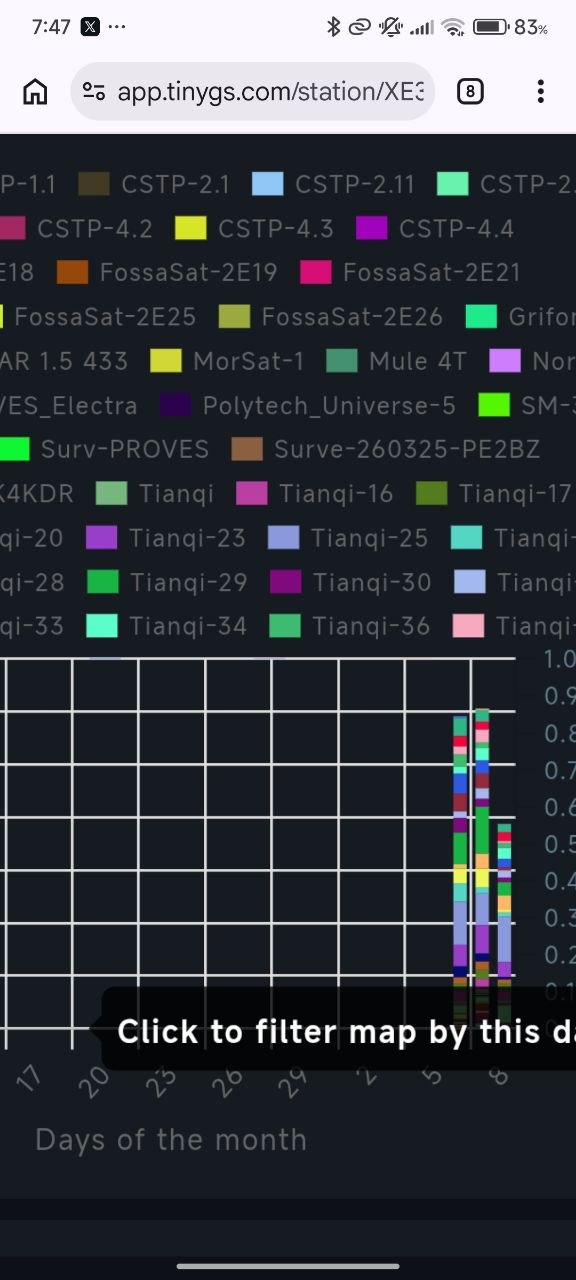
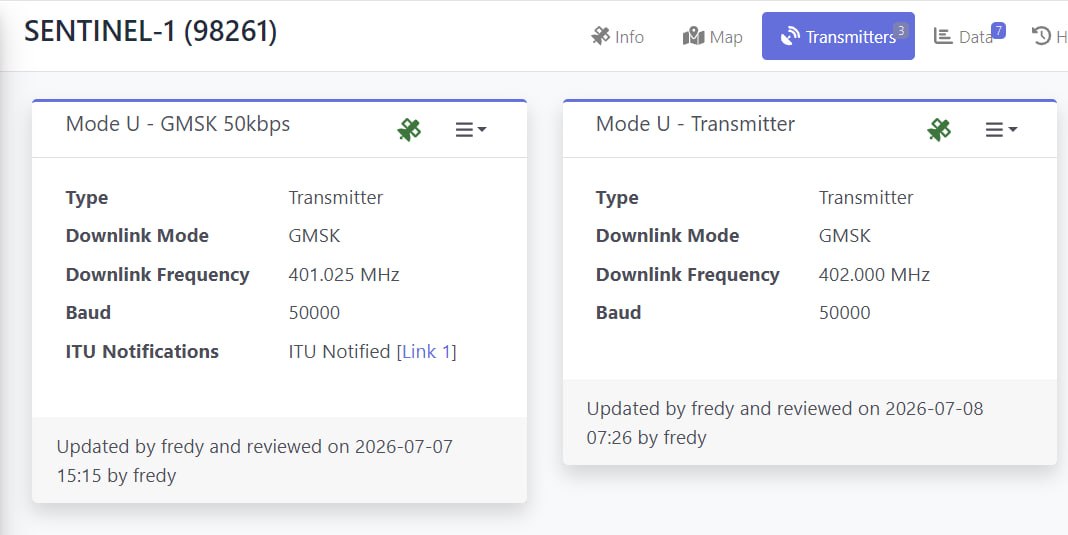
- Stefan/OE6ISP noted a new satellite on 402 MHz, but its activity remains unconfirmed and it is likely not what was previously received. 🔗
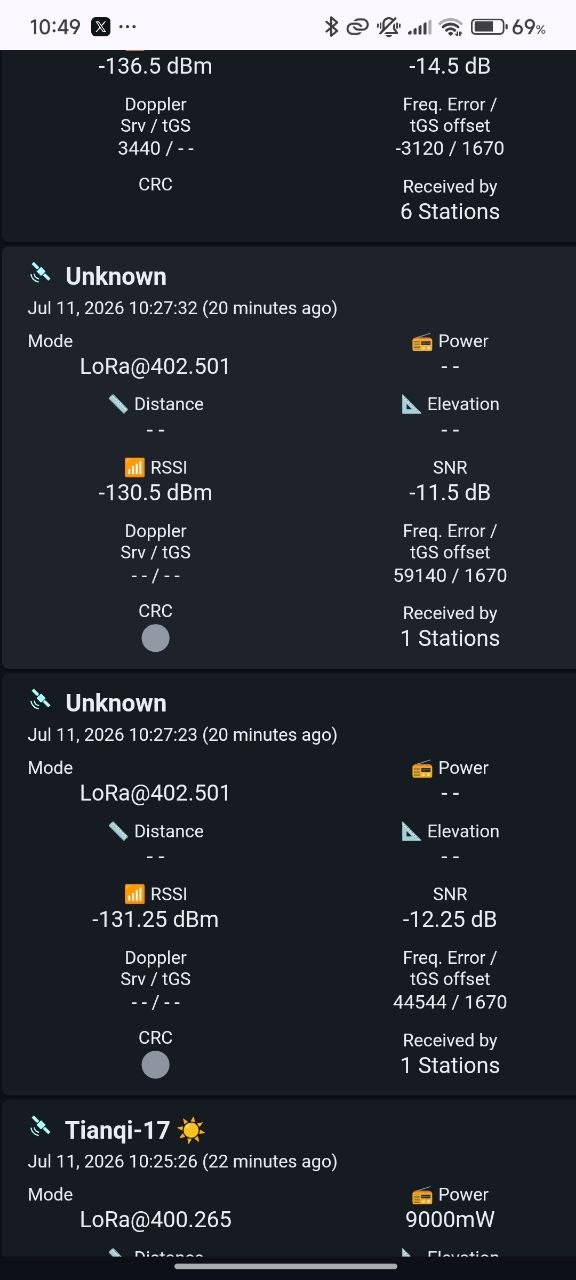
- XE3JCL shared a signal captured at 16:27 UTC and asked if the frequency looked familiar. Stefan/OE6ISP identified it as likely a terrestrial signal due to a very high frequency error, explaining that the 402-405 MHz band is used for medical implants (MICS) and weather radiosondes, not satellites. 🔗
General
- Stefan/OE6ISP explained that no uplink-capable LoRa satellite is currently active, and that uplink requires special equipment and a ham license. He added that uplink-capable satellites appear from time to time, but most ground stations lack the required equipment to transmit with bandwidths up to 500 kHz, and noted the decreasing number of amateur satellites is a real problem. Dumbledore712 later announced that HUCSat is intended to be uplink-capable for the amateur radio community once its scientific objective is complete, and Ines shared that the PROVES satellites will also become uplink capable after their primary payload objectives, with current ones acting as simple repeaters. 🔗
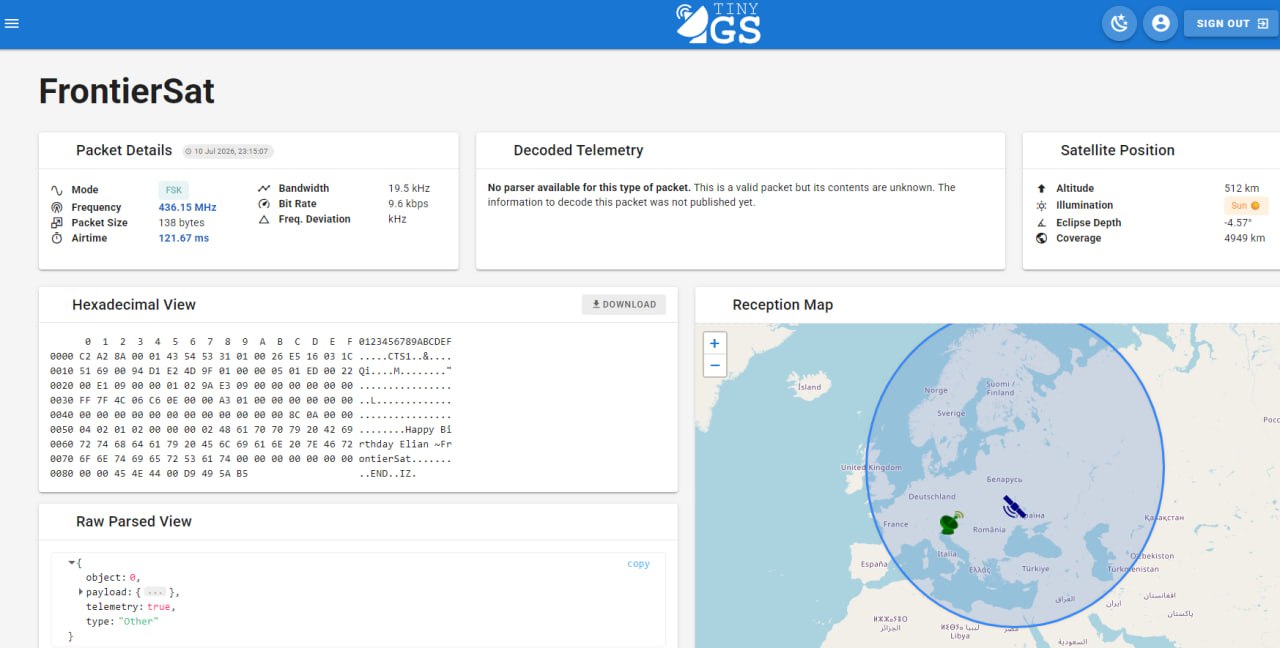
- Stefan/OE6ISP announced that a new mode, FSK AX.100 MODE 5, has been implemented in TinyGS beta version 2607072, enabling reception of many new satellites. He is currently testing it on his stations for FrontierSat using GFSK 9K6 AX.100 MODE 5. 🔗
- HJ4CL asked how to rotate the TinyGS display 180 degrees in software. Helmi explained that a custom compilation is needed, suggesting editing the Display.cpp file to add `display->setRotation(2)` in the displayInit method. 🔗
Technical Problems
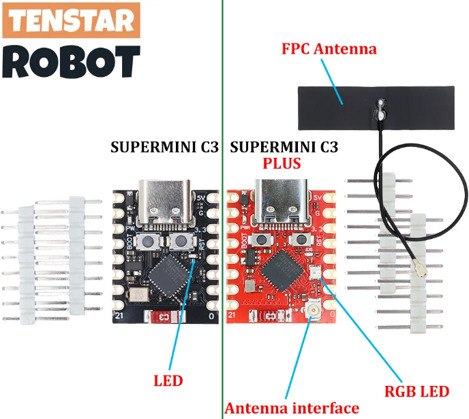
- AristotelesBF asked about using a supermini board with available parts for a TinyGS station. Notsure7 explained that while the combo is essentially an HT62, the supermini lacks a dedicated USB-serial chip for configuration logs, but noted that flashing via the web installer and configuring through the access point works fine without serial. 🔗

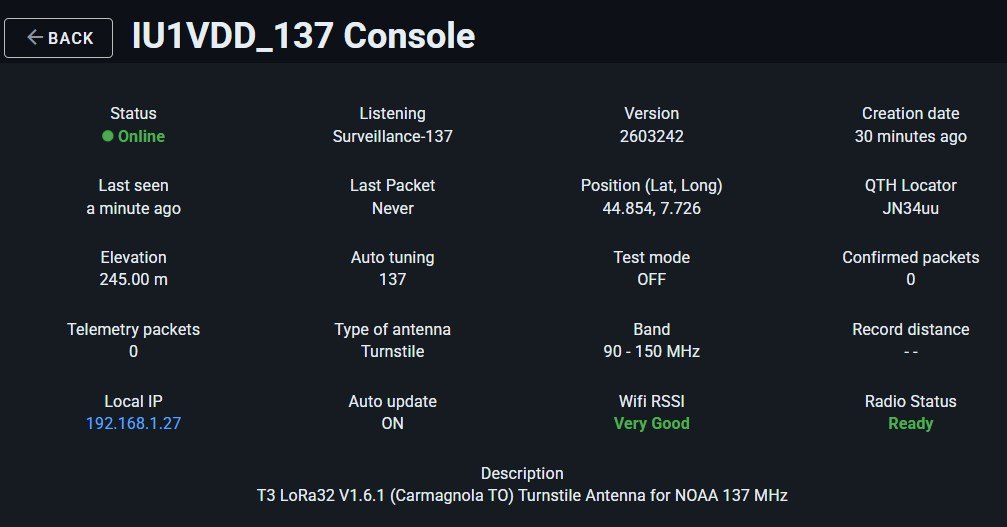
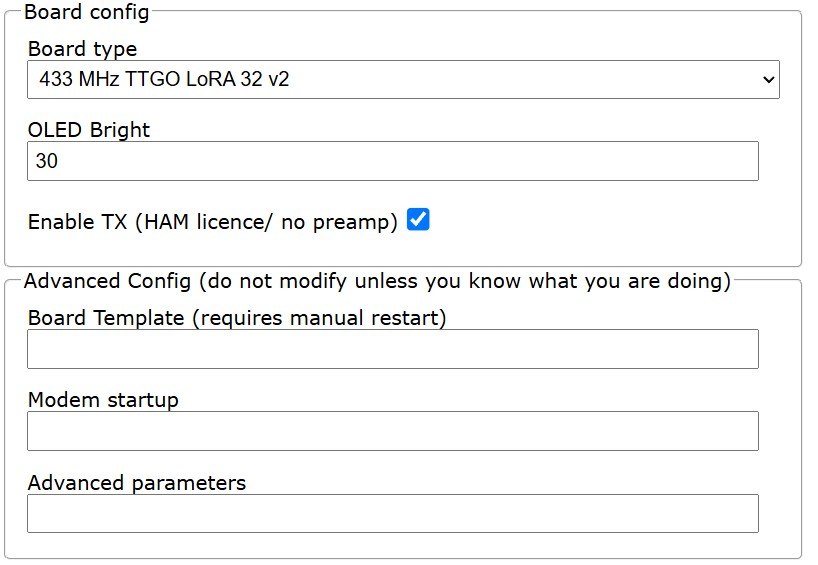
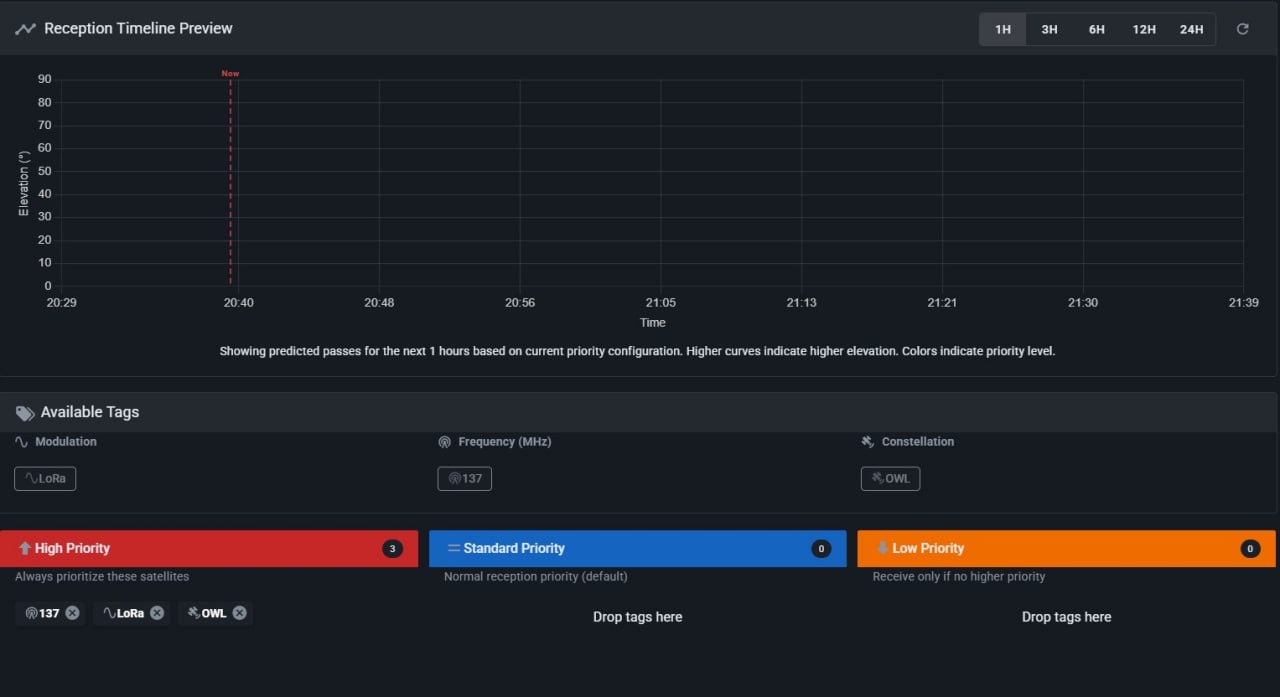
- IU1VDD_Tony shared photos of a newly received T3 LoRa32 V1.6.1 board and asked for the best setup to receive satellites. Stefan/OE6ISP replied with clear instructions: use the 433MHz Lilygo Lora32 V2 configuration and set autotune to 137MHz in the Operate tab, noting that new boards need some time to tune in for upcoming passes. 🔗
- Notsure7 deployed two HT62-based stations (SX1262, ESP32-C3) but wasn’t receiving any FSK packets. After discussion with Stefan/OE6ISP, it was clarified that all FSK satellites are on 436 MHz and require better SNR than LoRa. The issue was traced to using 10m of RG58 cable, which was identified as a likely culprit. Notsure7 reported that RG8 had just arrived, and together with a Rittal box, the new setup was described as ‘built like a tank’. 🔗
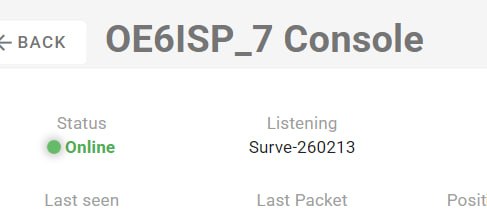
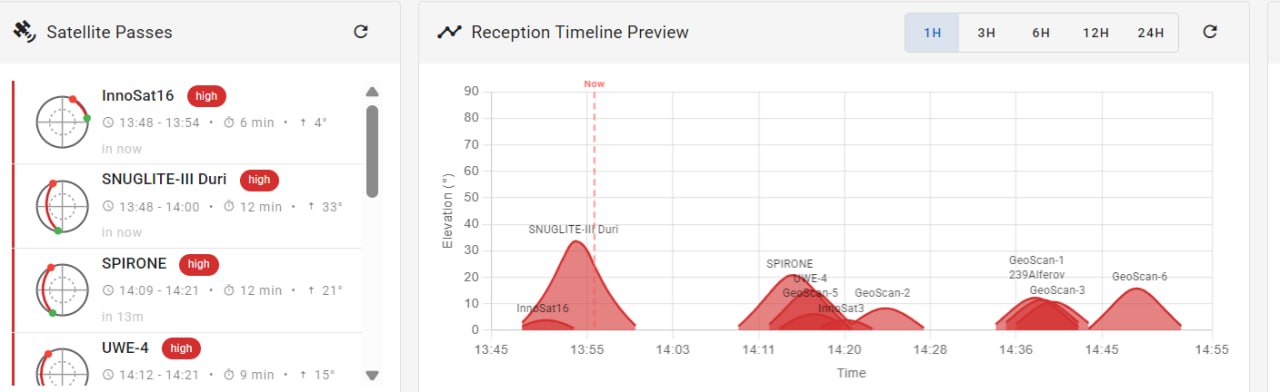
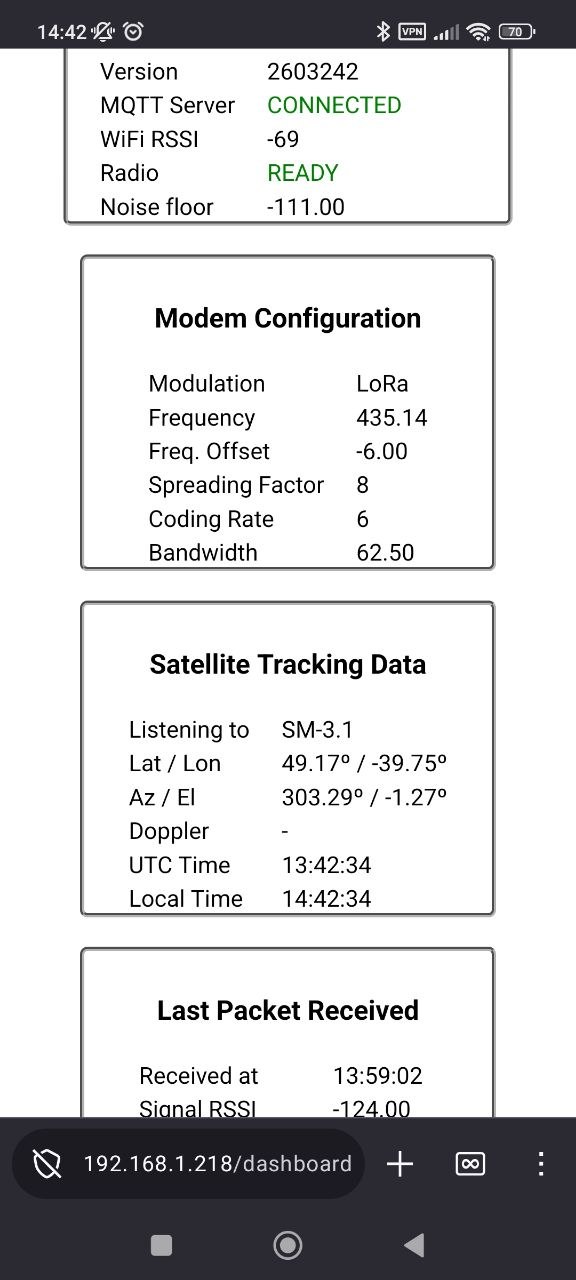
- V reported receiving valid packets that appear on the TinyGS web page, but the confirmed packet count does not increase, even though none have CRC errors. Stefan/OE6ISP suggested the station might be in test mode, but V disagreed, wondering if packets need to be received by 2 or more stations to be confirmed. The conversation moved to DMs for further troubleshooting. 🔗
Share your setup
- LarsSM0TGU shared that their station ‘SM0TGU_Stockholm’ is QRV again, using a 400 MHz GP antenna without an LNA, shared with a SatNOGS station via a good-quality antenna splitter, noting the splitter loss is approximately -3.3 dB. They later mentioned decoding approximately 700 packets in 20 hours without an LNA, and planned to test with an LNA to see if performance improves. 🔗
https://app.tinygs.com/station/SM0TGU_Stockholm@EyAENjELLPRD_nAf
https://www.aliexpress.com/item/1005007595606424.html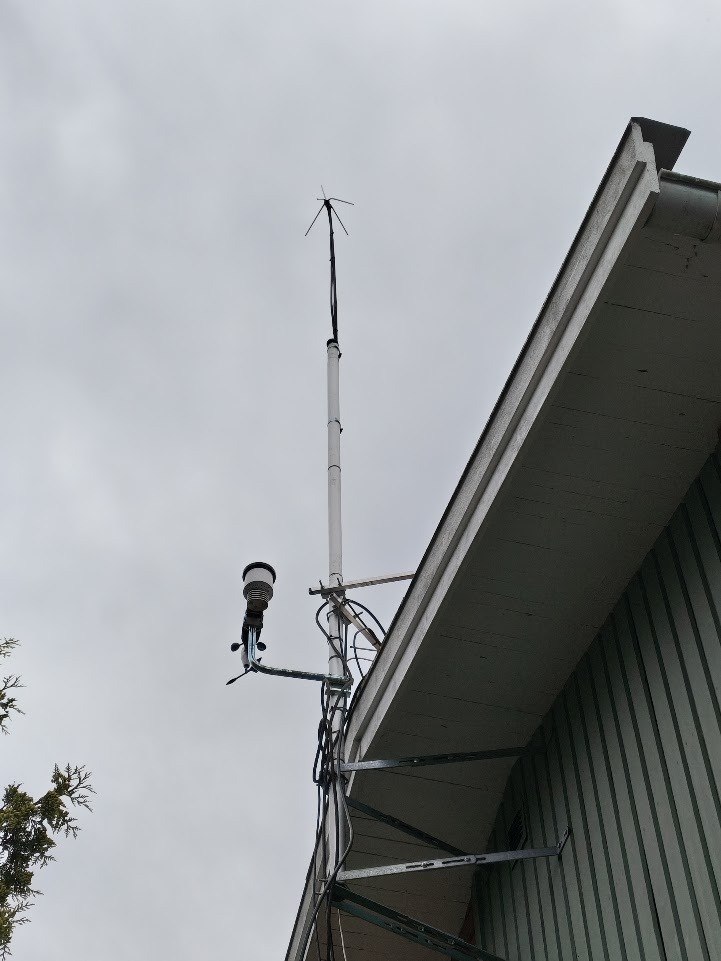
- Stefan/OE6ISP shared that he has prepared and tested a 40dBm uplink station, ready for use if a satellite with repeater functionality becomes available. 🔗
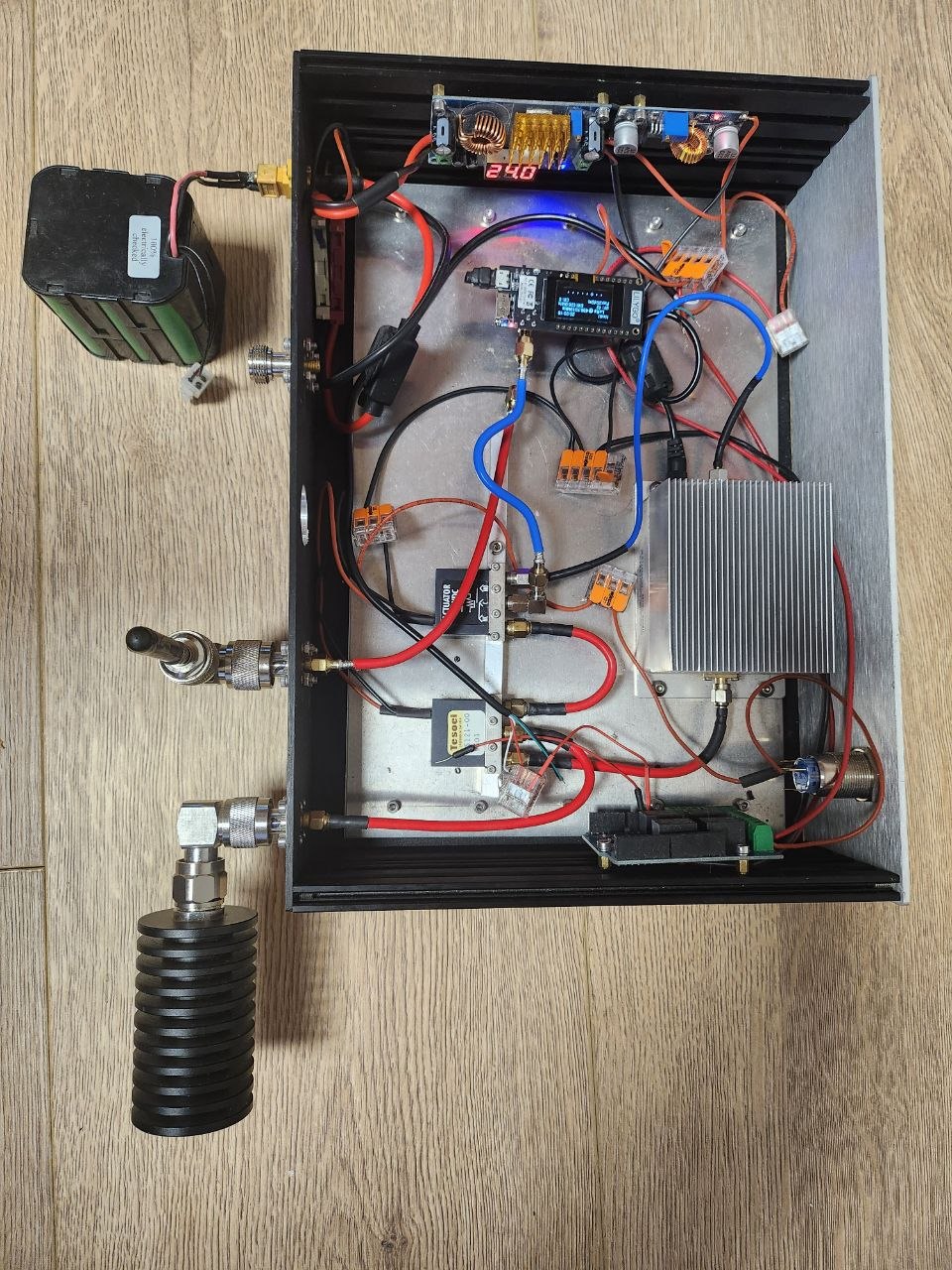
- Notsure7 suggested that if a module has separate rx and tx paths, relays wouldn’t be needed for switching, sparking a discussion on antenna switching alternatives. Stefan/OE6ISP considered using a rat-race coupler but noted it would be a bit lossy, and also reflected on the legal limitations of operating on 70 cm in some countries like Thailand, where transmitting is not permitted. 🔗
Antenna Building
- mz_bgi asked for help making a discone antenna for an RTL-SDR wideband frequency antenna using 3D printing. Helmi responded by asking which frequency range is preferred and shared links to DIY instructions for a mostly 3D-printed discone antenna. Peter warned that a discone antenna has a very flat radiation pattern, which is good for terrestrial signals but has low sensitivity to transmitters at higher elevation. 🔗
https://bytechlab.com/2018/05/mostly-3d-printed-discone-antenna/
https://www.instructables.com/Discone/
Featured Conversations
- The community collaborated to identify unknown signals on 437.485 MHz, which were eventually traced to the PROVES-Electra satellite after its recent activation. The PROVES team confirmed the spacecraft IDs for their constellation, enabling the building of a parser to correctly assign telemetry packets to each satellite.
- A new FSK AX.100 Mode 5 decoding mode has been implemented in TinyGS beta firmware, expanding the range of satellites that can be received. Community members are already testing it on their stations for satellites like FrontierSat.
- Early signals from the freshly deployed FossaSat-2E26 satellite were already being detected on its first day in orbit, with multiple operators reporting clean decodes and confirming the satellite’s healthy operation.
- A community member troubleshooting a new HT62-based station discovered that FSK reception requires better signal-to-noise ratio than LoRa and that cable quality is critical—switching from 10m of RG58 to RG8 was identified as a key improvement for receiving FSK satellites on 436 MHz.
- The community explored antenna design and switching techniques, including discussions on relay-free setups for modules with separate RX/TX paths and advice on building 3D-printed discone antennas for wideband SDR use, noting their limitations for satellite tracking at higher elevations.
Latest Cubesats News
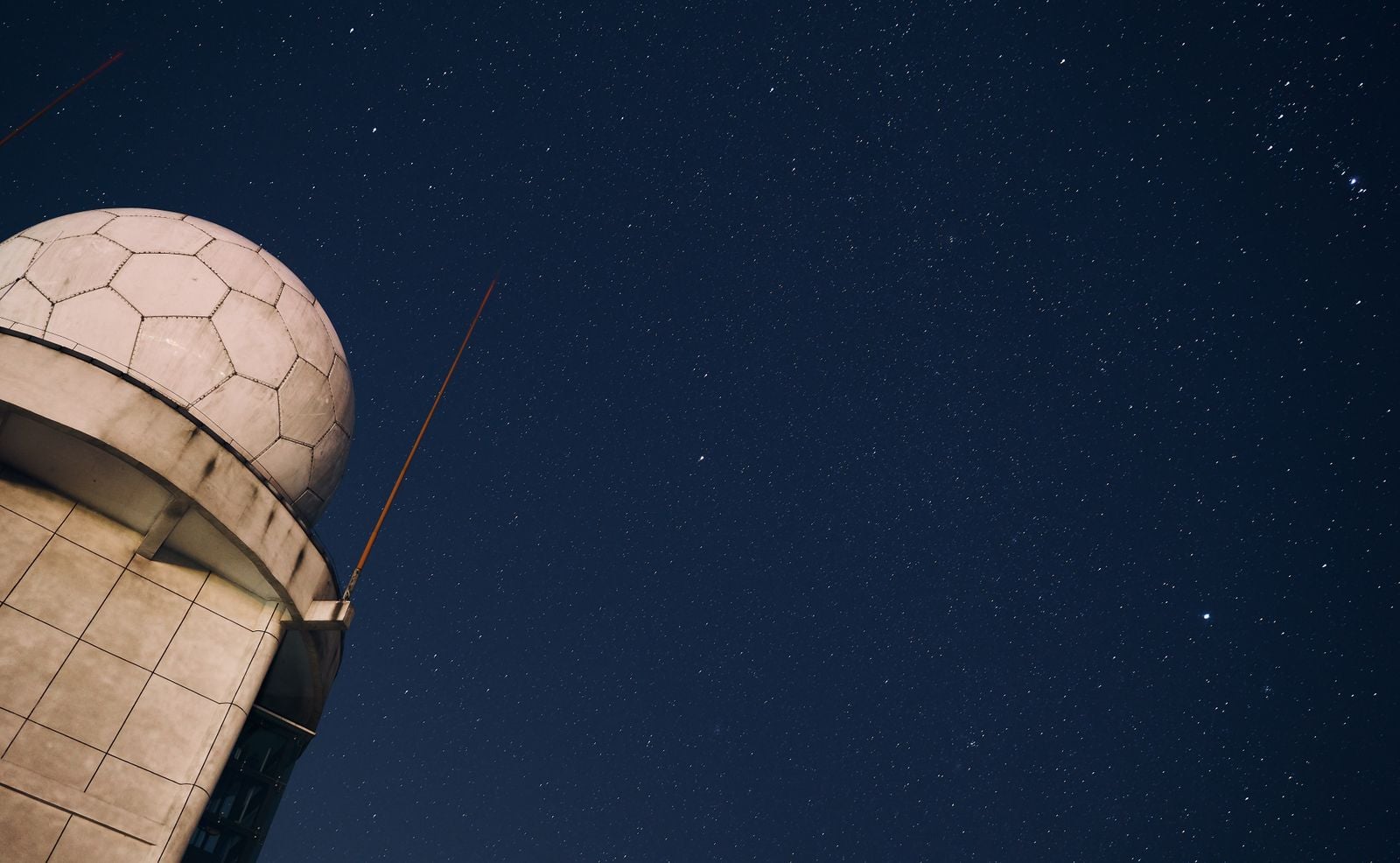
In July 2026, a Miami startup called City Labs sent a softball-sized CubeSat carrying a tritium …
City Labs’ BOHR satellite, a 1U CubeSat, became the first commercially built nuclear-powered satellite launched into orbit on July 7, 2026, via a SpaceX Falcon 9. It uses a tritium betavoltaic battery producing nanowatts to microwatts, distinct from traditional RTGs, and is the first mission cleared under the FAA’s new commercial nuclear launch approval process. The satellite demonstrates a regulatory pathway for commercial nuclear payloads, with tritium’s low-risk profile enabling simpler handling and shipping. This mission paves the way for future applications in lunar exploration, where solar power is unavailable, and for other companies seeking to launch nuclear devices.
/https%3A%2F%2Fwww.tudelft.nl%2F_assets%2Ff6b877d73456607fbfa2de3e3c5fd420%2FImages%2FOpenGraph%2FTUDelft.jpg%3Fhash%3D9ac1b46830)
Colloquium: Vincent Bull (ASM) - TU Delft
A TU Delft thesis assesses thermal feasibility of a 16U CubeSat in Very Low Earth Orbit down to 130 km perigee. Using reduced-order LTspice and COMSOL models, the baseline design fails hot case due to limited heat rejection. The selected passive design combines a heat shield, high-emissivity panels, and insulated interfaces, enabling a 15% payload duty cycle. Structure temperature centers at 39.7°C, over 7°C below the 50°C requirement, with no exceedances observed.

ESA to Launch CyberCUBE, the GMV-Led Mission to Validate Cybersecurity Technologies
The European Space Agency (ESA) will launch the CyberCUBE mission on July 7 from Vandenberg Space Force Base aboard a SpaceX Falcon 9. Developed by GMV with Alén Space, the 3U CubeSat will serve as an orbital laboratory to test advanced cybersecurity technologies, including post-quantum cryptography. The mission aims to protect European space infrastructure from sophisticated cyber threats like jamming and spoofing. With a budget of €1.9 million and a one-year operational life, CyberCUBE is the first ESA mission fully led by GMV’s Romanian team.
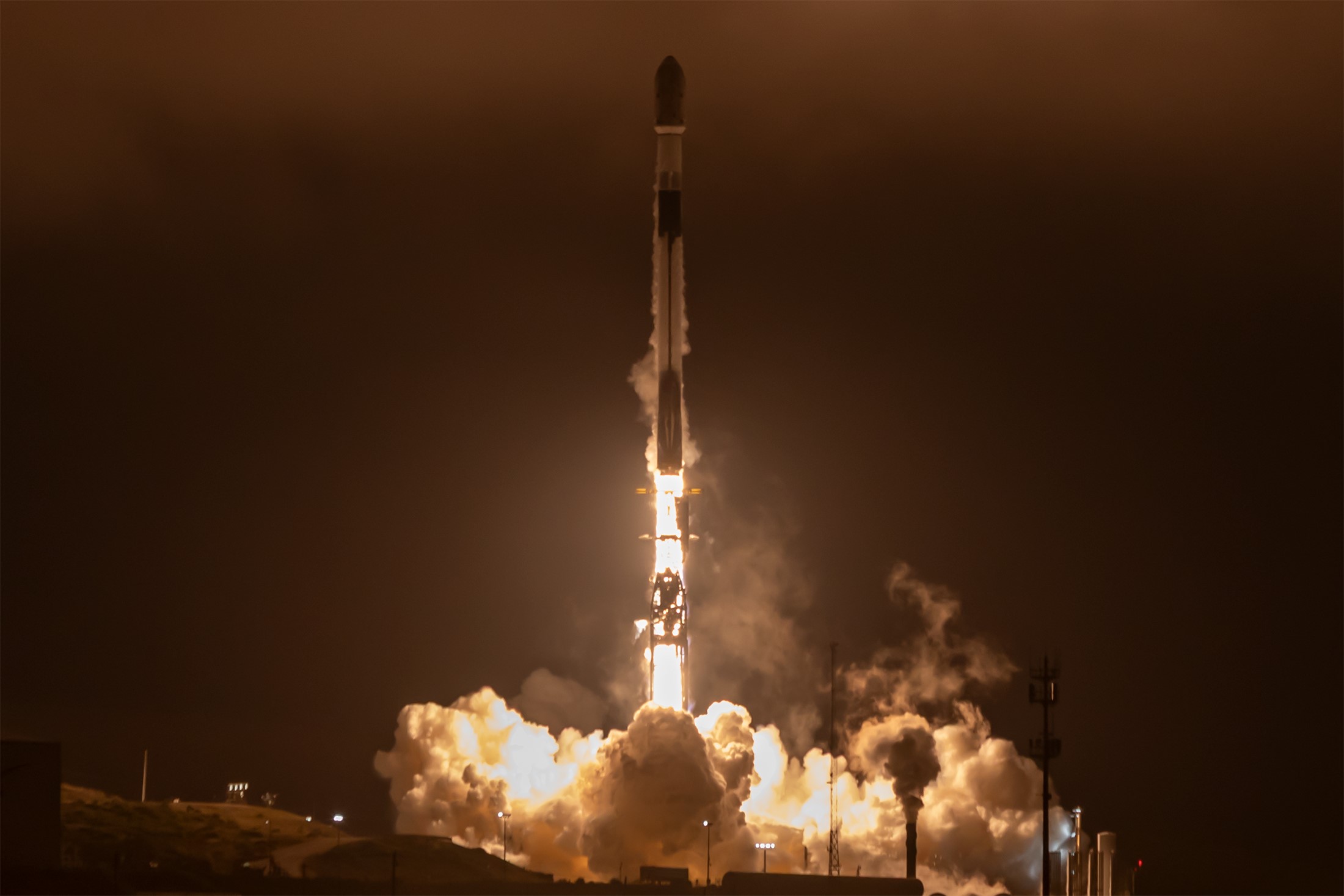
NASA CubeSat to Speed Technology Testing in Orbit
NASA’s R5-S9 CubeSat launched July 7 on a SpaceX Falcon 9 from Vandenberg Space Force Base. The satellite uses commercial components and an incremental development approach to reduce costs and schedules. It will test edge computing for autonomous Earth and space observation with Sandia National Laboratories and a low-cost optical communication system from The Aerospace Corporation. The mission took approximately four months from design to delivery.

Sarawak to deploy CubeSat technology to map rare earth reserves, says Abang Johari
Sarawak will use CubeSat satellites to map its rare earth element reserves and collect Earth observation data. Premier Abang Johari stated the data will enable precise, data-driven decisions for building a future economy based on AI, semiconductors, and advanced technologies. He noted the state currently does not know the volume of its rare earth minerals, which are essential for manufacturing specialized magnets. Abang Johari also predicted a shift from centralized data centers to decentralized computing models within five years due to AI evolution.
Surface CubeSat of the Ramses Mission is Secured
The Ramses mission’s surface CubeSat has been secured. A Pegasus XL rocket launched the LINK robotic satellite to raise the orbit of NASA’s Neil Gehrels Swift Observatory. This operation aims to enhance the observatory’s capabilities. The mission represents a step forward in space infrastructure maintenance.
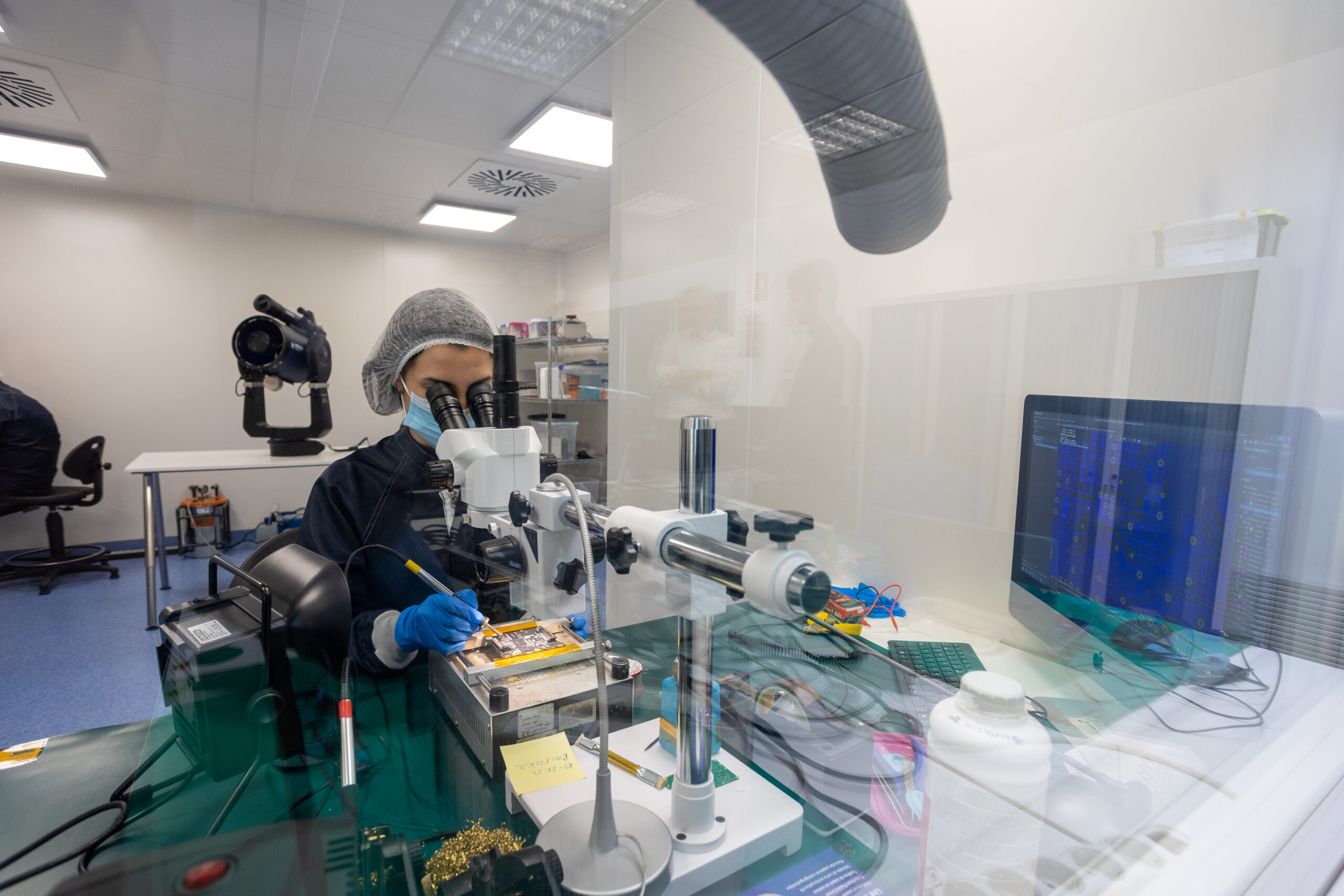
EMXYS to Build the Don Quijote CubeSat for ESA’s Ramses Mission
The European Space Agency (ESA) has contracted Spanish company EMXYS to build the first CubeSat designed to operate on an asteroid’s surface. The Don Quijote CubeSat will autonomously land on the 375-meter asteroid Apophis, which will pass within 32,000 km of Earth in 2029. It will carry three instruments: a gravimeter to measure the asteroid’s gravity, a magnetometer to detect magnetic fields, and a seismometer for seismic measurements. The CubeSat must survive extreme conditions, including chaotic rotation and temperature swings, while operating autonomously without constant human supervision.

Facing Orbital Threats, Parabilis Tests DOTS, a Toaster-Sized Engine
Parabilis Space Technologies successfully hot-fired DOTS, a hybrid propulsion module for military CubeSats. The system combines solid fuel with liquid oxidizer for maneuverability, offering a Delta-V of several hundred meters per second. The US Space Force aims to give small satellites the ability to dodge debris, reposition, and perform new missions. An orbital demonstration is expected by 2027 at the earliest.
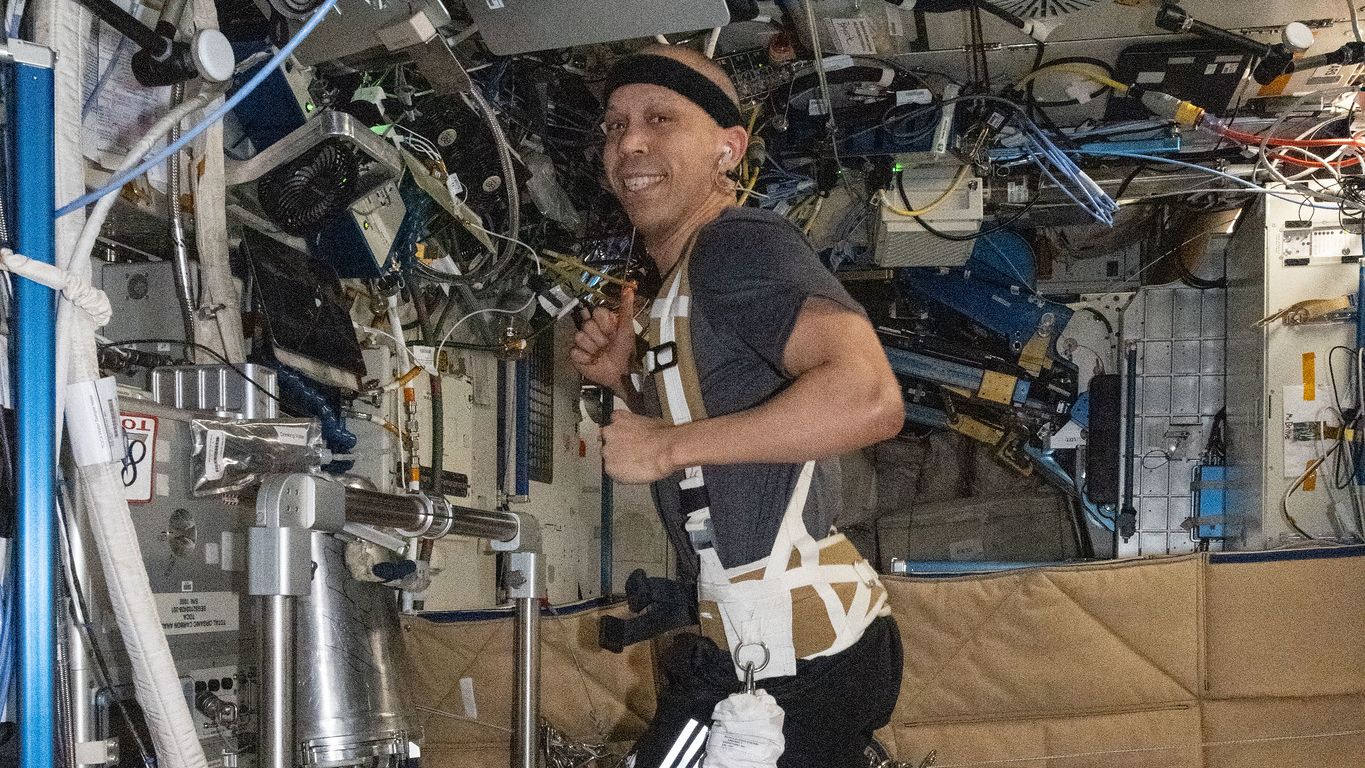
Crew Works Health Checks, CubeSat Maintenance, and Soyuz Seat Checks - NASA
Expedition 74 crew conducted health checks, including blood and urine sample collection, for the CIPHER suite of human research studies. NASA astronauts Chris Williams and Jessica Meir stowed spacewalking tools used to repair the Canadarm2 robotic arm. NASA flight engineer Jack Hathaway retrieved and uninstalled the NanoRacks CubeSat deployer from the Kibo laboratory module. Roscosmos cosmonauts Sergey Kud-Sverchkov and Sergei Mikaev checked custom-fit seat liners for their return to Earth in the Soyuz MS-28 spacecraft.

Sarawakian engineer behind SpaceX-bound CubeSat wants to help build State’s space future
Sarawak-born astronautical engineer Irfan Annuar, 25, led integration and testing of the MAVERIC CubeSat, set to launch on a SpaceX Falcon 9 rocket. He believes Sarawak has the engineering talent to build its own satellite by 2030, with applications in flood forecasting, agriculture, and resource management. Irfan advises aspiring engineers to seize opportunities and build projects, emphasizing that space technology is more accessible than commonly perceived. His goal is to bring his experience back to Sarawak to inspire the next generation and support the state’s satellite ambitions.
What’s next
Join the TinyGS Telegram channel to participate in these discussions and contribute to the project. Your experiences and insights can help others build and improve their stations!