tinyGS
· TinyGS Community · 8 min read
Weekly Newsletter - April 27, 2025
Welcome to the TinyGS community newsletter! This week's edition covers discussions on beta firmware testing, technical problems, antenna setups, new satellites, and general community contributions. Stay informed with the latest insights and developments from fellow TinyGS enthusiasts.
Highlights
Beta Firmware Testing
- G4lile0 shared an algorithm that compares last receptions with “reference” satellites (still in early stages). 🔗
- IV3IHD inquired whether autotune works with FSK satellites and if it is possible to enable it, and G4lile0 replied that it’s automatically enabled for stations with the beta firmware. 🔗
- Notsure7 reported an “Update error: Not Enough Space”. 🔗
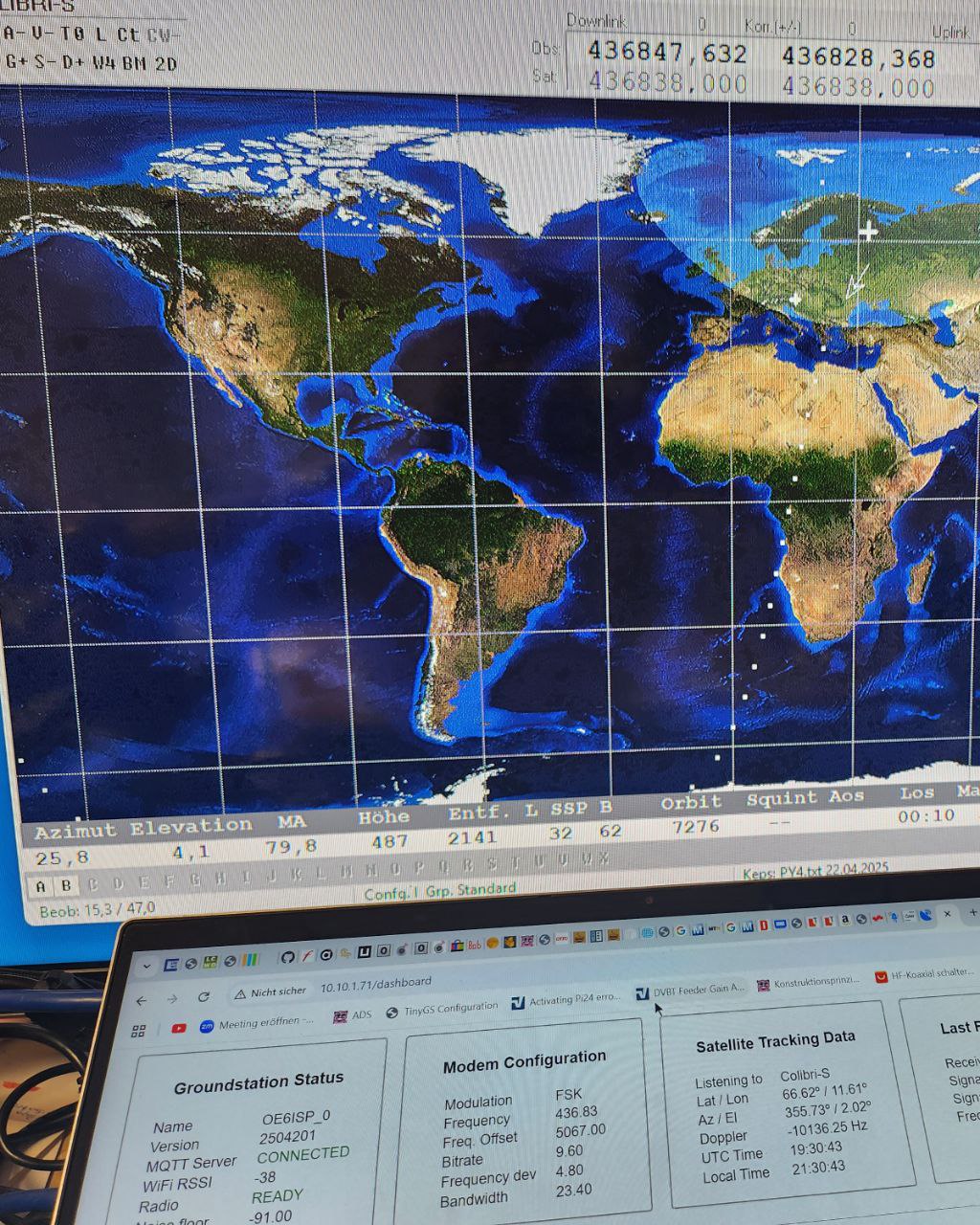
- Stefan/OE6ISP reported incorrect tracking info for Colibri, noting TinyGS seemed to be one orbit late. The user also mentioned that even with the correct timezone, tracking information was invalid and that the satellite was passing in the opposite direction, and included a photo.  and expressed uncertainty about the cause of the issue. 🔗
- Stefan/OE6ISP reported a 5kHz offset after restarting and shared a photo.  After that, mentioned that manual frequency entries were being overwritten and asked about resetting the high 5KHz offset. Also, was thinking about how to synchronize the rotator in autotune mode, and later confirmed that switching to manual mode preserved the correct TLE until the next power cycle. Additionally, confirmed a pass was achieved despite a high kHz offset and shared a photo.  Finally, responded to a suggestion about motor switching from the positioner potentially causing disturbances. 🔗
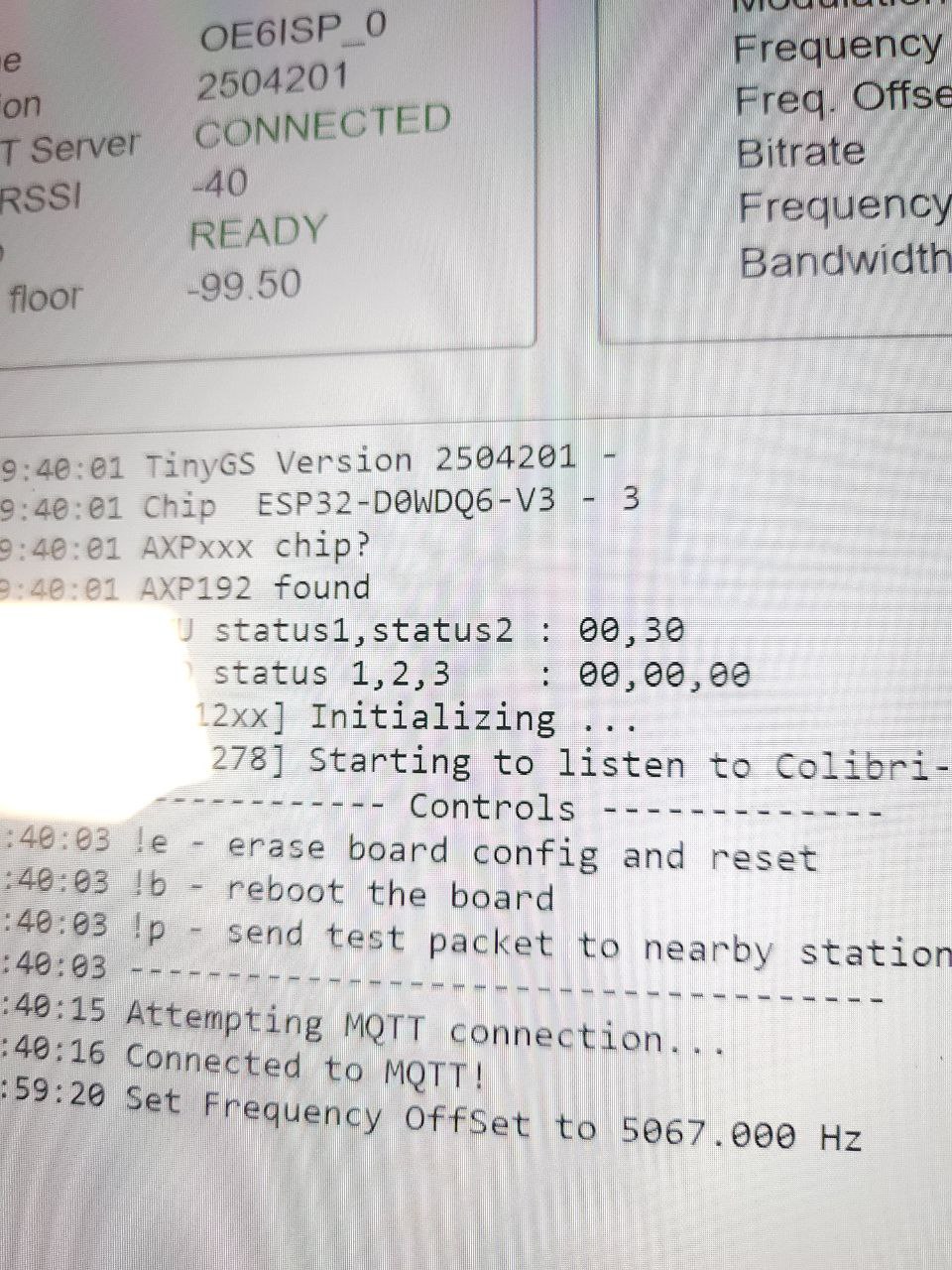
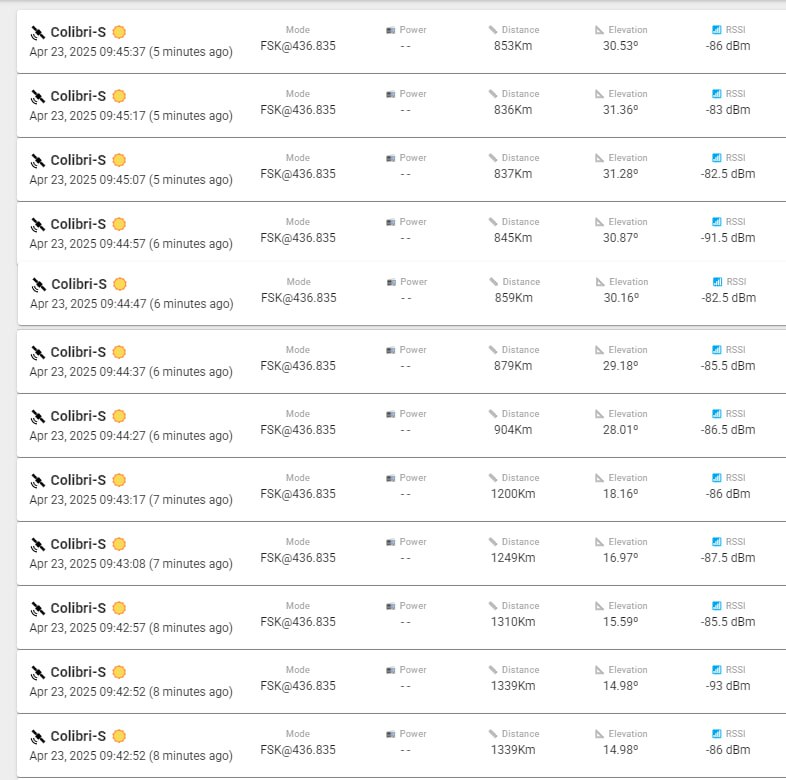
- Stefan/OE6ISP reported that after loading the correct TLE with the autotune-trick and disabling the frequency offset, the station is already tuned very well, receiving FSK on OE6ISP_0 with the tracked yagi. However, it seems the many frequency updates are disturbing the modem and preventing it from receiving sometimes, so some packets are lost and asked if the update interval for the frequency can be altered somewhere in the source code. 🔗
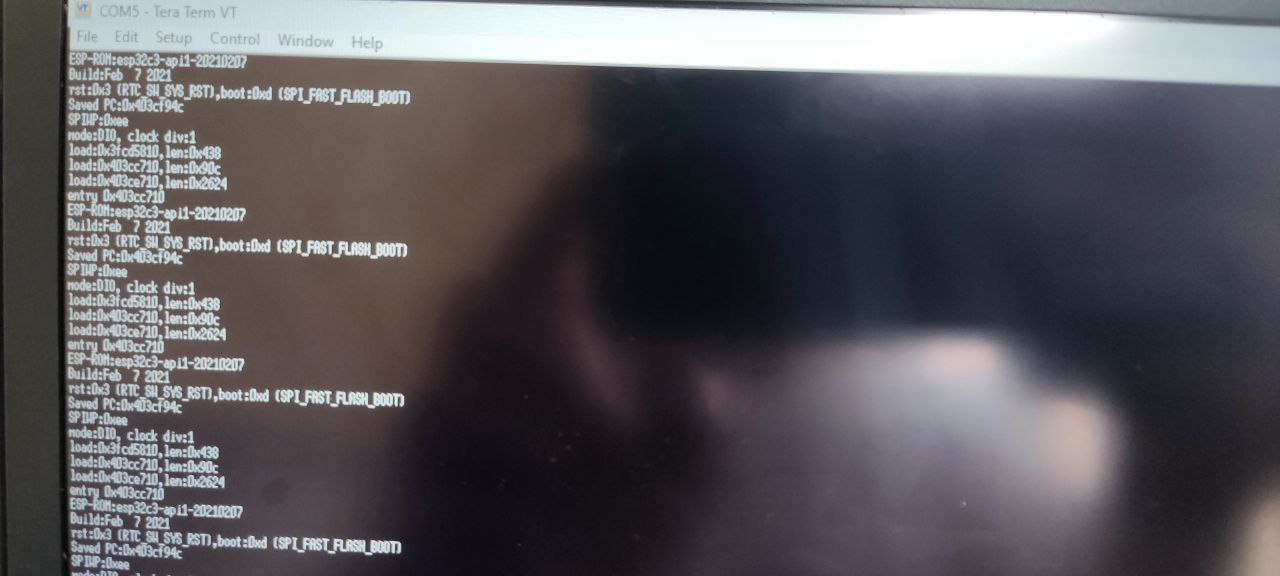
- Notsure7 mentioned that the mqtt messages should be tied to the mqtt messages, that’s a push system, i think you can’t control it on the client side. Was able to build and upload the beta branch, but nothing. If I compile and upload main version I get the tinyGS SSID, and the chip heats up (bad wifi antenna). With the beta… Nothing. Terminal output, something’s not right. Dio? Should be quad… 🔗
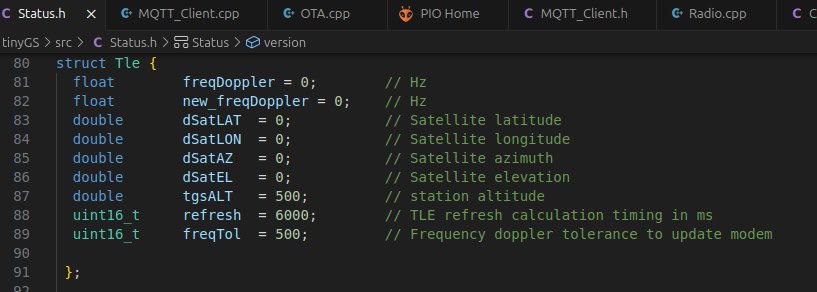
- G4lile0 said that on Status.h, you can change refresh and freqTol. These values are currently set to default but can be changed via MQTT. The future plan is to automatically adjust them dynamically based on modulation, frequency, bandwidth… 🔗
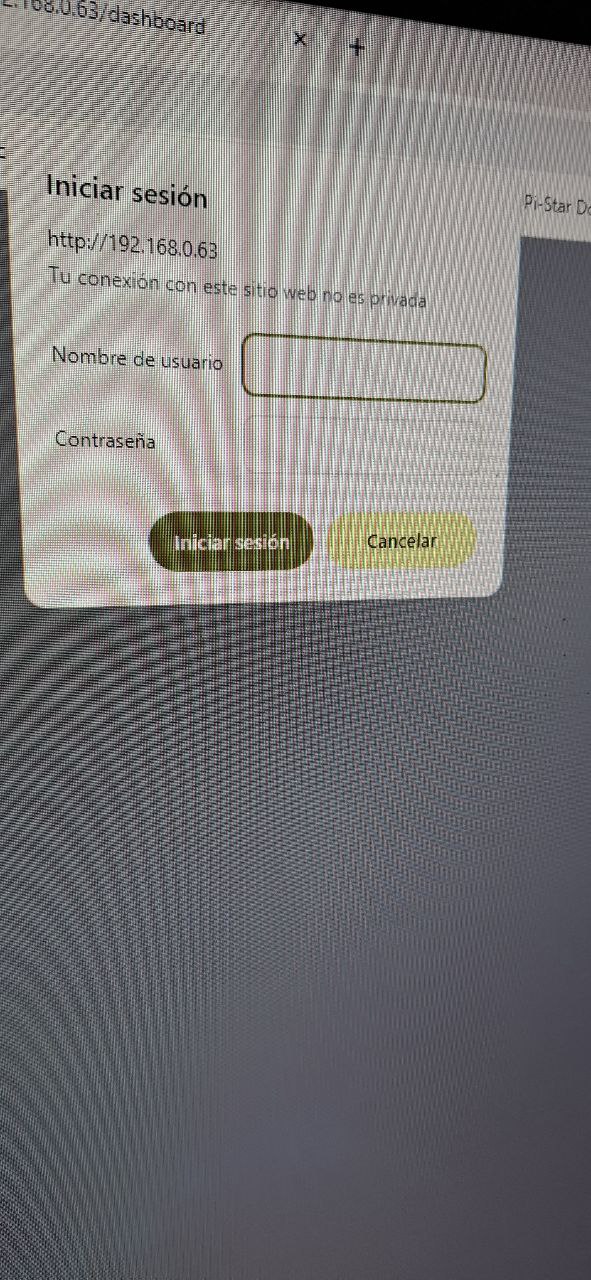
- Pedro asked what is supose to write ?? 🔗
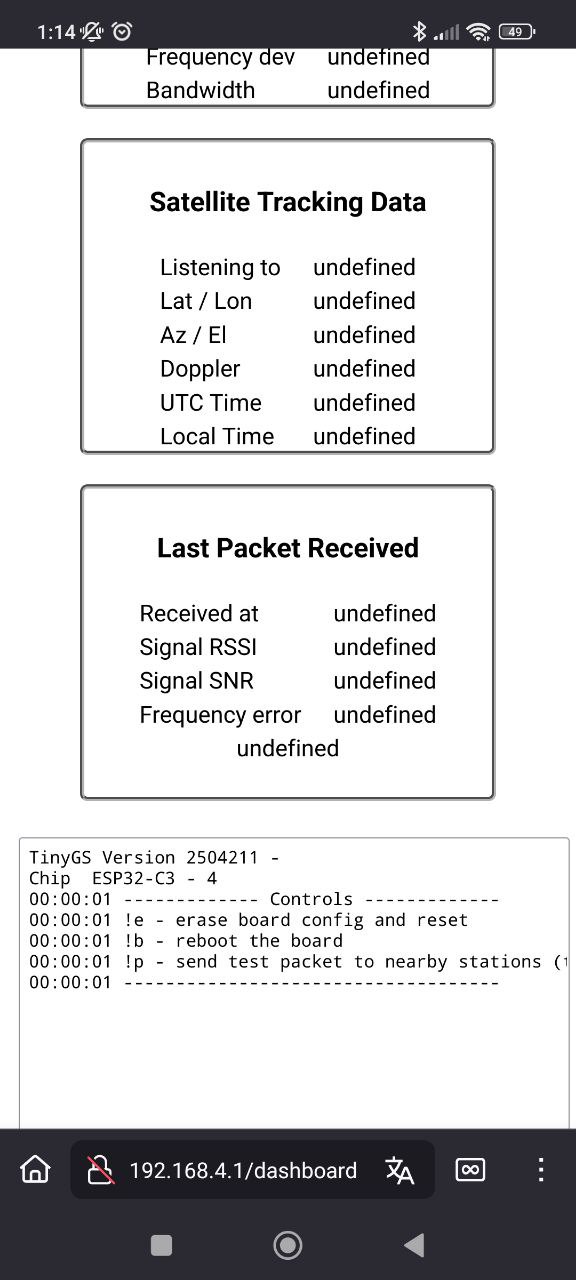
- Notsure7 reported progress on beta firmware testing, mentioning finding part of the solution in platformio.ini and suggesting to revert back to version 6.5.0. After that, configured it and now it appears to be fully working, but still have to fix the wifi. 🔗
- Stefan/OE6ISP shared observations on the tracking feature with FSK-sats, suggesting that the tracking algorithm waits until the frequency is off by freqTol and then corrects, potentially overcompensating. He believes trackers overcompensate by tuning to f(new) - f(tol), and saving 50% of frequency updates may be beneficial. He uses a GPSDO-stabilized IC-9700 with the satpc32 tracker as reference, which should be pretty accurate. 🔗
- G4lile0 responded to Stefan/OE6ISP, mentioning that the issue is approached by calculating the TLE for now + half of the refresh time. He suggested changing the refresh time to 15000 might be helpful, as the algorithm also works for LoRa. He also announced new beta with the PN9 whitening encoding created by @Estbhan to properly decode “new” Geoscan FSK satellites. 🔗
- Notsure7 asked where the WiFi connection is managed in the code, noting that it seems to only connect to the first AP, even when a stronger one with the same SSID is nearby. 🔗
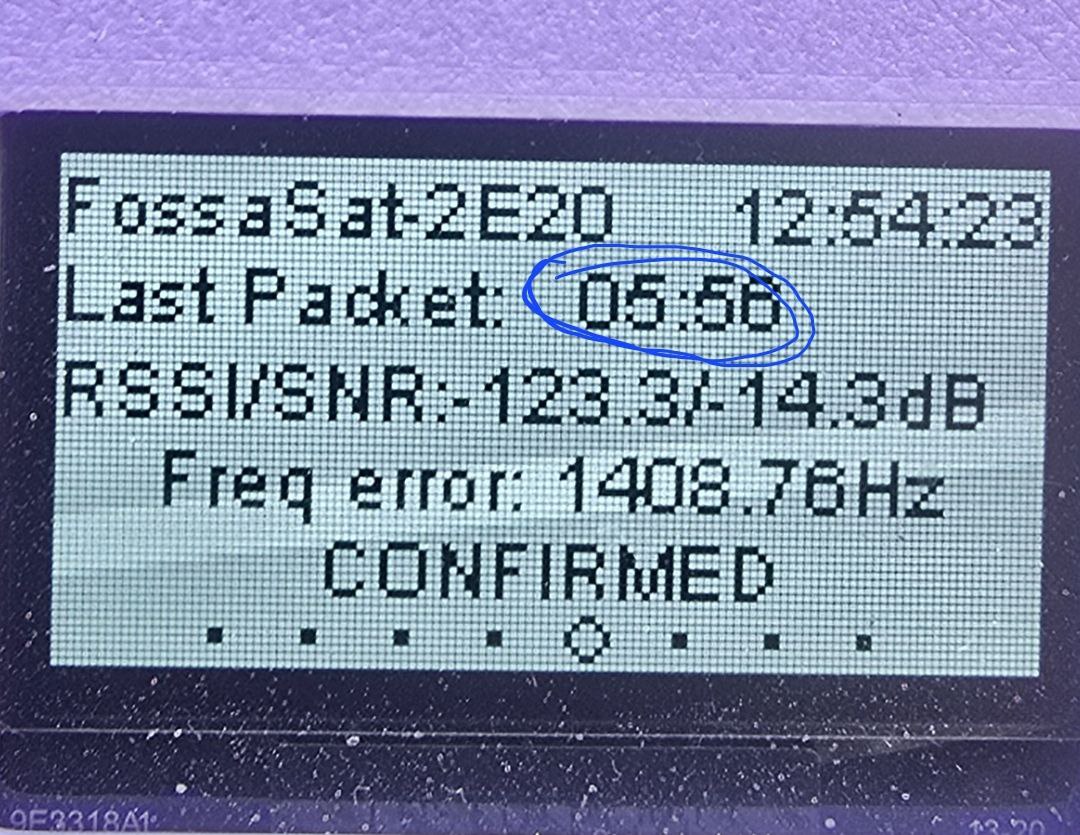
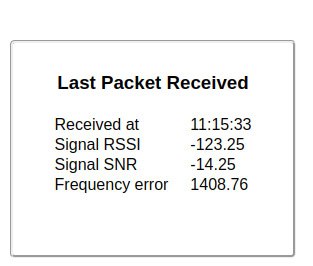
- n3v1l reported an issue where the time displayed is always the same and never changes. He added that the dashboard shows the correct time of the last packet. 🔗
Technical Problems
- Nick mentioned that for SX1262, it is necessary to set radio to 6 and the typical Itcxov is 1.6… 1.8v, adding that he had the same problem and had to look at the sources. 🔗
- Stephen found that the suggestion of Nick seems to be working, and the radio is now ready; the screen is still garbled, but it’s thought to be because the screen is a different size, also shared a template for t-beam supreme 433Mhz for those interested. {“name”:“[433] TTGO T-Beam Sup”,“aADDR”:60,“oSDA”:17,“oSCL”:18,“pBut”:0,“led”:3,“radio”:6,“lNSS”:10,“lDIO1”:1,“lBUSSY”:4,“lRST”:5,“lMISO”:13,“lMOSI”:11,“lSCK”:12,“lTCXOV”:1.6} 🔗
- sincos364 shared that the receiver can be located anywhere with a cellular connection. 🔗
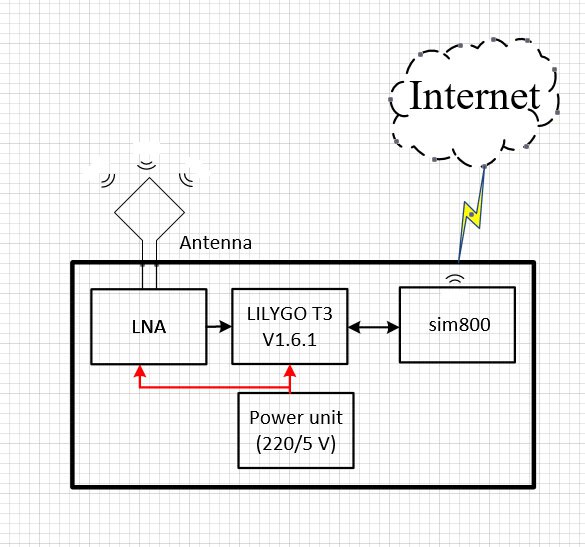
- Helmi suggested that if you have a cell phone, use it as a Hot Spot for tinyGS and relay the data to the MQTT server to save the Sim800. Also, in response to a user having issues with MQTT connection, advised to double-check username and password, using copy/paste to avoid typos, checking for ’-’ at the ends of the username, and trailing spaces in the password. 🔗
- B reported setting up the station and inquired about a way to check if it is capable of receiving messages, like a test message, and asked about stopping the OLED screen from changing on a TTGO LoRa32 V2 board to closely examine the data screen. 🔗
- omuoto reported creating a station with no name and being unable to delete it using /telegram. He is running a custom version and adding some custom features i need, which was support forwarding data to multiple Telemetry (Other MQTT, InfluxDB) and Logging agents (Datadog, HTTP API). My goal was to get it to run on arduino (ouch). 🔗
- Pedro tried to access the control panel and asked what to write in the fields. 🔗
- B asked how often the TLE data is updated. 🔗
Antenna Building
- andrebruton mentioned having a similar tower and placing the TinyGS on a mast at the end of a 2m aluminum angle iron, powered by a 12V solar module with a DC-DC module inside the box, and offered to DM for more details. 🔗
Share your setup
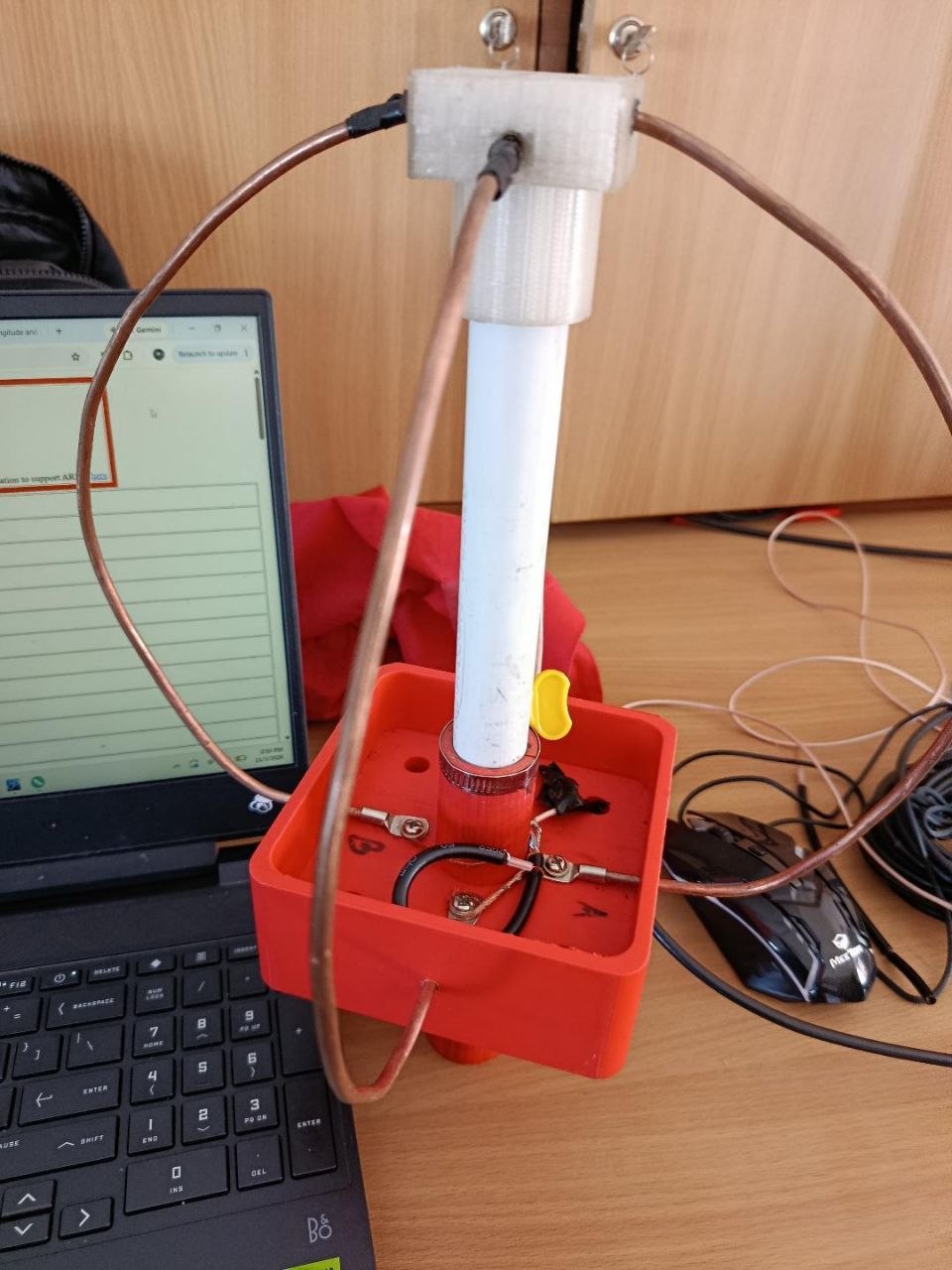
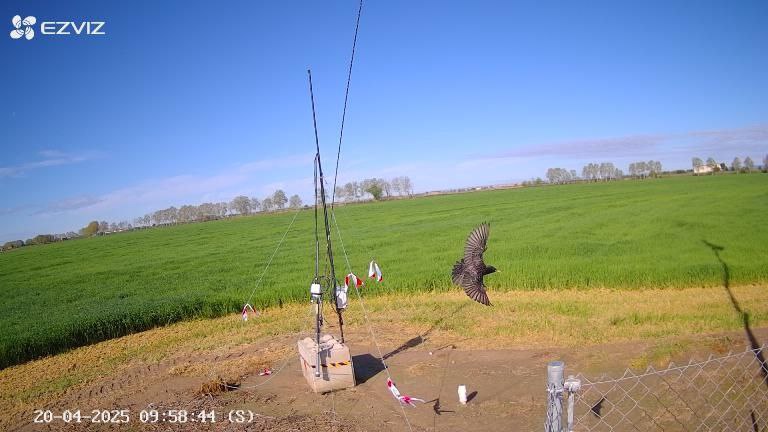
- Guillem shared a photo of the antenna setup after an incident and is looking for suggestions for a good mast that is at least 6-10m tall, as the previous one from Wimo failed.  Also mentioned that the setup is used for other purposes besides TinyGS. 🔗
New Satellites
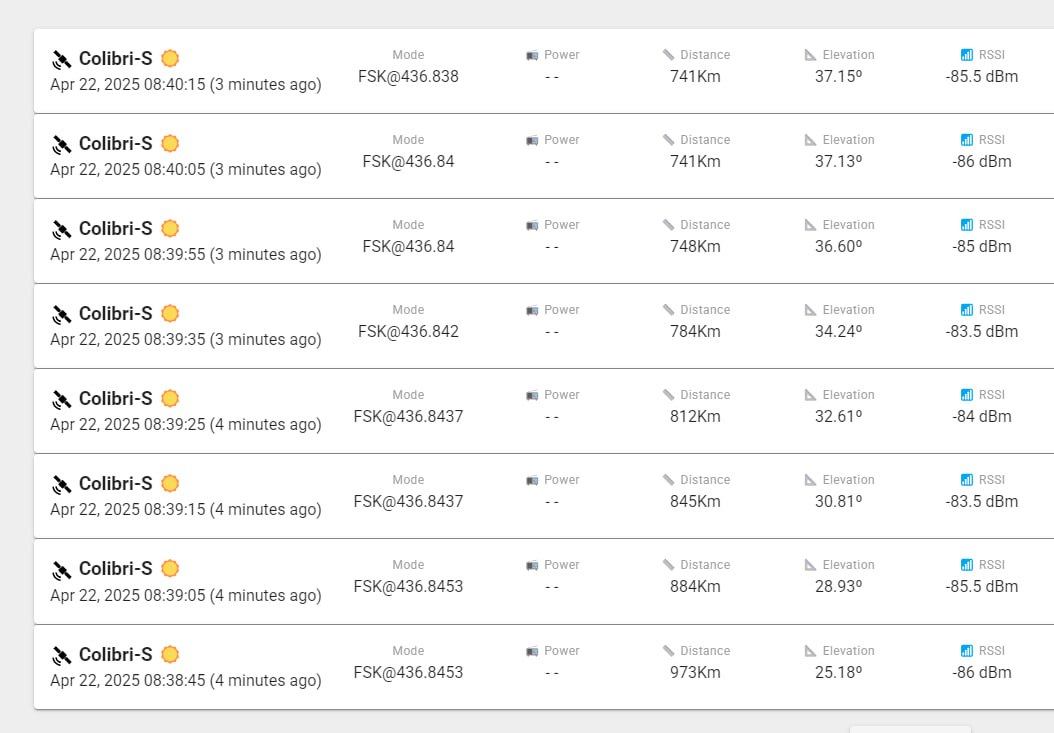
- Stefan/OE6ISP reported a successful FSK catch on OE6ISP_0, but the autotune didn’t activate for an unknown reason.  🔗
- PE2BZ reported on several Tianqi satellites. Started by pointing out that Tianqi-25 shows as name, but uses Norad and TLE for Tianqi-26 and added that he might have Tianqi-25 / 59909 but on 400.267 MHz, which shows as approx 125 kHz wide LoRa signal. Following messages confirmed the presence of 59911 TIANQI 27, 55912 TIANQI 28 and 59910 TIANQI 26 also on 400.267 MHz, same 125 kHz wide, 3 passes matching. Included links to example data. 🔗
https://app.tinygs.com/satellite/Tianqi-25
https://docs.google.com/document/d/135cx5TfERXo5wTzgOLiFMWIi3ym9wzYHWPCnv2BtfO0/edit?usp=sharing
https://docs.google.com/document/d/1RjojDUYXbc3ZLOJBgf56SyLgU4fLvwyOc4b051WYYJo/edit?usp=sharing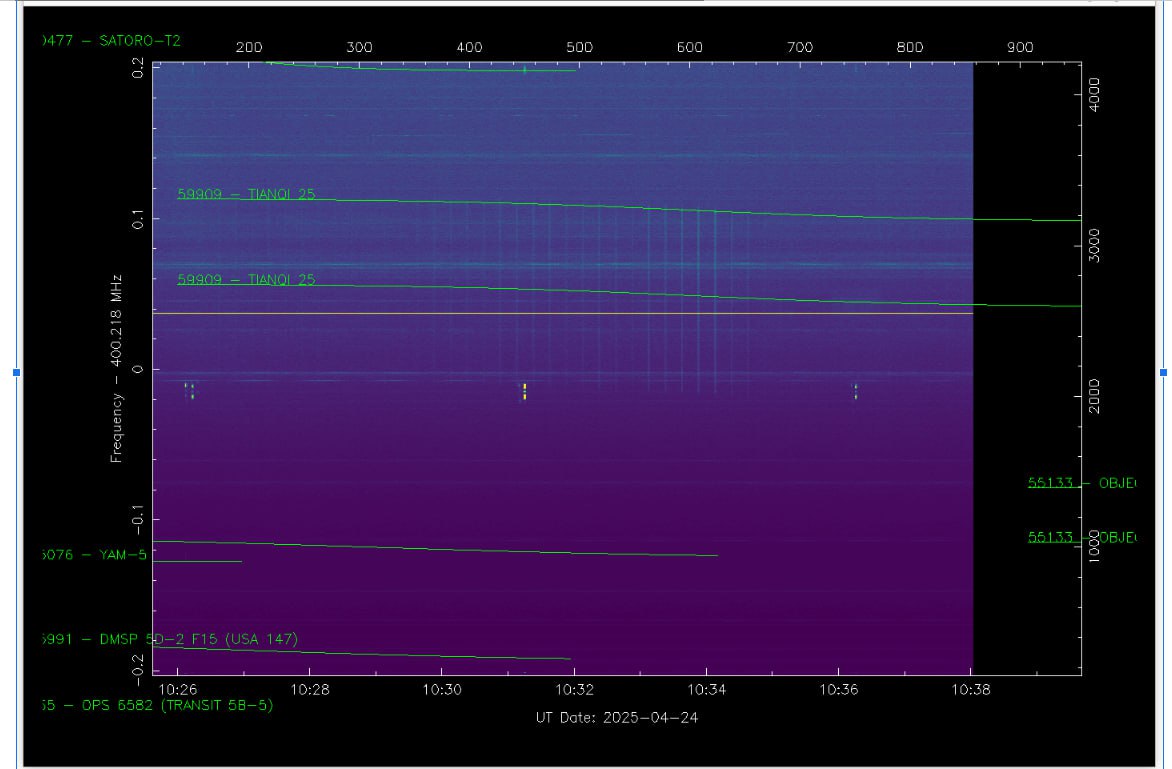
- G4lile0 reported that any Tiaqi satellites have an incorrect international NORAD designation in their TLEs, but we identify them using their internal sat_id and assign them the correct TLE, regardless of the name associated with it. 🔗
General
- F21467 asked what the “satellites” Surveillance-EU868 and Surveillance-US915 correspond to, how they are emitted, and their purpose. 🔗
- Notsure7 mentioned a small contribution and asked if expenses will be somewhat public, stating that the community would like to know the value, even a ballpark figure. 🔗
- Manuel congratulated the community on becoming a non-profit and offered technical contributions in software development, distributed systems, and embedded systems. 🔗
- G4lile0 expressed gratitude for a recent donation and mentioned that the priority is allocating funds towards infrastructure. Also told that We’re working hard on some exciting new features for the upcoming firmware and website releases. Soon after, we’ll be publishing a roadmap detailing our future plans, and we think this will be a fantastic way for everyone to get involved. 🔗
- VK7HRS asked why his Lora32 V3 only shows 433MHz when his is the 915MHz AU, and why it says mqtt off and it cant be changed, asked about updating the TLE because all the sat passes are wrong and reported not receiving anything on rx. 🔗
- caracolmaker shared plans to create a DIY PCB for CNC and contribute to the project. 🔗
- JulioRossoni asked for MQTT credentials for his first setup. 🔗
- EA7LGA introduced himself, expressing it was nice to be among everyone. 🔗
Featured Conversations
- The community actively tested the beta firmware, addressing frequency offsets and TLE update issues. They explored integrating rotator control with autotune functionality to improve station capabilities.
- Users shared experiences with antenna setups, discussing challenges and solutions for different height requirements. This collaboration aids in optimizing station performance and resilience.
- PE2BZ reported inconsistencies in Tianqi satellite data, noting mismatches between names, NORAD IDs, and TLE data. This highlights the community’s commitment to data accuracy and reliability.
- G4lile0 expressed gratitude for recent donations, emphasizing infrastructure allocation and promising exciting new features for upcoming releases. A roadmap will involve community participation.
- The community is troubleshooting technical problems like SX1262 radio settings and OLED screen management. They also discussed cellular connectivity alternatives, sharing advice and solutions.
What’s next
Thank you for being an active part of the TinyGS community! Share your knowledge, ask questions, and contribute to the growth of the project. Join the Telegram group to participate in the discussions and visit our website to stay updated on the newest supported satellites!
Share: