tinyGS
· TinyGS Community · 13 min read
Weekly Newsletter - November 22, 2026
First-time builders spent the week getting stations online — from a freshly flashed T-Beam to an ESP32 setup that refused to answer on its own access point — while seasoned experimenters pushed SX127x radios into FSK territory and weighed whether a TCXO modification is actually worth the soldering iron. Far above, CATSAT began saying its goodbyes from a 260 km orbit, and a newly detected LoRa beacon from a recent Vostochny launch was picked apart down to its sync word, with five more satellites still waiting for someone to pin down their frequencies.

Highlights
General
- Paul asked for guidance on setting up a LILYGO T-Beam as a complete TinyGS beginner, despite already holding an Intermediate Licence and finding no useful help elsewhere; the community pointed him to the official installer, advised selecting the TTGo LoRa32 V2 board type and suggested the GitHub documentation for further reading — a response he described as very helpful before heading off to try it. 🔗
https://installer.tinygs.com/
https://github.com/tinygs/tinyGS - Anthony1876 shared that custom firmware has been made to work on SX1278 boards for receiving FSK, noting that TinyGS assumes those radios are incapable of it and therefore never attempts it during auto-tune, so manual tuning is required. The thread widened into FSK support in RadioLib examples since early versions, the trick of reporting a board as an SX1262 so the server enables FSK handling while the SX127x does the real work, and the temperature-compensated oscillator that is the main advantage of SX1262 boards — a point that tied into a parallel attempt to fit a TCXO onto an SX1278 module, where the modification was hard to tell apart from stock behaviour in practice. Follow-up bench videos showed tests of whether to run FSK on an SX127x chip at all. 🔗
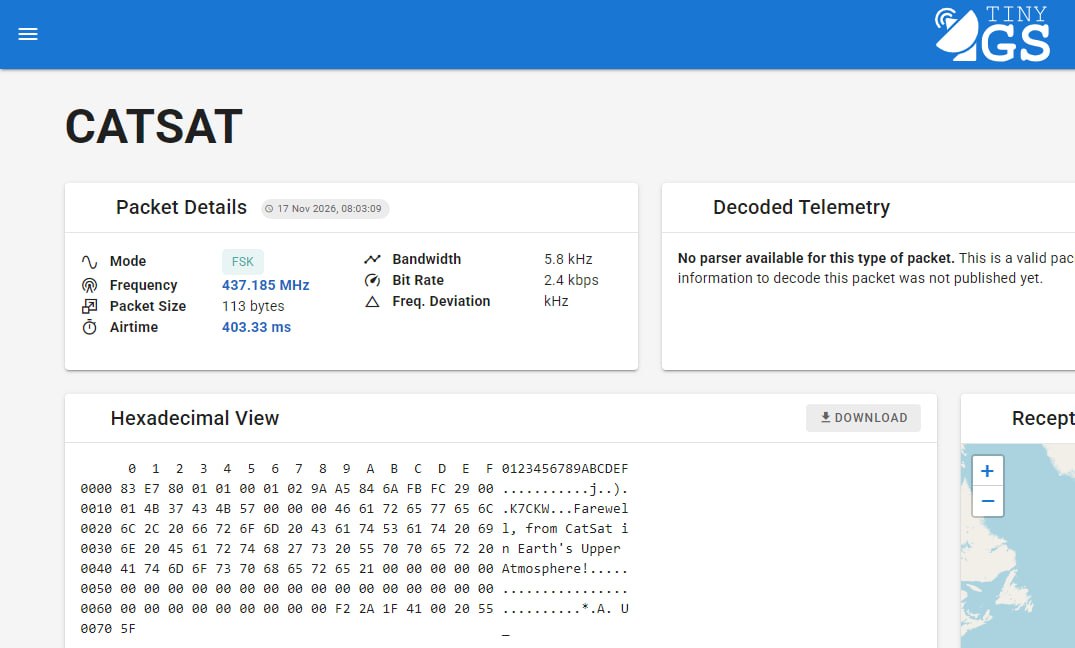
- Stefan/OE6ISP shared that CATSAT is already sending farewell messages from its 260 km orbit, with a predicted decay date of 27 November, and posted a capture of the reception. 🔗
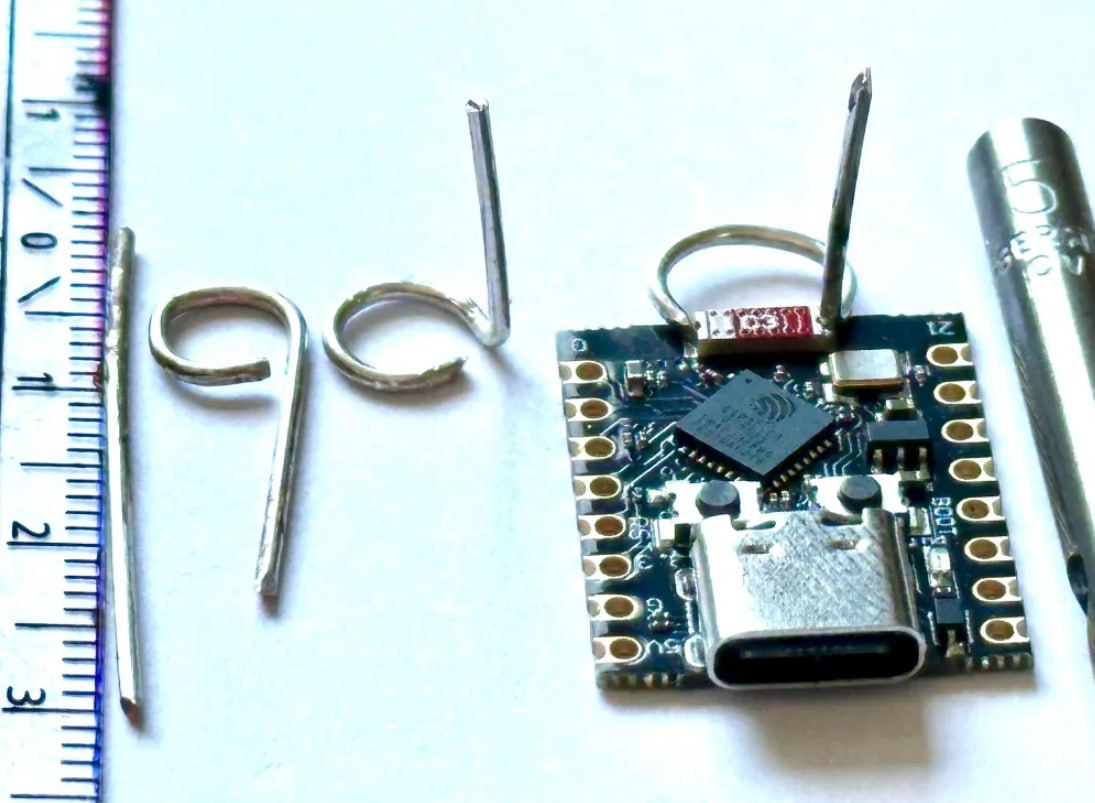
- Luniva asked whether an eggbeater antenna built for 437 MHz would be suitable for satellite reception, sharing a photo of the build and explaining that the station was trying to receive APRS signals but nothing came through despite good passes. The community warned that the small helix is a poor choice for satellite work, recommended starting with a simple groundplane made from a coax connector and five pieces of wire, advised keeping the antenna away from noise sources such as light bulbs, switching regulators and PCs, and noted that an eggbeater lives or dies by the quality of its feed and usually needs a VNA for tuning. 🔗
https://t.me/tinyGScom/78473/219774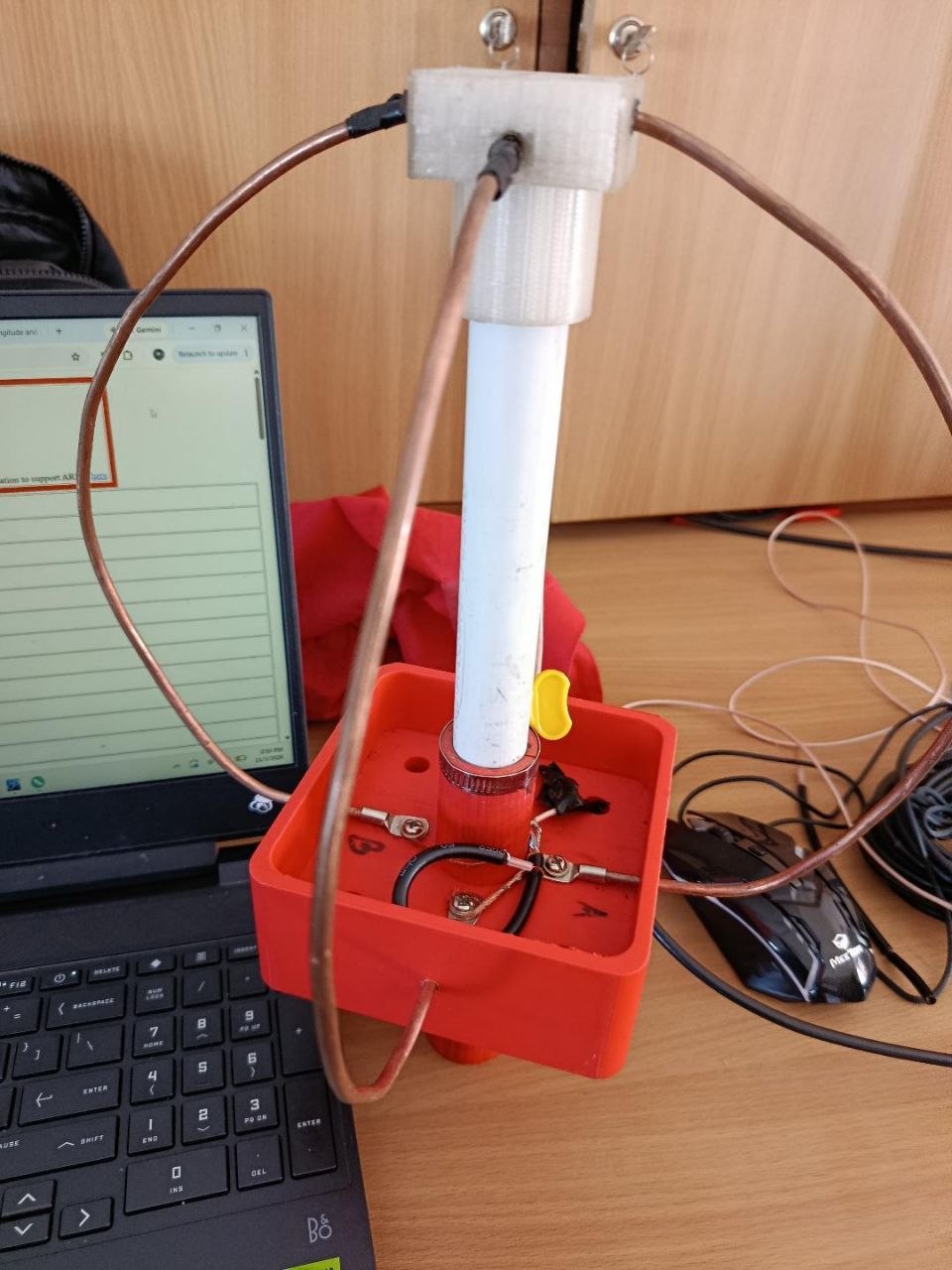
- Anthony1876 described a side project attempting to fit a lightweight LLM into a 64 kB FIFO array on a 433 MHz SX127x board, noting that version 1 is still in development with version 2 already planned and that a PC with 8 GB or more of RAM is needed to run it. 🔗

Technical Problems
- Sam asked whether a guide existed for transmitting, explaining that having just obtained his ham licence he wanted to send data using the TX test function; the reply set expectations by clarifying that no satellites are currently receiving LoRa signals on that path, and that reaching ham satellites in general calls for an AZ-EL Yagi plus a power amplifier, so looking into the better-established amateur satellites through AMSAT was suggested as a simpler way to start. 🔗
https://www.amsat.org - Luniva reported trouble with a first TinyGS setup built around an ESP32-WROOM, an SX1278 RA-02 LoRa module and a 433 MHz helix antenna, where the configuration page at 192.168.4.1 returned a “connection refused” error. Members suggested joining the station’s own access point instead of the home router, trying the first configuration from a smartphone and following the official installer guide, and the builder confirmed the laptop had been on the TinyGS AP and planned to retry from a phone. The same access-point step tripped up another operator later in the week, who found no access point appearing at all when bringing a station online — the recurring first-setup hurdle of the week. 🔗
https://installer.tinygs.com/ - VE2KBS thanked the community for the advice and reported ordering a Heltec WiFi LoRa 32 V3 at 433 MHz so he could receive both LoRa and FSK satellites from his location in Canada, adding that he was looking forward to getting the station up and running on the network. 🔗
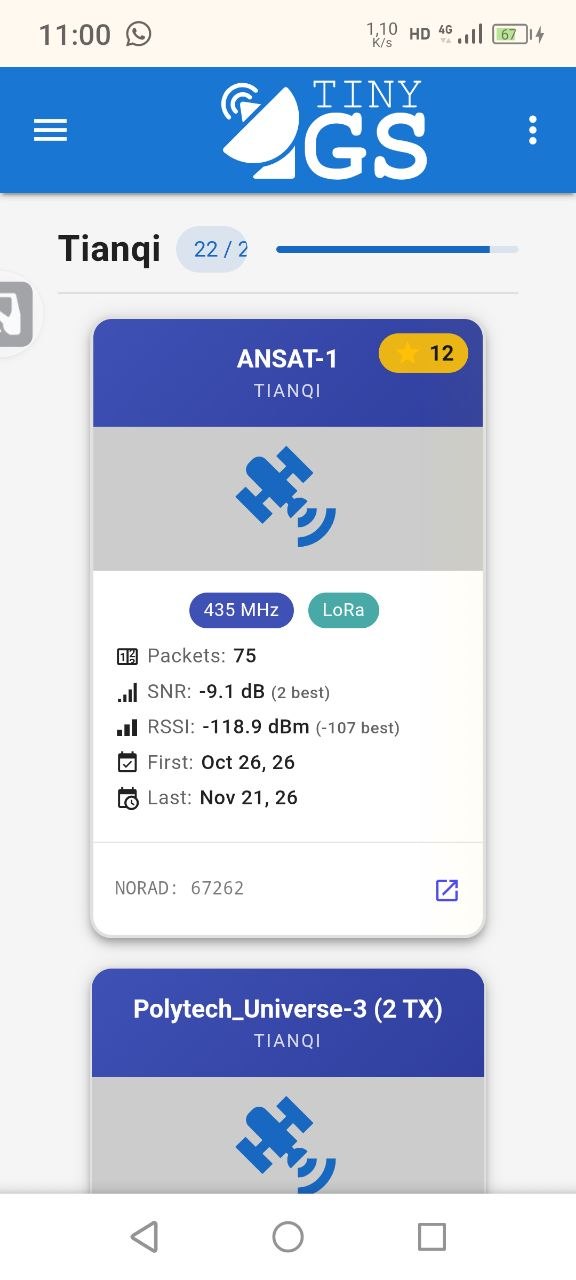
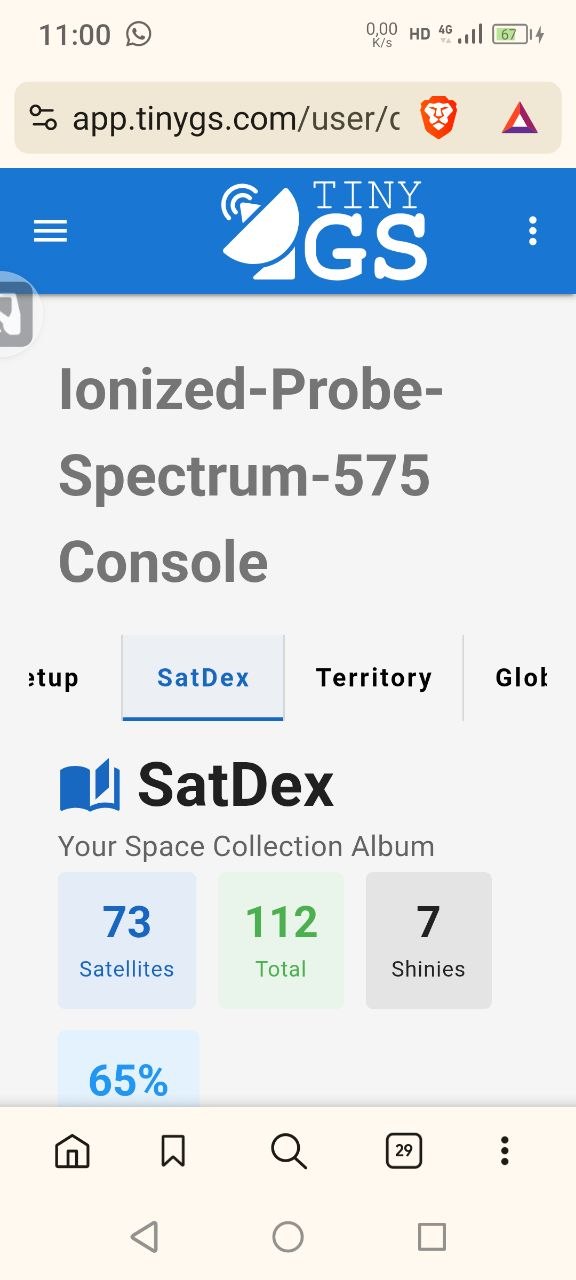
- ROM1 raised an issue with his station’s SatDex, noting that Shines were not being counted correctly, and shared screenshots illustrating the discrepancy between the expected and displayed totals. 🔗
Antenna Building
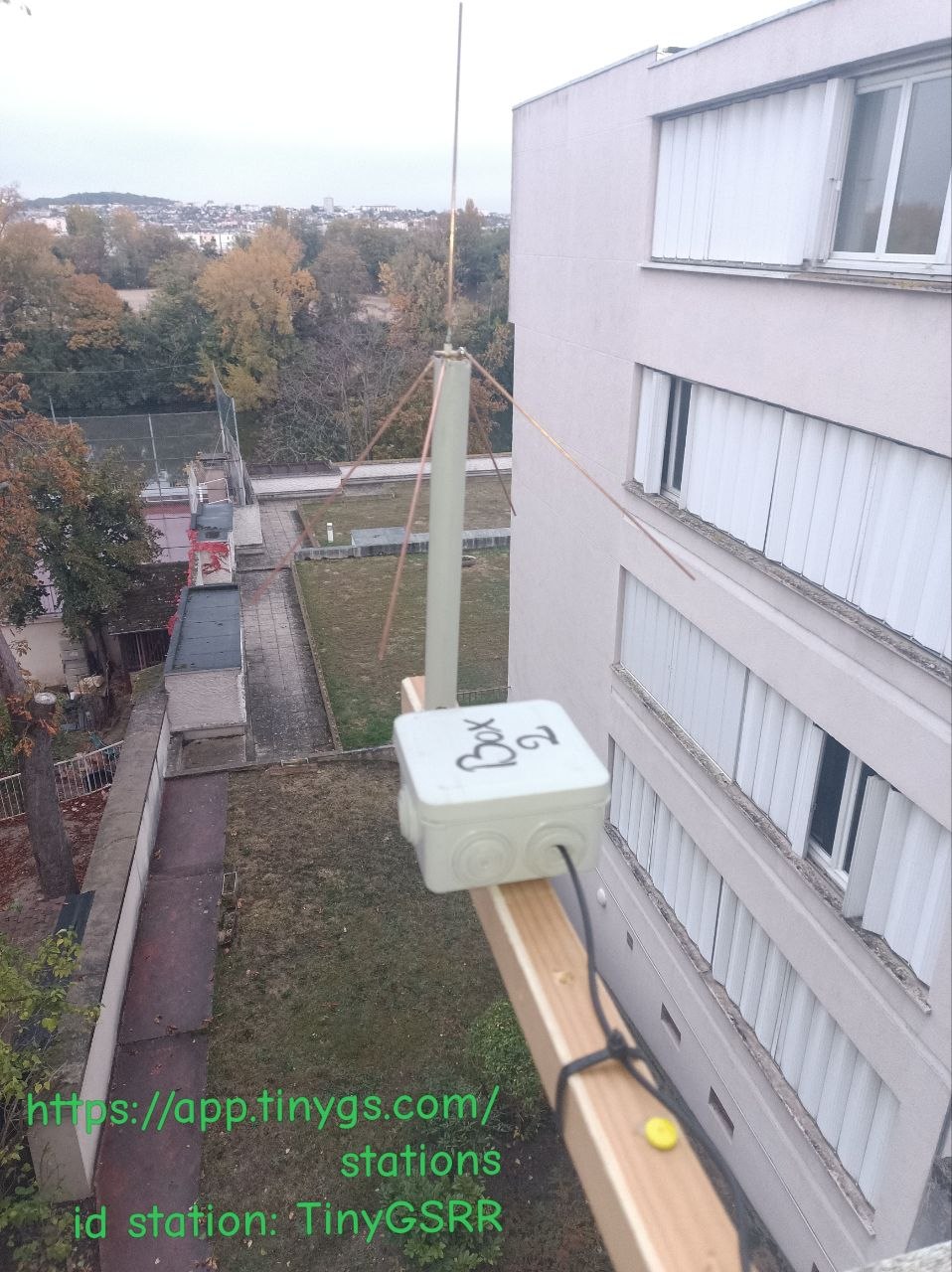
- ROM1 shared a photo of their very first station build, adding another newcomer setup to the community gallery. 🔗
New Satellites
- nuggetFries64 reported having submitted details for a new satellite registration to missioncontrol@tinygs.com following the tutorial, but having received no reply for over a month, and asked the community for help on the next steps. Days later, when asking about a particular satellite, he was advised to double-check the satellite page, where the object had in fact been listed for a long time — something he confirmed he had then managed to find. 🔗
- PE2BZ reported finding object 101399 from the Vostochny launch transmitting LoRa around 436.905 MHz, after cutting a 187.5 kS/s channel out of a 2.85 GB IQ recording. The signal showed rising chirps followed by 2¼ falling chirps as a start-of-frame marker, 62.5 kHz bandwidth, SF8 with 4.1 ms symbols, sync word 0x12, packets of roughly 0.43 s sent in pairs about 2 s apart and repeated near 30, 190, 242, 293 and 313 s, with a Doppler drift from about −3 kHz to −12 kHz confirming a satellite source; a follow-up post showed the raw SX1262 packet log from a station configured with autotune disabled for a low 10-degree pass over the west. 🔗
- K4KDR relayed that Jan (PE0SAT) had identified five additional CSTP satellites from the recent Soyuz launch and asked whether anyone has their frequencies or knows of differences in their LoRa parameters, linking to a launch overview article. 🔗
https://russianspaceweb.com/koen-kinosputnik-launch.html
Featured Conversations
- Bench experimentation with older LoRa radios dominated part of the week, as members explored running FSK reception on SX127x chips through custom firmware that has already been shown to work in practice. The platform assumes these boards cannot handle FSK at all, so auto-tune never attempts it and manual configuration is required, with one discussed workaround being to report the board as an SX1262 so the server enables FSK handling while the older chip does the real work. Hardware tweaks came up alongside it, including fitting a TCXO onto an SX1278 module, which proved hard to tell apart from stock behaviour and was complicated by a datasheet that offers little help. The trade-offs were weighed up as well: SX1262 boards stand out mainly for a temperature-compensated oscillator on some models, which supports the precise tuning FSK needs, while the 127x series was described as more capable in most other respects.
- Getting a first station online remained a recurring theme, and most snags traced back to the same step: the configuration page only answers when the computer or phone is joined to the station’s own access point rather than the home router, and trying a smartphone first avoids most connection-refused errors. Newcomers were walked through the official installer, the correct board variant to select and the project documentation, and several went on to choose hardware specifically capable of covering both LoRa and FSK satellites. Choosing a radio is only half the story, though — a station owner also reported that achievement counts were not being tallied correctly in their SatDex, backing it up with screenshots of the mismatch. Small discrepancies like this are easiest to catch when operators compare the SatDex against their own records over time.
- Antenna choice drew some blunt advice: a small helix was described as a poor use of copper for satellite reception, and a simple groundplane built from a coax connector and five pieces of wire was recommended as a far better first antenna. Eggbeater designs came up too, with the caveat that feed quality decides everything and that tuning one properly usually requires a VNA. Placement matters as much as geometry, and members were reminded to keep antennas away from noise sources such as light bulbs, switching regulators and PCs. The takeaway for anyone staring at silent passes is that a modest, well-placed antenna usually beats an ambitious one built without the tools to tune it.
- A satellite is now sending farewell messages from a 260 km orbit, with decay predicted for late November — a reminder of how brief some LoRa missions turn out to be. Continuous community tracking becomes especially valuable in the final weeks of a spacecraft’s life, when every pass adds to the record. The reception was captured and shared as the spacecraft winds down, giving the network a closing snapshot of the mission. Moments like this are part of why the community keeps listening long after a satellite’s first novelty has worn off.
- A newly detected LoRa signal from a recent Vostochny launch was characterised in impressive detail — 62.5 kHz bandwidth, SF8 with 4.1 ms symbols, sync word 0x12, paired 0.43 s packets and a clear Doppler drift confirming a satellite source — leaving only a full decoder to finish the job. Five more satellites from a Soyuz launch have been identified by the tracking community and are still waiting for frequency confirmation and LoRa parameter details. Between hunting down beacons in large IQ recordings and checking the satellite catalogue before assuming an object is missing, the week showed how much of satellite discovery still happens through patient, shared listening.
Latest Cubesats News
Engineered at Tech: Controlling a CubeSat - Georgia Tech College of Engineering
Georgia Tech undergraduates are operating a NASA CubeSat from the Daniel Guggenheim School of Aerospace Engineering’s Mission Operations Center for nine months. The student-built satellite will test a next-generation propulsion system that uses a single fuel to power two types of thrusters. The APDM mission is featured in the latest episode of Engineered at Tech, hosted by undergraduate Harrison Burnside. The page also highlights other Georgia Tech research on campus sustainability, river pathogen tracking, and advanced manufacturing.
Curtin Uni strikes deal on cubesat comms for next three missions - iTnews
Curtin University will use SSC Space Go’s ground station at the Western Australia Space Centre near Dongara to communicate with Binar-5, Binar-6 and Binar-7. The three cubesats are scheduled to launch at the end of this month and be deployed from the International Space Station in January 2027, with missions expected to last about six months. Binar-5 focuses on Earth observation and spacecraft operations; Binar-6 supports communications and technology demonstration; Binar-7 adds enhanced payload and mission capabilities. The program supports student training, Australian sovereign space capability and development of low-cost satellite technologies for scientific and commercial use.

3D printing CubeSat bodies for cheaper, faster missions
ESA has 3D-printed CubeSat structures using an electrically conductive PEEK plastic made printable with nano-fillers. The PEEK bodies are flight-capable and include conductive lines that replace the usual wire harness connecting CubeSat subsystems. ESA is developing a space-optimized PEEK printer for zero-g tests and eventual use by astronauts on the International Space Station. On-orbit 3D printing could cut costs and improve recyclability, and a PEEK-printed part is due to fly on Meteosat Third Generation weather satellites.

With 32 teams from 6 countries, UNSAM will host the CubeDesign satellite competition …
UNSAM will host the fifth CubeDesign Latin American small-satellite design competition from November 24 to 27, with 32 teams from Argentina, Bolivia, Brazil, Chile, Peru, and Uruguay. Twenty-one university teams will compete in CubeSat by capturing and processing ADS-B signals from aircraft, while 11 high school, technical, and university teams will deploy CanSat devices from drones to collect descent data. The event includes optional thermal and vibration tests, mission simulations, talks by CONAE, CNEA, and space-industry specialists, plus a SpaceArts category for artistic, visual, or narrative projects. Argentina and Brazil each have 13 teams; judging is by space-sector professionals, and the program closes Friday 27 with awards and a sky-observation session.
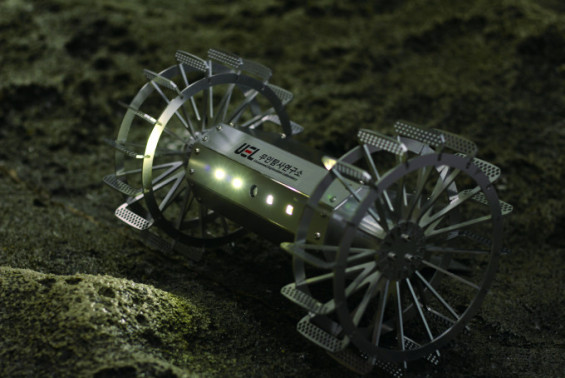
Nuri Launches 15 Satellites as Each Begins Its Unique Mission in Space - DongA Science
Nuri (KSLV-II) launched 15 satellites on October 7, its largest payload, and released five satellites in different directions. NeonSat-2 to -6 will image the Korean Peninsula more frequently for disaster response and national security. BiCheon-12 will grow drug crystals in microgravity for dementia treatment, while Ulysses tests lunar rover components in near-Earth space. GBSat, built by high school students, aims to measure space radiation but experienced an unexpected spin-rate increase after launch.
Skyroot Partners With HEX20, Exolaunch, OhmSpace For Second Vikram-1 Flight
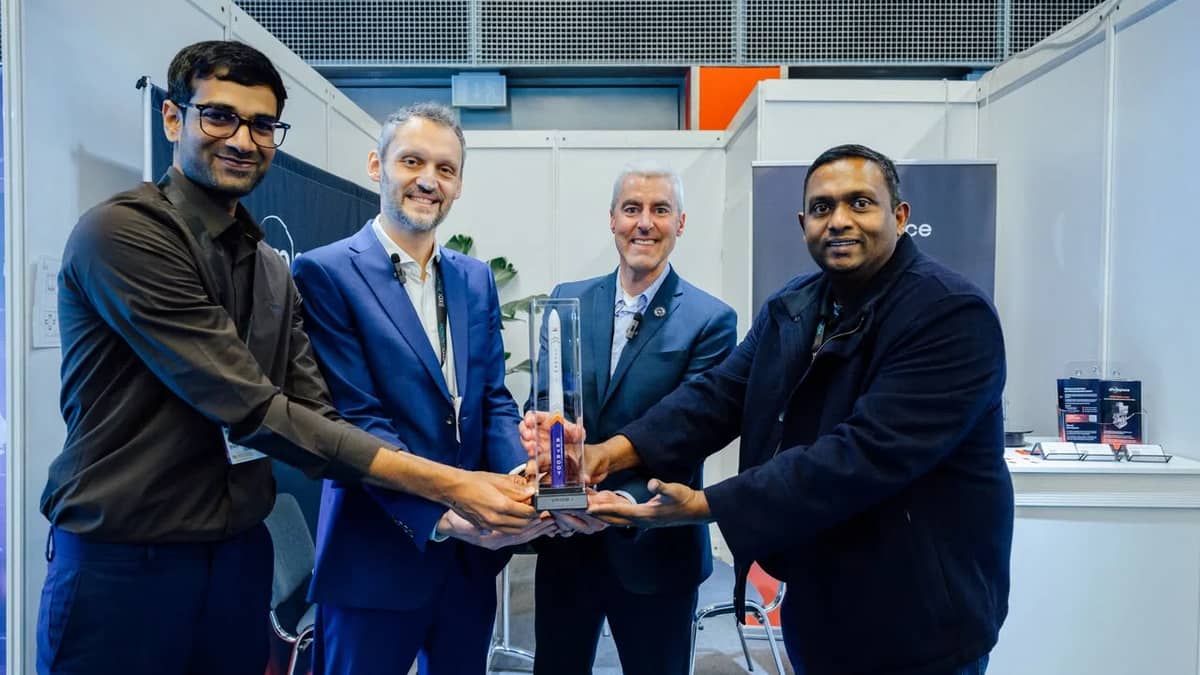
Skyroot Aerospace partnered with HEX20, Exolaunch, and OhmSpace for Vikram-1’s second orbital flight, announced at Space Tech Expo Europe 2026 in Bremen. The mission combines launch services, satellite development, deployment systems, and in-space propulsion. It will carry HEX20’s NILA III 4U CubeSat and Skyroot’s SCOPE 4U satellite. Exolaunch will provide an 8U deployer, and NILA III will demonstrate OhmSpace’s high-temperature resistojet in orbit.

Lunar Prospecting Satellites: GomSpace Wins €8M Phase Two Contract, Names No …
GomSpace won an €8 million phase-two contract for two lunar prospecting satellites, with delivery scheduled for late 2027 and the customer identified only as a leading North American space company. The release names no instrument, orbit type, launch date, or critical design review date; the first phase was a €2.9 million initial-design contract announced Jan. 9, 2026, bringing disclosed awards to €10.9 million. Orbital prospecting measures indirect proxies for water, and small lunar orbiters have a documented record of propulsion and software failures; GomSpace cites Juventas heritage, but that CubeSat has not yet completed its mission. The €89.1 million kronor contract equals about 22% of order backlog and 17% of trailing 12-month revenue, while GomSpace says it will need additional funding and Inderes treats dilution as a base-case risk.

Rocket Lab reaches 100 launches: the company even surpasses SpaceX’s record | VIDEO
Rocket Lab completed its 100th Electron launch on 14 November from New Zealand, carrying a Japanese iQPS Earth-observation satellite. The mission, named “The Mountain God Rises,” was Rocket Lab’s 11th launch for Tokyo-based iQPS and deployed a SAR satellite at 575 km. CEO Peter Beck said no other commercial rocket, including SpaceX’s Falcon 9, reached 100 launches as quickly; Rocket Lab cites 96% reliability over 99 launches. Rocket Lab is developing the partially reusable, crew-capable Neutron medium-lift rocket, with first flight no earlier than 2027.

The CubeSat ERMIS-3 achieves a laser communications link with Earth
Greek CubeSat ERMIS-3 successfully demonstrated an optical laser link with Earth, marking Greece’s first optical connection to a satellite in low Earth orbit. The satellite, developed by the National and Kapodistrian University of Athens, connected to the Holomondas HolOGS-1 optical ground station using Astrolight terminals with ESA support. The link was established shortly after commissioning; optical communications offer high data rates but require precise pointing, tracking, and favorable atmospheric conditions. ERMIS-3 launched on March 30, 2026, alongside ERMIS-1 and ERMIS-2 as part of Greece’s national space program to test small-satellite communications technologies.

10 Satellite Buses Behind the Spacecraft in Orbit - KeepTrack.space
Satellite buses are the non-mission platform providing power, propulsion, attitude control, communications and thermal control while carrying customer payloads. KeepTrack.space profiles ten bus families—including Eurostar, Spacebus, 702, SSL-1300, GEOStar, I-2K/I-4K, PROTEUS, Myriade and M6P—with real catalog examples. Bus counts are unreliable for ranking: the catalog has 1,590 distinct bus values, families appear under multiple labels, and manufacturer tallies count launches or satellites built differently. Examples include Eutelsat 172B on Eurostar 3000e, Eutelsat KONNECT on Spacebus NEO100, O3b mPOWER on 702X, EchoStar 25 on SSL-1300, and Lemu Nge filed as Cubesat 6U.
What’s next
The TinyGS newsletter is only ever as good as the conversations behind it, and this week proved it once again: someone flashing a first board, someone pushing an SX127x chip where the platform says it cannot go, someone decoding an unknown beacon chirp by chirp. Join the TinyGS Telegram channel to ask your own questions, share your bench experiments and station photos, and help the next operator get their first satellite decoded.