tinyGS
· TinyGS Community · 12 min read
Weekly Newsletter - November 8, 2026
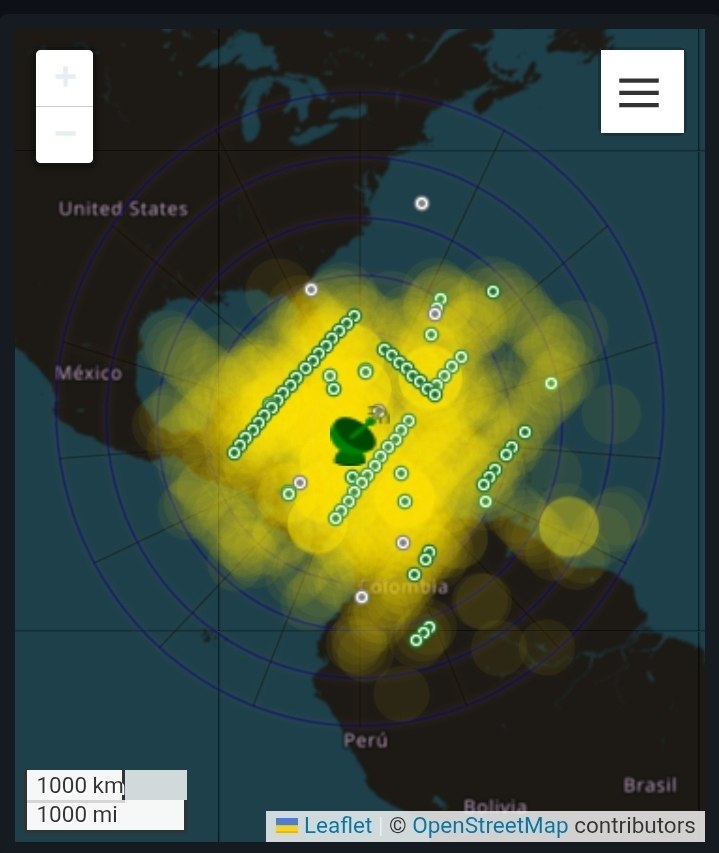
This week the community worked through a stubbornly noisy station and the surprisingly large difference antenna placement can make, while also digging into G3RUH scrambling, zero-bit preambles and SX1278 long-packet experiments. Between a scrappy solar-powered copper-film build, a firmware push to receive FSK frames beyond 64 bytes and a clear explanation of why receive-only stations are forgiving on SWR, it was a week of practical troubleshooting and hands-on experimentation.
Highlights
General
- MeOnMes shared photos of a station moved to a fourth-floor location with fewer nearby buildings, reporting that no packets were coming in and that the noise floor sat around -99 dB even after adjusting the antenna parameters for 400 MHz; the community confirmed the coordinates near Bogota looked correct, explained that the antenna parameter field is only a comment while autotune is what actually matters, noted that -99 dB of noise is far too high when satellites arrive around -120 dB, and advised moving the antenna at least a metre away from the laptop using a longer USB-C cable or power bank, recommending a simple groundplane built from the stock antenna with a tutorial that describes capturing several hundred packets a day in a quiet environment. 🔗
https://t.me/tinyGScom/78473/232881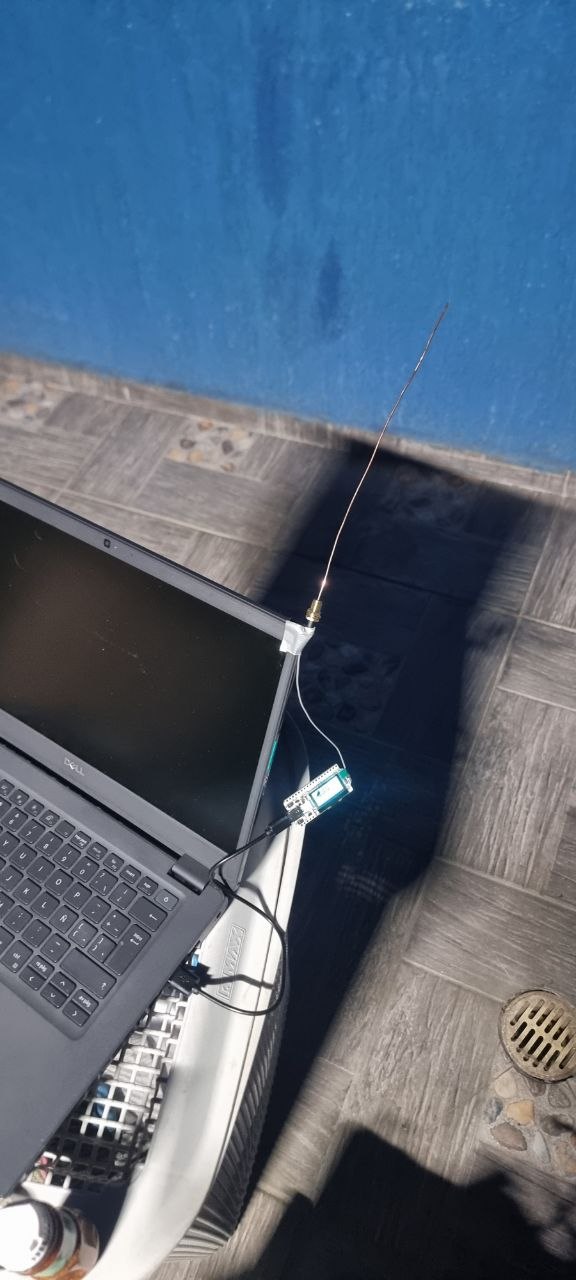
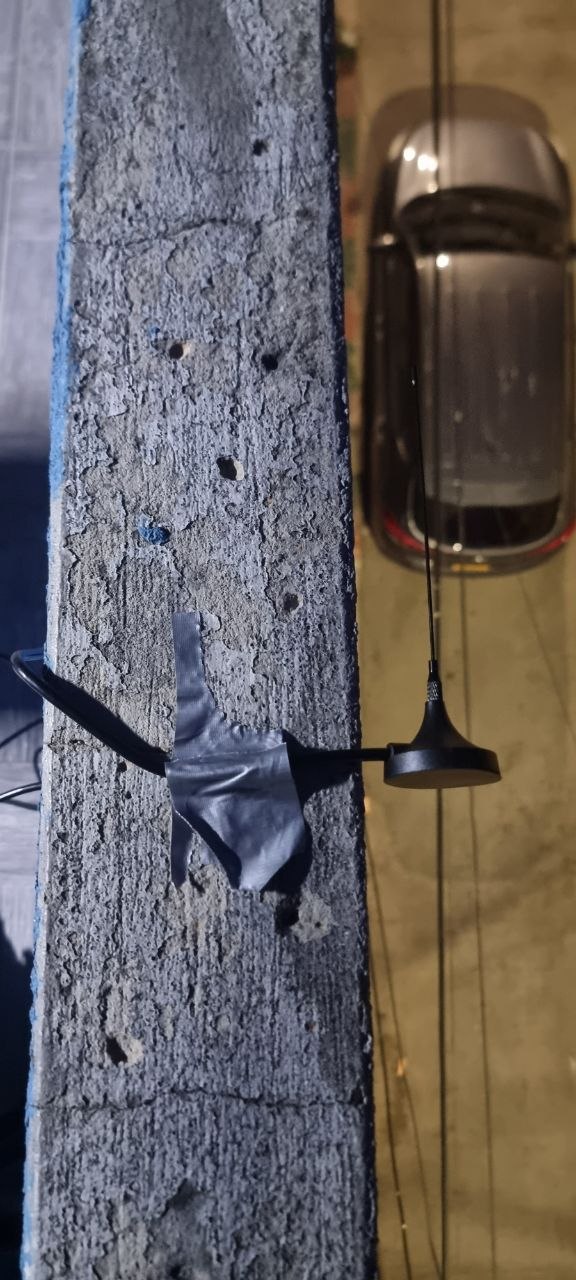
- David reported that his 433 MHz ground station was playing up and that the board was no longer available from Amazon UK, asking what hardware is recommended these days, and was pointed to the Heltec V3 while confirming he already owned a Heltec Tracker 433 board with community notes describing it as viable; he also described receiving Starlink with a 433 MHz module locked to a single frequency around 137.055 MHz with auto-tune off and was advised that auto-tune is preferable because there are many more interesting satellites on 137 MHz, that a 433 MHz module loses roughly 10 dB of sensitivity compared with a dedicated 140 MHz module, and that a preamp can recover much of that loss. 🔗
- Fabio IZ0IBA raised a question about satellites configured with zero-bit preambles, wondering whether such configurations are evidence that the satellite does transmit a preamble to stabilize the RF chain before sending data; Stefan/OE6ISP suggested these could be AX.25 G3RUH signals, which often do not use the 1010101 sync pattern physically and instead have both preamble and syncword G3RUH scrambled, making decoding difficult or impossible with the SX1262. 🔗
- EA4HDZ shared that the software had been installed a few days earlier but expressed uncertainty about whether the station parameters were truly optimal, singling out antenna bandwidth as the main open question; the community replied that because TinyGS stations are receive-only, SWR is not critical, and that a 433 MHz groundplane for example covers the whole 400-460 MHz range with sufficient performance, a reassuring practical answer that the new operator acknowledged with thanks. 🔗
Technical Problems
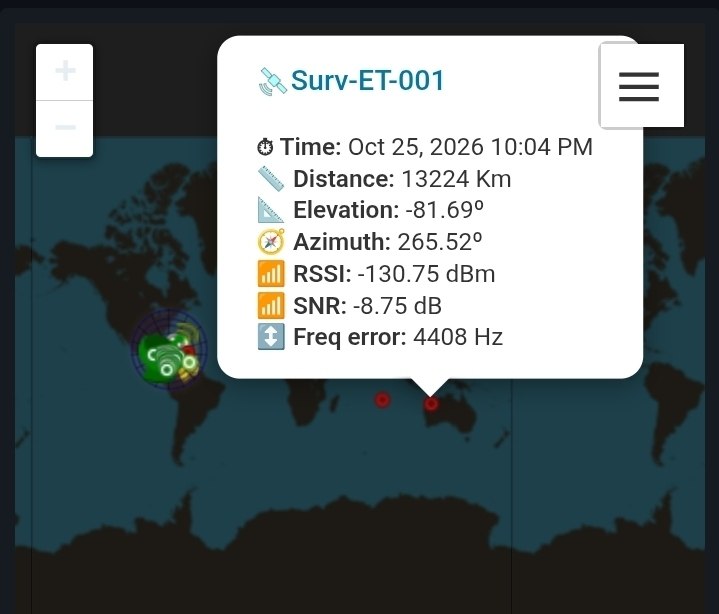
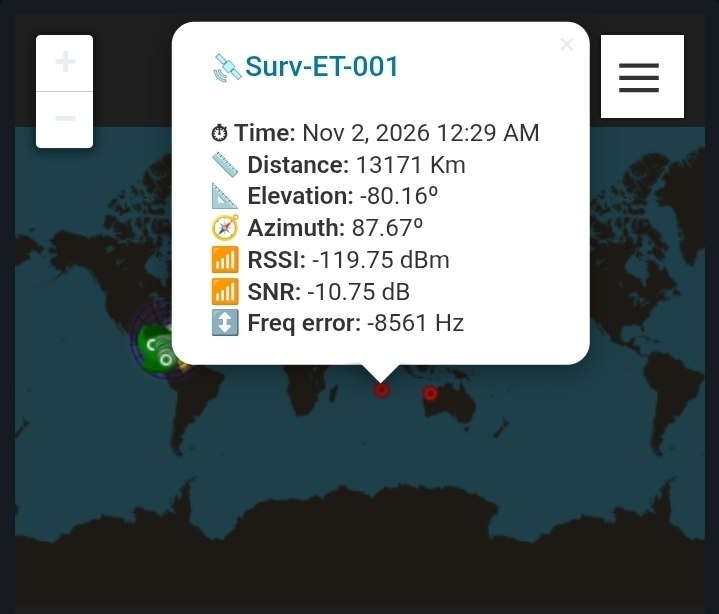
- Anthony1876 posted screenshots of unusual azimuth and elevation readings that appeared twice for the same object and asked whether such values were even possible; a member confirmed it is expected behaviour for an object under surveillance, since its TLE is not yet known and therefore the predicted position cannot be computed, which makes the reported azimuth and elevation meaningless until a TLE becomes available. 🔗
- Ahmad_9K2DB asked what radio error -2 means; a member explained that it indicates no communication with the radio chip, usually caused by the wrong module being selected in the internal configuration page, and asked which module was fitted so the setting could be checked, while another member shared a link to the RadioLib status code reference to help narrow down the failure. 🔗
https://jgromes.github.io/RadioLib/group__status__codes.html - santiago reported being unable to reach their account because the login link delivered through the Telegram bot was always rejected as already expired, even when requested and used right away; after waiting several days, resetting the bot conversation and requesting fresh links with no change, they asked whether others had hit the same problem and how it could be resolved. 🔗
- Network_ne asked how to export all packets received by a station since its very first day, explaining that repeatedly pressing ‘Load More’ on the station page to expand the export file is impractical when dealing with thousands of packets; another member responded that, despite the topic appearing in the new-satellites section, there did not appear to be any other option for retrieving all of the old data. 🔗
Beta Firmware Testing
- Fabio IZ0IBA ran test-mode experiments using GNU Radio-generated FSK/CoRAL frames and noticed packets reaching MQTT; the exchange clarified that test-mode packets stay in station logs rather than satellite logs, and that the MQTT send in Radio.cpp can be commented out to avoid uploads, with the test aimed at long-packet handling and frequency-error tolerance in SX1278 receivers. 🔗
- Fabio IZ0IBA asked about autotune behavior while developing a firmware version for SX1278 TBeam boards that can handle packets larger than 64 bytes, the current limit blocking FSK reception; manual tuning tests were promising, but FSK autotune priority still allowed other LoRa or surveillance targets to be selected, prompting questions about whether the MQTT server excludes SX1278 boards from FSK tuning and how best to collect positive FSK decoding observations. 🔗
- Notsure7 explained that autotune only works reliably on known compatible hardware and suggested a manual alternative: tune two stations individually, one of them built around an SX1262, and compare their results directly. 🔗
Share your setup
- Anthony1876 shared a solar stealth setup featuring a DIY copper film antenna and cardboard enclosure, zip-tied to cement blocks next to a 7 V solar panel outside. 🔗
- Anthony1876 shared a station build that drew appreciative reactions from the community, while noting that the setup remained a work in progress and that the antenna in particular still needed further refinement before it was finished. 🔗
- Anthony1876 shared a photo of a festive evening around their station, adding a short caption and a gem emoji to set the mood. 🔗

Balloons
- grzewik relayed a question on behalf of CosmoPK about the procedure for getting a balloon tracked by TinyGS and whether there is a specified packet format for balloon telemetry. 🔗
Featured Conversations
- Antenna placement and local interference dominated troubleshooting, with the community noting that a noise floor near -99 dB is far too high when satellites arrive around -120 dB. Moving the receiver away from a laptop using a longer cable or power bank, and building a simple groundplane from the stock antenna, were presented as practical ways to turn a marginal station into a productive one.
- Zero-bit preambles, G3RUH scrambling and SX1278 long-packet handling sparked deeper technical discussion. AX.25 G3RUH signals may scramble preamble and syncword in ways that complicate SX1262 decoding, while firmware work is targeting FSK frames larger than 64 bytes and better autotune behavior on TBeam hardware.
- Receive-only station design offered a useful rule of thumb for newcomers: because TinyGS stations do not transmit, SWR and antenna matching are far less critical, and a basic 433 MHz groundplane can cover the 400-460 MHz range well enough for satellite reception.
- Community support ranged from practical station setup to onboarding friction. Members shared a solar-powered copper-film antenna build, helped a newcomer locate the station bot, and flagged a login-link expiry problem that may affect new operators trying to register and monitor their ground stations.
- Balloon tracking and historical data access remain open areas. A question asked how balloons can be reliably tracked by TinyGS and whether a packet format is specified, while another operator sought a practical way to export a station’s complete packet history beyond repeated ‘Load More’ clicks.
Latest Cubesats News

A personal satellite in space is no longer science fiction: how much does it cost to launch into orbit
Launching a small CubeSat can cost tens of thousands of dollars, while a full mission runs from about $10 million to hundreds of millions depending on size, orbit, and launch vehicle. DIY CubeSat kits cost roughly $7,000–$8,000, but launching a 1U satellite on Rocket Lab has been offered for $50,000–$90,000, with fixed private launches cited at $5.5 million. Satellite communications alone can cost about $1.5 million per year, putting launch plus first-year operation for a small satellite at at least $11.5 million before manufacturing. CubeSats typically stay in low Earth orbit for one to three years, while higher-orbit satellites can remain for up to 150 years, raising space-debris and atmospheric-chemistry concerns.

Turkey, Kazakhstan and Uzbekistan advance in the 12U TDT-SAT cubesat - Foro3D
Turkey, Kazakhstan and Uzbekistan are developing the 12U TDT-SAT cubesat, a roughly 16 kg satellite based on the XL nano platform built in Astana by Ghalam. Launch is planned for the second half of 2027 from Baikonur, followed by about two years in a 550 km Sun-synchronous orbit. The cubesat integrates an optical camera, data processing, attitude control, communications, power and propulsion for Earth observation and in-orbit technology testing. The project aims to build joint technical experience and regional space cooperation, laying groundwork for future shared missions and a common space station module.

A dossier reveals Pham Nhat Vuong’s plan: Launching four small satellites the size of a cake box…
VinSpace, part of Vingroup’s ecosystem, plans to launch four 3U CubeSats—each about 10 × 10 × 30 cm—into a roughly 500 km low Earth orbit with a 47-degree inclination in April 2027. The satellites will fly on a SpaceX Transporter rideshare from Cape Canaveral, Florida, under a contract announced in August 2026. An IARU filing lists the mission goals as training students and young engineers, studying the space environment, and testing domestically developed satellite equipment on orbit. The IARU declined VinSpace’s amateur-radio frequency coordination request because the project lacks a specific amateur-radio mission, a decision that does not prohibit the launch; VinSpace was founded in November 2025 with Pham Nhat Vuong holding 71%.

Drone warfare in space: Swarms of autonomous, laser-shooting cubesats could defend …
U.K. startup Shield Space is developing swarms of up to 100 small, low-cost, autonomous cubesats to protect Western satellites, adapting lessons from drone warfare in Ukraine. The space drones would use lasers, microwaves, or kinetic standoff effectors and operate autonomously even if ground controllers lose contact. Shield Space plans Project Broadsword in Q4 2027 on SpaceX’s Transporter-21, demonstrating rendezvous and proximity operations with an 8U cubesat and 3U target, moving from 100 km apart to within 100 m. Major hurdles remain in size, weight, power, AI training data, testing, and rules of engagement; experts compare the concept to Cold War Brilliant Pebbles and caution it will require years of development.

ESA partnership’s CubeSat achieves ‘challenging’ laser link to ground - Optics.org
ERMIS-3, an 8U CubeSat built by the National and Kapodistrian University of Athens, established Greece’s first optical link from low Earth orbit to the Holomondas Optical Ground Station (HolOGS-1). The link used Astrolight’s ATLAS-1 optical terminal and validated precise pointing, acquisition and tracking for high-data-rate small-satellite communications. The demonstration was supported by ESA under Greece’s National Space Programme and occurred weeks after the satellite’s commissioning. ERMIS-3 launched on 30 March 2026 with ERMIS-1 and ERMIS-2 to test communications technologies, including optical links for Earth-observation data transfer.

CROUSE | Come for the Engineering, Forced to Complete the Checklist
Cornell engineering students must complete six liberal studies courses (18 credits), about $36,000 at Cornell’s part-time rate, often chosen as easy-A fillers. The requirement creates opportunity costs, limiting advanced electives, research, minors, or lighter loads for students like the author. The author argues the system produces credits rather than outcomes and that most students do not gain the intended ethics, communication, or cultural awareness. Cornell should integrate ethics and communication into engineering contexts, following Canadian accreditation models, and reevaluate the requirement.

FramSat-1.5: Norwegian students launch their CubeSat into space - Foro3D
Norwegian students Lars Andreas Weel Aasen and Tara Linnea Edvardsen from NTNU have presented FramSat-1.5, a CubeSat to be sent into space. Developed in Trondheim, the project is part of practical aerospace technology training and demonstrates how university teams can access real launch platforms. The team worked on subsystem integration, vibration testing, and communications validation, turning the classroom into an orbital test bench. The shoebox-sized satellite aims to survive launch and respond from orbit, setting a precedent for Norwegian applied research and student missions.

Flying first on Ariane 6 - ESA
Ariane 6’s inaugural flight will carry a diverse set of payloads from nine countries and dozens of organizations, including commercial companies, space agencies, and universities. Missions range from NASA CubeSats and student satellites to reentry capsules, smart-farming satellites, and experiments testing self-healing solar cells and black-body radiation. Four deployers, including RAMI and EXOpod, will release CubeSats about 600 km above Earth, while YPSat and four fixed experiments stay attached to the upper stage. The flight is intended to demonstrate Ariane 6’s versatility and cost-conscious design while offering a unique opportunity to gather data with smaller payloads.
Deep space pioneer Henon signs to launch with Plato - ESA
ESA signed the launch services contract for its Henon deep-space CubeSat mission, confirming it will fly on Ariane 6 alongside the Plato mission in early 2027. Henon is ESA’s first stand-alone deep-space CubeSat and is being developed through the GSTP programme with Argotec Italy as prime contractor. The spacecraft will independently travel into deep space, communicate directly with Earth, and monitor solar activity to provide earlier warnings of solar storms. Launching as a secondary payload will give Henon the deep-space injection it needs, while a feasibility study confirmed Ariane 6 can accommodate up to four 16U CubeSats.

A software failure left the satellite intended to inspect space debris out of contact
Otter 24C was a NASA-funded Starfish Space experimental satellite designed to inspect defunct objects in low Earth orbit. It launched on October 1 and communicated initially, but contact was lost during commissioning when a protection-software error left its radio off. NASA and Starfish Space declared the spacecraft unrecoverable after attempts to restore the link failed. The SSPICY mission planned to inspect up to four U.S. objects in LEO; Starfish is working with Astro Digital to correct the software and review test procedures.
What’s next
Join the TinyGS Telegram channel to take part in these discussions and share your own experience. Whether you are chasing down a noisy antenna, testing firmware changes, building a station from scrap materials or asking how balloons can be tracked, your questions and findings help others build better stations and keep the network growing.