tinyGS
· TinyGS Community · 11 min read
Weekly Newsletter - September 20, 2026
This week TinyGS welcomed a genuinely new way to run a station — a pure-Python LoRa decoder paired with an SDR ground station client — while Brazil's first educational station went live at a school in São Paulo. Between a deep community investigation into why LNAs keep dying, a long debate on circular versus linear antennas and the Tianqi satellites that refuse to be heard, and a bug hunt in the website's telemetry decoding, it was a week that mixed fresh hardware ideas with serious troubleshooting.
Highlights
General
- Hamzah04 shared a new way to run a TinyGS station without an ESP-based board: a pure-Python LoRa decoder (softlora) paired with an SDR ground station client, built over the summer as part of GSoC 2026 with LibreCube. Plugging an SDR into any Linux PC, installing the tinygs Python package and joining the network over MQTT is enough to get started, and testers were warmly invited, since both working and broken stations were described as equally useful feedback while the project is in active testing. 🔗
https://studhamza.github.io/hamza-folio/blog/2026/tinygs/
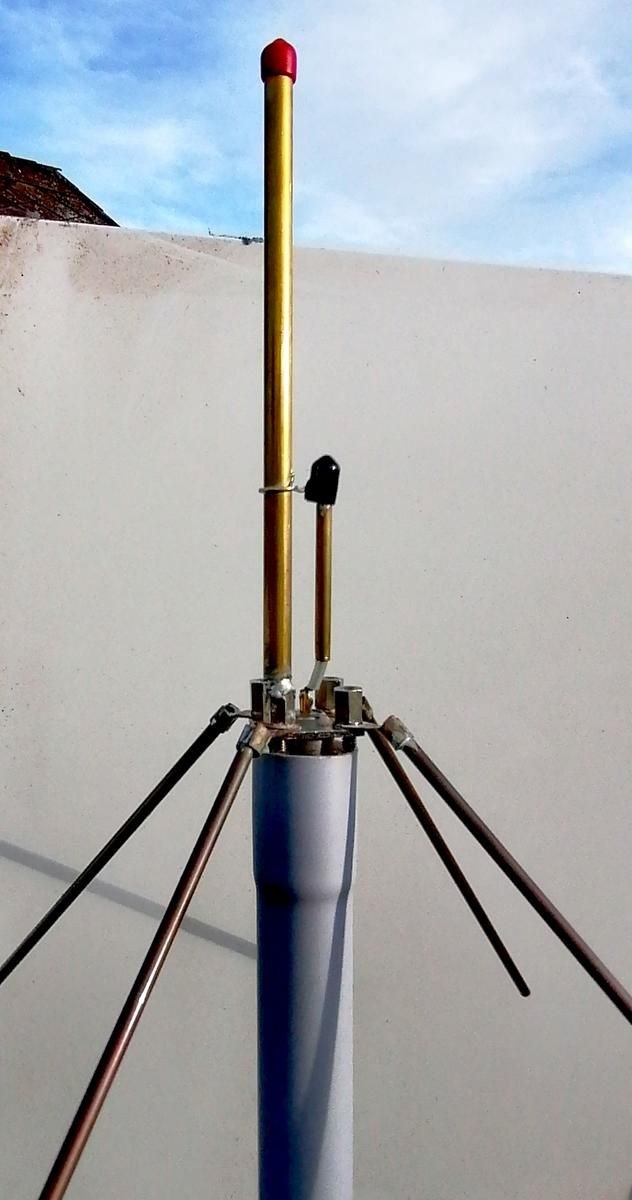
https://gitlab.com/librecube/lib/python-tinygs - dbrunod announced that a new educational TinyGS station at Colégio Salgueiro, a school in Interlagos, São Paulo, Brazil, was finally live after testing and adjustments, running a 401 MHz ground-plane antenna. The station is the first educational TinyGS installation in Brazil and is intended as a hands-on tool for students, linking physics, astronomy, electronics and space communications to real satellite passes, the Doppler effect and telemetry, and it had already logged good receptions including Tianqi-29 from over 1,200 km away. 🔗
https://app.tinygs.com/station/Salgueiro@1150742650 - Fabio IZ0IBA reported a software bug in the TinyGS website telemetry decoding script for the satellite PROVES_Electra, where each received packet produced the error “Render error: e.toFixed is not a function” even though manual packet decoding stayed correct, pointing to a problem confined to the website’s decoding logic. He also noted that MQTT automatic tuning appeared to be working, with his station changing frequency as scheduled, although no information was yet showing up on the website console. 🔗
- Fabio IZ0IBA observed that several satellites of the Tianqi constellation were missed even on passes that were optimal for his antenna, while others arrived very strong despite similar distance and expected power. He described testing several antennas, mostly 70 cm ham-band models plus a custom 1/4 lambda ground plane built for TinyGS with SWR below 1.7 from 400 to 450 MHz, and mentioned he was building a quad-helix antenna for a more consistent radiation pattern, highlighting that the Tianqi-27 pass at 21:43:47 was copied by only one station while Tianqi 23 and 26 were received by 50-70 stations. 🔗
- Stefan/OE6ISP explained that the Tianqi satellites do not all transmit on the same frequency — some on .265 and some on .450 — so satellites seen passing may simply not be tuned in. He noted that the logged Tianqi signals were all a little weak, suggested the antenna was perhaps slightly high in frequency, and advised against chasing the constellation at all, describing it as a kind of “spam” that suppresses more interesting passes and mentioning that he had blocked it on certain stations. 🔗
- Stefan/OE6ISP shared his experience that circular omnidirectional antennas tend to make things worse for satellite reception, since the polarization mismatch between linear and circular signals costs about 3 dB constantly and can reach full cancellation on the LHCP Tianqi satellites, potentially explaining why certain packets are never received. To test this he set up two identical stations, one with a j-pole and one with an eggbeater, and found the circular version performed significantly lower. He then turned to urban noise, noting that TETRA around 395 MHz is the main interference source in the EU and can be reduced with a high-pass filter or a diamond diplexer, that a horizontally polarized antenna can suppress local noise by a few dB since terrestrial signals are usually vertically polarized, and that a vertically mounted 3-to-5 element yagi close to the ground often works well in cities. 🔗
- Fabio IZ0IBA thanked the community for the antenna guidance, noting he is fairly new to satellite listening and needs a few experiments to find what works best in his environment. He observed that some stations using a turnstile antenna report good reception, that a go and vertical antenna performed well for low-elevation passes, and that a V-shaped dipole has much wilder elevation sensitivity but needs many passes for clear results, and said he planned to experiment with filters, expecting them to help more than an LNA given the in-band noise. 🔗
Technical Problems
- dbrunod asked about inconsistent behaviour in the web interface on the latest Chrome after returning to the project: the auto-tune priority tags appear only sometimes, cannot be interacted with when they do show, and seem to be visible only on mobile, with the same applying to some logged-in views such as passes that do not display on PC. He asked whether this was a browser version issue, an option that needs enabling, or a bug, and the query was also reposted in the General topic but had not been answered at the time of the log. 🔗
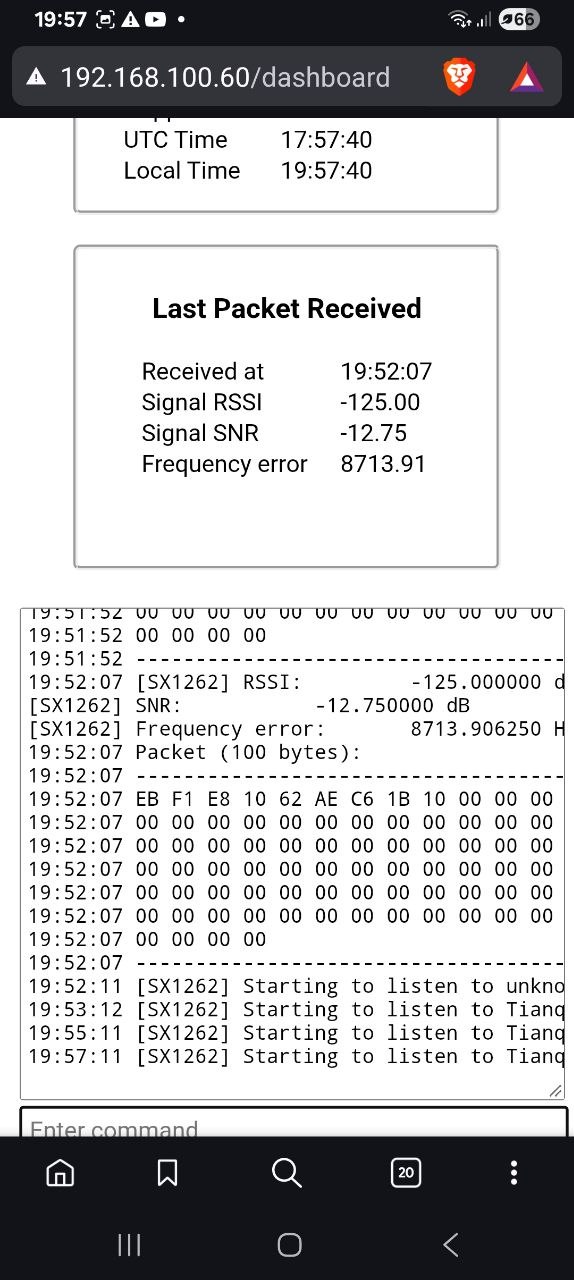
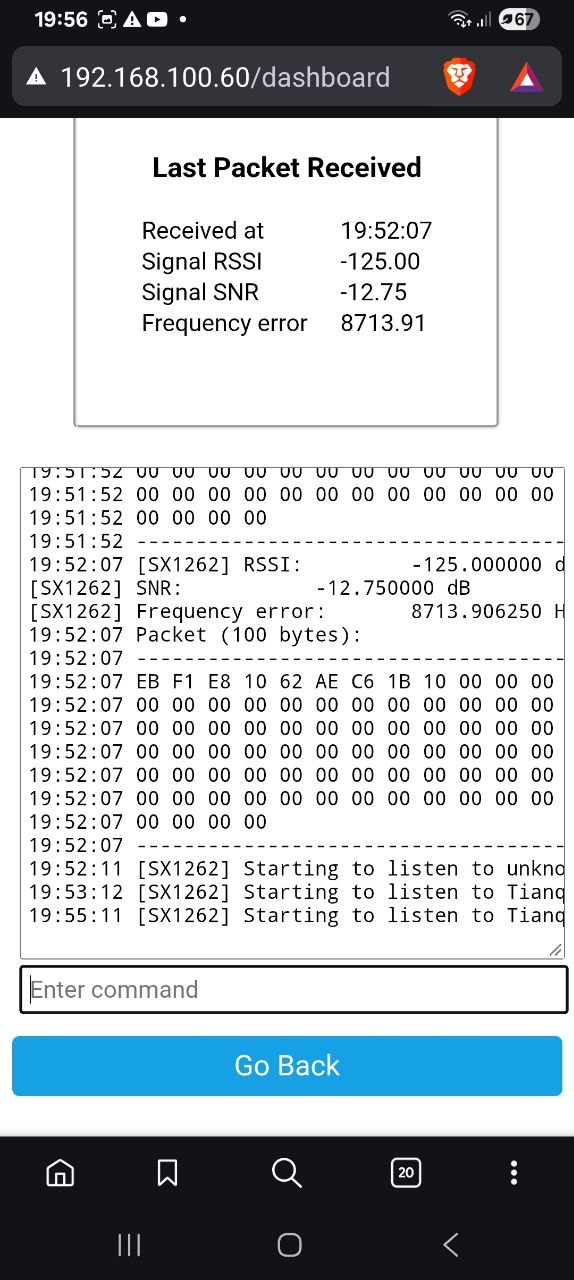
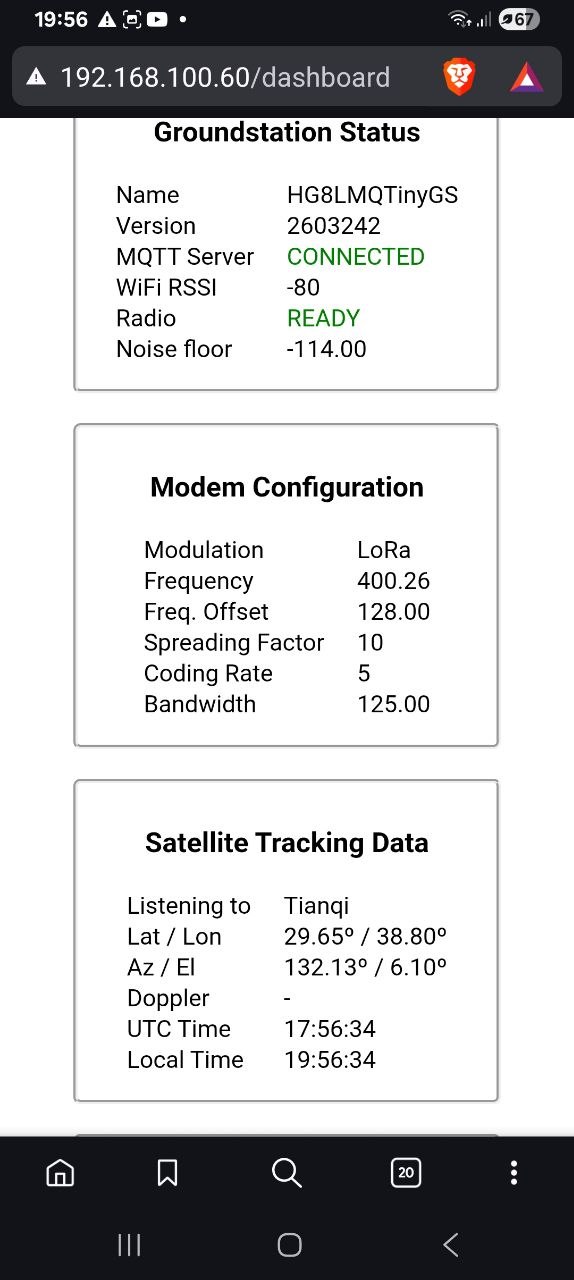
- Will shared that his board was working and connecting properly to the MQTT server, posting a few photos of the hardware setup and mentioning that the website console was not yet ready at the time. 🔗
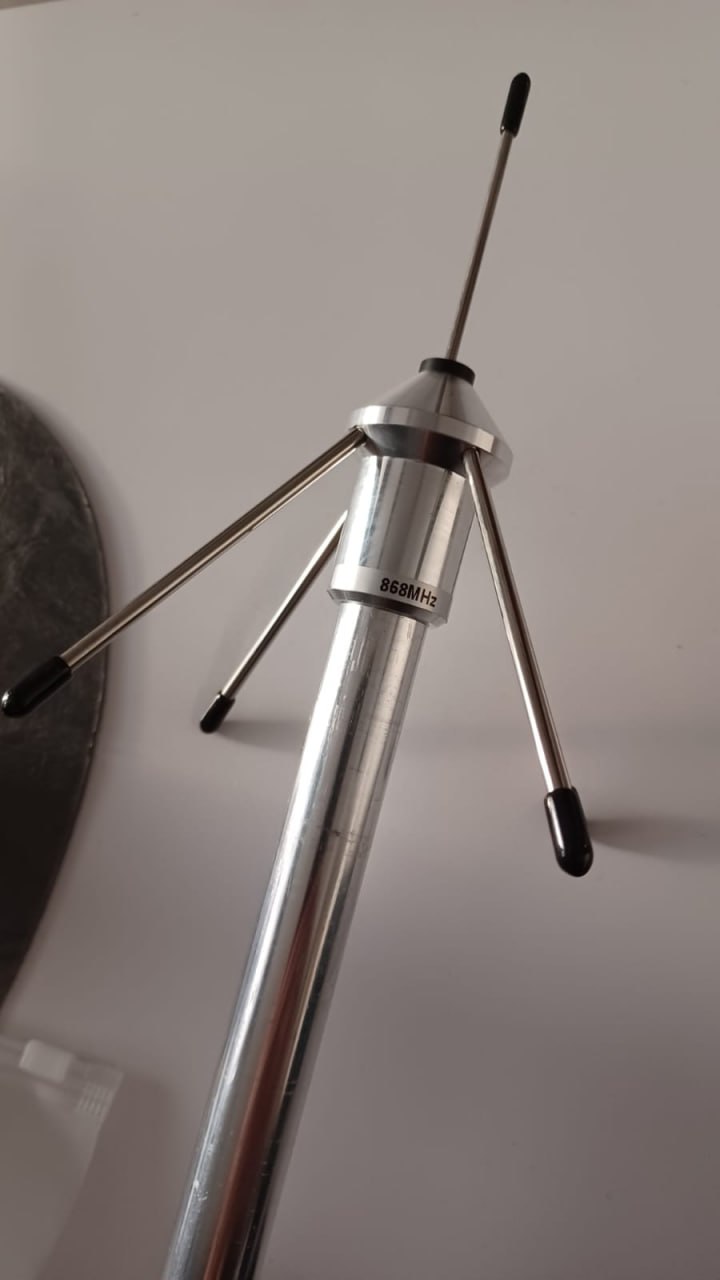
- IU1VDD_Tony reported that his station IU1VDD_868 had been running for five months, during which he had already replaced five LNAs bought on AliExpress: the units worked at first but failed after a while, and some were found overheating. He asked the community for a link to an affordable but genuinely long-lasting LNA, noting that he runs an 868 MHz ground-plane antenna and only uses an LNA on 868 MHz rather than on 433 or 137 MHz, and later added that he was left with a box full of dead amplifiers and had to find a replacement. 🔗
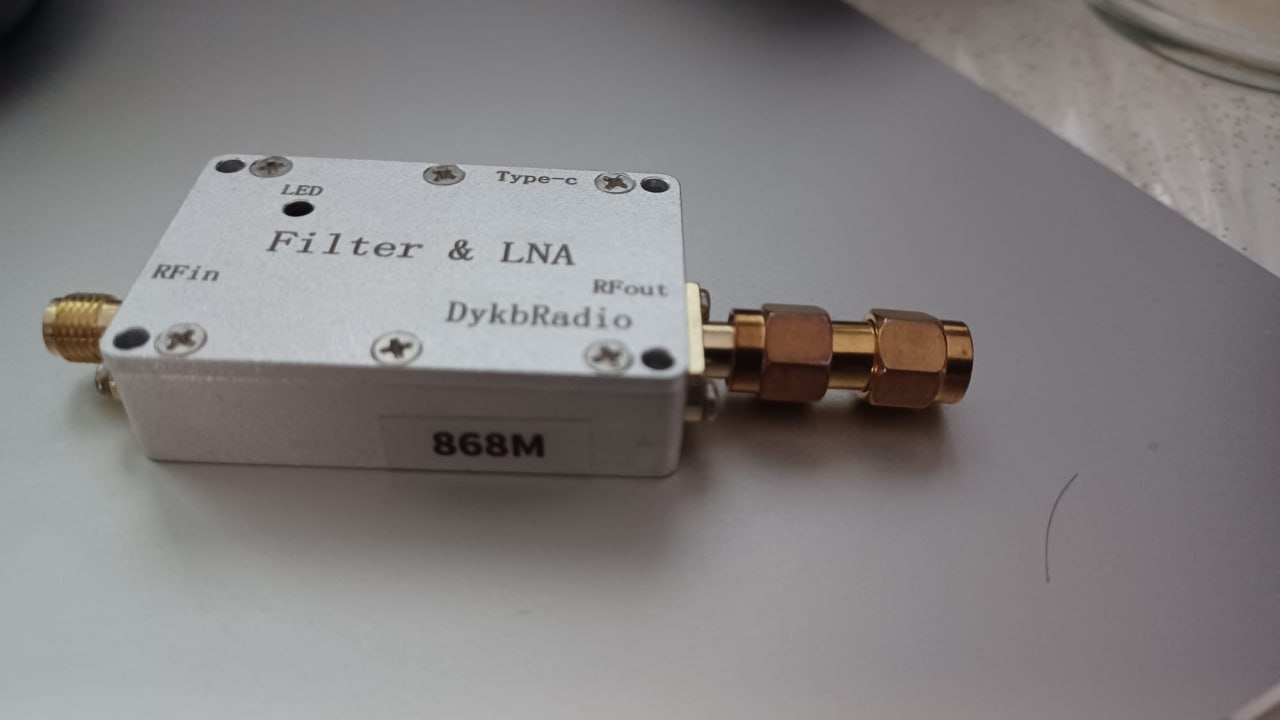
- Helmi pointed out that the ConnectaIoT satellites had stopped transmitting on 868 MHz several weeks earlier, so there was nothing to receive on that frequency at the moment, with his own last received signal 33 days old. He also suggested looking at Stefan/OE6ISP’s QRZ page, which carries LNA recommendations. 🔗
- Stefan/OE6ISP diagnosed the repeated LNA failures, noting that SPF5189Z-based amplifiers are not very robust and that he had already repaired a dozen of them, while SPF5043Z-based units such as his Hartwig RF amplifiers hold up far better. He recommended DC-shorted antennas, or at least grounded radiators with gamma matches, so static charges cannot build up, and suggested a 1K resistor to ground at the LNA input at the cost of only a fraction of a dB of noise. He added that broken LNAs can be repaired cheaply by ordering a batch of chips — an SMD-beginner level job, ideally with preheating to 100-150 degrees on a hotplate — and observed that most of his own failures happened during thunderstorms many kilometres away, suggesting ordinary atmospheric charge is already too much. He later confirmed that Hartwig-RF LNAs are more expensive but excellent, with most of his 0.7 dB and 0.23 dB units coming from there and customised components, filters and splitters available. 🔗
https://t.me/tinyGScom/78478/229011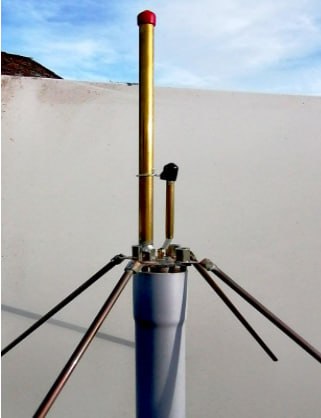
Beta Firmware Testing
- krunaljethva asked how often firmware should be updated when it is managed manually, and whether it is necessary to move to the latest firmware every time. He explained that the ax.100 decoder was not needed yet so beta would be avoided, but that a plan to add a temperature sensor to his station would require deviating from the main branch, raising the concern of whether the latest code would then have to be pulled immediately. 🔗
- Stefan/OE6ISP reassured him that the normal release 2603242 is good for regular use, and that the latest beta is only needed by those who want the additional ax.100 decoder. 🔗
- Notsure7 questioned the relevance of adding a particular function to TinyGS, arguing it is completely unrelated and that an ESP12 running ESPHome or Tasmota can turn into a fully fledged weather station in minutes, with additional features such as watchdog and power control being trivial to add. He added that he plans to build such a controller when he constructs the housing for his stations. 🔗
Featured Conversations
- A genuinely new way of running a TinyGS station appeared this week: a pure-Python LoRa decoder combined with an SDR ground station client, built as part of GSoC 2026 with LibreCube. Any Linux PC with an SDR can join the network over MQTT after installing the Python package, removing the need for an ESP-based board entirely. The project is in active testing and the author explicitly invites feedback from anyone trying it, since both working and broken stations provide useful information for improving the setup. This opens the door to setups far beyond the usual microcontroller-based builds.
- A new educational TinyGS station went live at a school in Interlagos, São Paulo, using a 401 MHz ground-plane antenna. It is the first educational TinyGS station in Brazil and is already receiving satellites, including Tianqi-29 from more than 1,200 km away. The goal is to use live passes to teach physics, astronomy, electronics and space communications with real signals instead of theory alone, connecting students to the Doppler effect, telemetry and satellite tracking in a hands-on way.
- A long-running station owner reported replacing five AliExpress LNAs in five months, sparking a detailed community discussion about why these amplifiers keep dying. The failures were linked to static discharge and ordinary atmospheric charge rather than direct lightning strikes, with SPF5189Z-based units singled out as particularly fragile. Suggested countermeasures include DC-shorted antennas, grounded radiators with gamma matches, and a 1K resistor to ground at the LNA input for a negligible noise penalty. Repairing the boards by reflowing a batch of replacement chips was described as a viable low-cost option, and operators looking for reliability over price were pointed toward higher-grade SPF5043Z amplifiers with noise figures as low as 0.7 dB and 0.23 dB.
- A lively exchange explored why some Tianqi satellites arrive very strong while others are missed on otherwise perfect passes. It was explained that the constellation does not transmit on a single frequency — some satellites use .265 while others use .450 — so a receiver may simply not be tuned to the right channel. The community also flagged that the ConnectaIoT satellites have stopped transmitting on 868 MHz for several weeks, a reminder to check whether a satellite is still active before troubleshooting hardware. Alongside this, members debated antenna polarization for satellite reception, noting that circular omnidirectional designs can lose around 3 dB and even cancel out on LHCP signals, and shared practical ways to fight urban interference such as high-pass filters, diplexers and horizontally polarized antennas.
- Interface and firmware questions rounded out the week. Web interface quirks were reported, including auto-tune priority tags that appear inconsistently and cannot be edited, with logged-in views such as passes showing only on mobile. A bug was flagged in the website telemetry decoding script for PROVES_Electra, where every received packet produced a render error while manual decoding stayed correct. On firmware, it was clarified that the current stable release remains perfectly suitable for everyday operation and that beta firmware is only required for features such as the additional ax.100 decoder, useful reassurance for anyone planning local modifications like adding a temperature sensor.
Latest Cubesats News

CubeSat Riding Nuri Again… Re-challenge with 4th Experience / YonhapnewsTV - YouTube
South Korea’s fifth Nuri launch, set for the 7th of next month, will carry an ultra-small military satellite and CubeSats from domestic companies and university/research institutions. After a communications failure on Nuri 4, Cutternier is retrying its satellite with multiple ground stations for the ocean debris observation mission. Cosmos aims for more frequent, higher-quality Earth observation after verifying its satellite on Nuri 4, while Space Lintec has doubled its satellite and added AI for pharmaceutical trials. Repeated Nuri launches are accumulating domestic space experience, verifying technology in real space and supporting the domestic satellite industry.
CubeSat Instrument Extends Solar Storm Warnings 10x - Universe Today
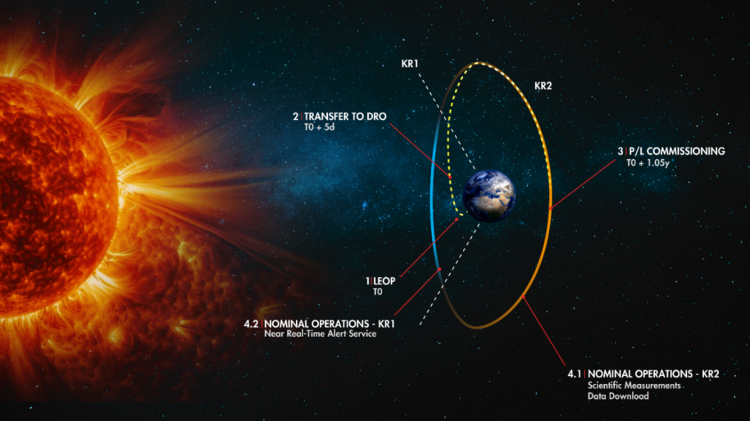
Imperial College London researchers introduced the HENON CubeSat and its MAGIC magnetometer to improve space weather forecasting and assess incoming solar storm severity. HENON is designed to orbit 15 million kilometers from Earth, about 10 times farther than current Sun-Earth L1 space weather satellites. This farther position could extend warning time to up to 3 hours before a geomagnetic or solar radiation storm reaches Earth, compared with the current 15–60 minutes. Presented at the Royal Astronomical Society’s National Astronomy Meeting, HENON is intended to pave the way for ESA’s larger SHIELD mission.
Hell Ride: European Qarman Will Descend as the First Cubesat into the Atmosphere
The provided content contains only a comment-section notice allowing comments without login. It states that creating an account enables faster future participation and links discussions to a profile. No article body about Qarman or its atmospheric reentry is included. The title says the European Qarman cubesat will make a first-of-its-kind descent into the atmosphere.
What’s next
Join the TinyGS Telegram channel to take part in these discussions and contribute to the project. Whether you want to test the new SDR-based station setup, share an antenna experiment or a hard-won hardware fix, compare reception results, or help troubleshoot interface quirks, your experiences and insights help others build and improve their stations — every station and every voice makes the network stronger!