tinyGS
· TinyGS Community · 10 min read
Weekly Newsletter - September 27, 2026
TinyGS operators dug into a puzzling drop in packet reception, tracing causes from cable integrity to Tianqi interference and autotune settings. A newcomer's untrimmed quarter-wave build surprised everyone with 3,312 km reception, while the community shared updates on upcoming LoRa missions and helped new stations get online. From coax loss debates to kiosk display ideas, it was a week of practical problem-solving and shared discovery.
Highlights
General
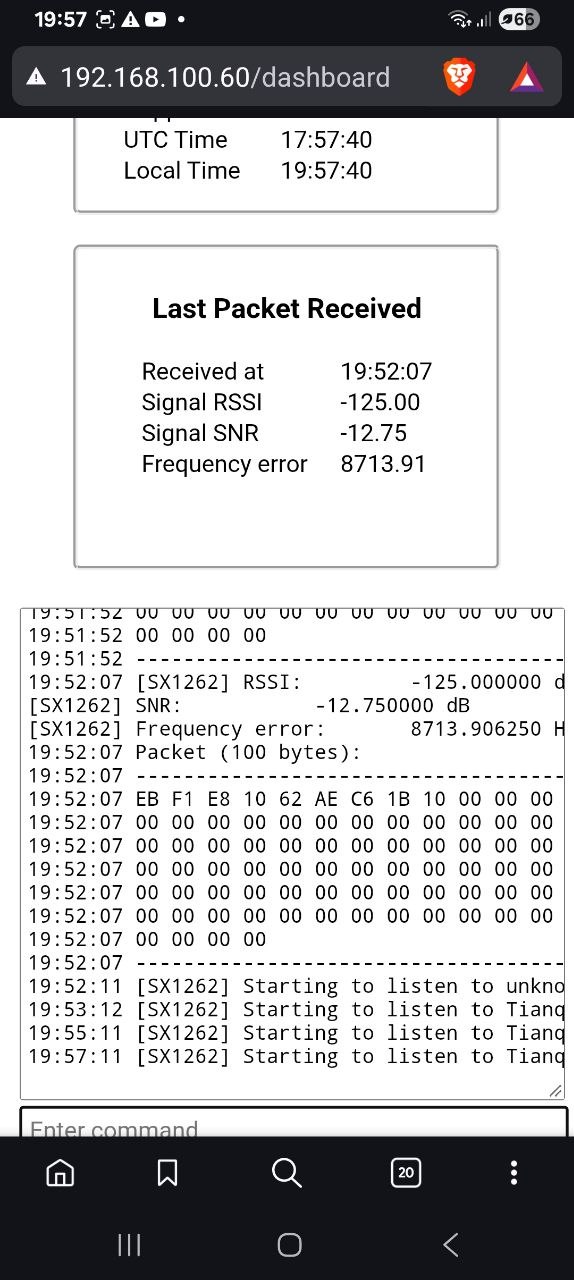
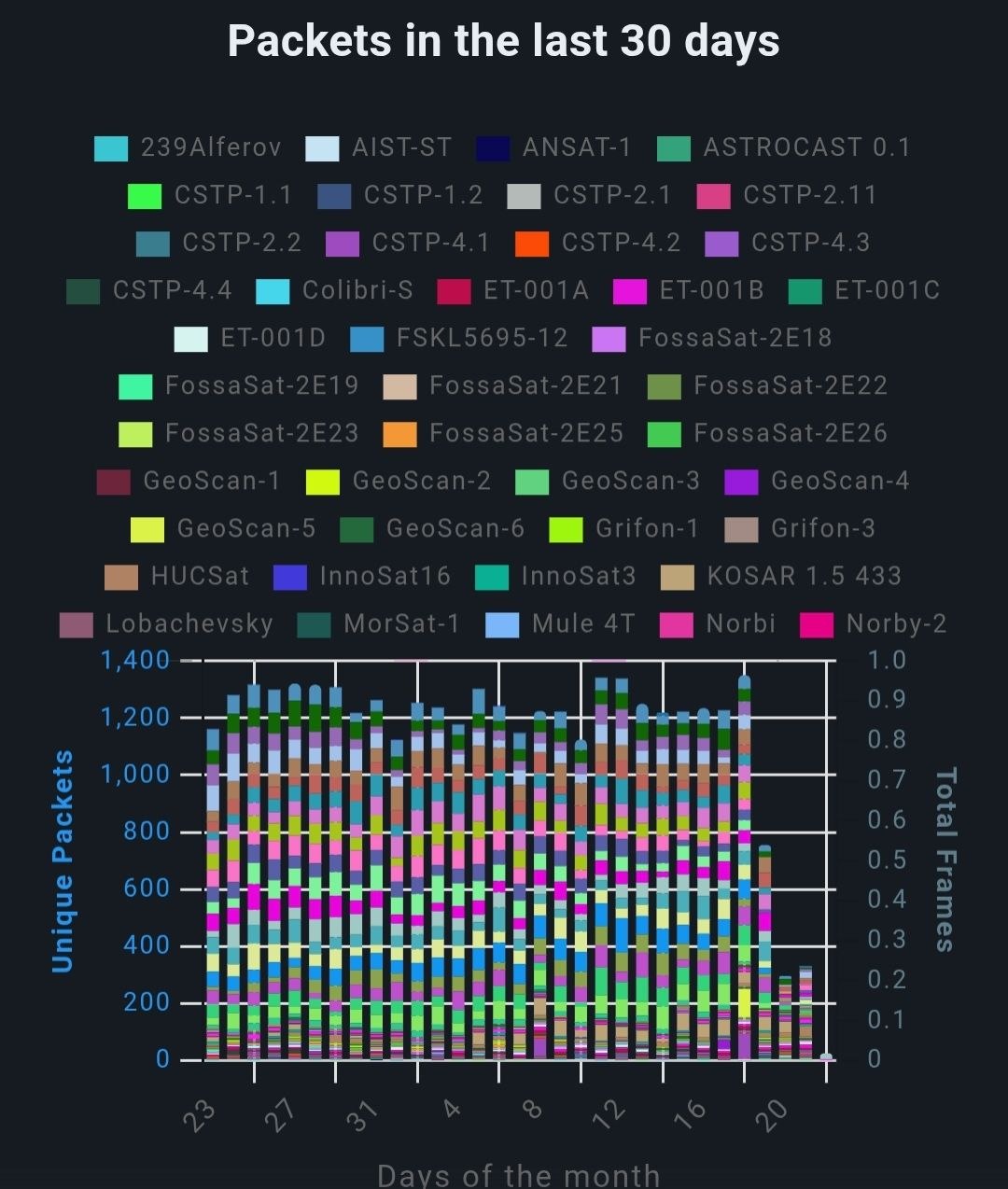
- PDXh0b0 shared a photo and asked whether others had noticed a drop in received packets over the past few days, then described checking an Airspy R2 and SDR# setup against satellite passes and measuring antenna SWR between 1.2 and 1.8 across 400–500 MHz with a NanoVNA. Stefan/OE6ISP suggested the drop was likely a cable or connector problem, perhaps water ingress after heavy rain, and recommended checking cables with a megaohmmeter, looking for new noise sources, verifying power supply, and comparing with a second station. Later, PDXh0b0 reported that resetting priorities in operation/customize to defaults fixed the issue. 🔗
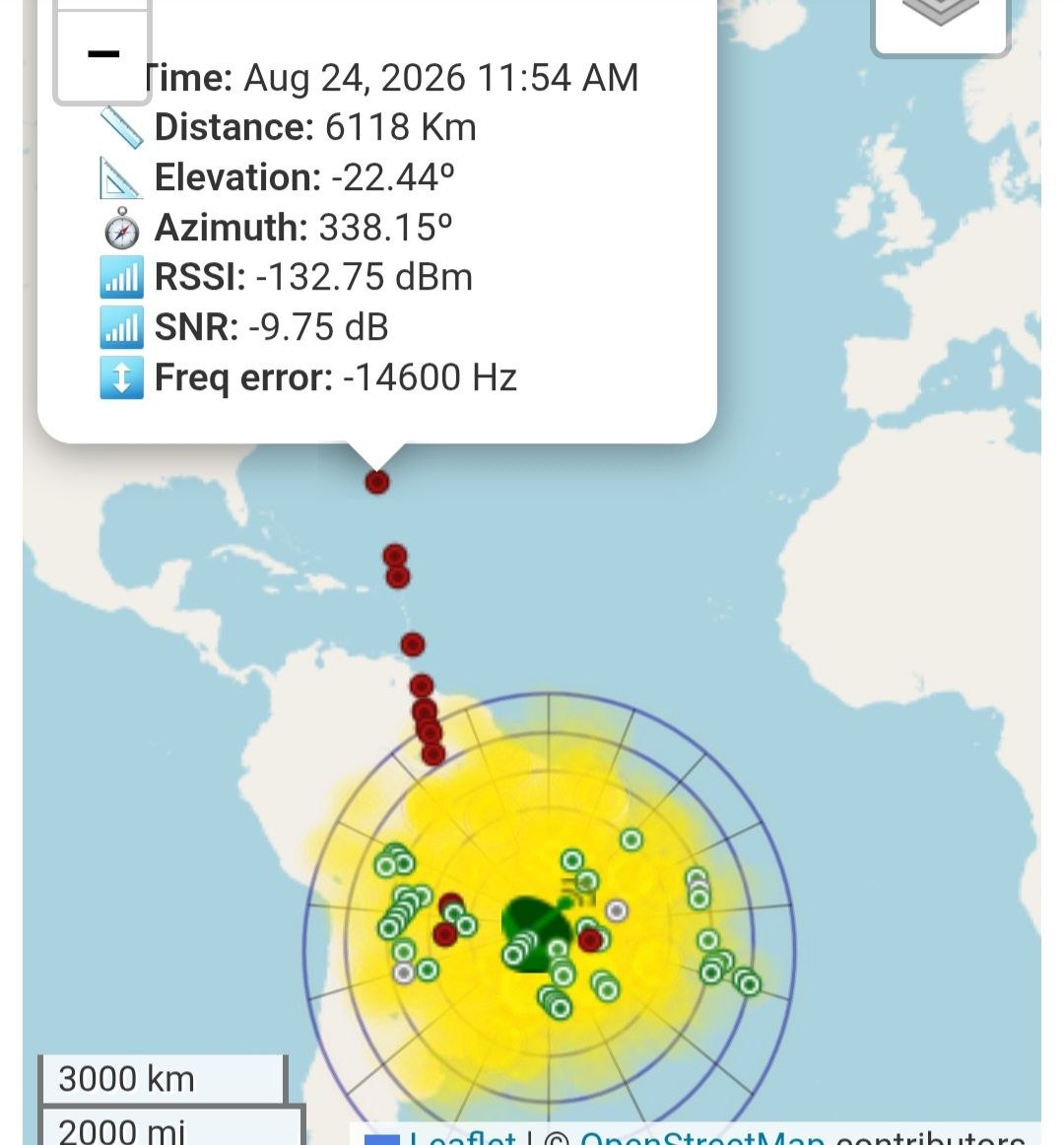
- Stefan/OE6ISP raised a question about missing Tianqi satellites in a reception diagram, noting that Tianqi packets dropped from about 60% to 5% after September 20 and suspecting autotune priority settings were blocking Tianqi or the 401 MHz band rather than a hardware problem. Later confirmed the Tianqi satellites were back and explained that Tianqi packets do not count as telemetry for leaderboard/ranking, so they intentionally block them on some stations because they can suppress normal satellites and reduce real telemetry packets. The community also shared resources explaining Tianqi as China’s largest LEO NB-IoT constellation. 🔗
https://space.skyrocket.de/doc_sdat/tianqi-19.htm
https://www.skylinker.io/p/tianqi-overview-china-largest-leo-nb-iot-constellation-eng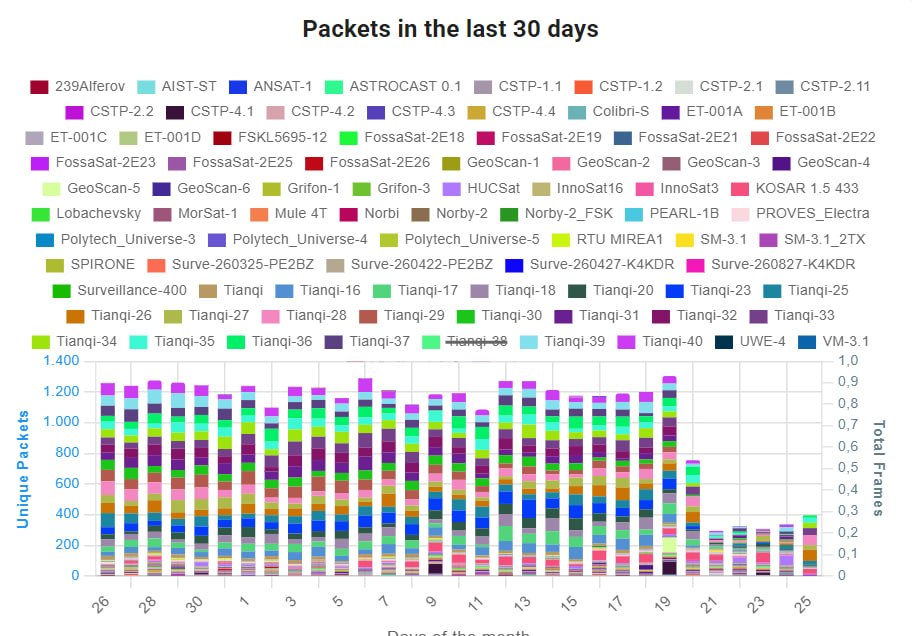
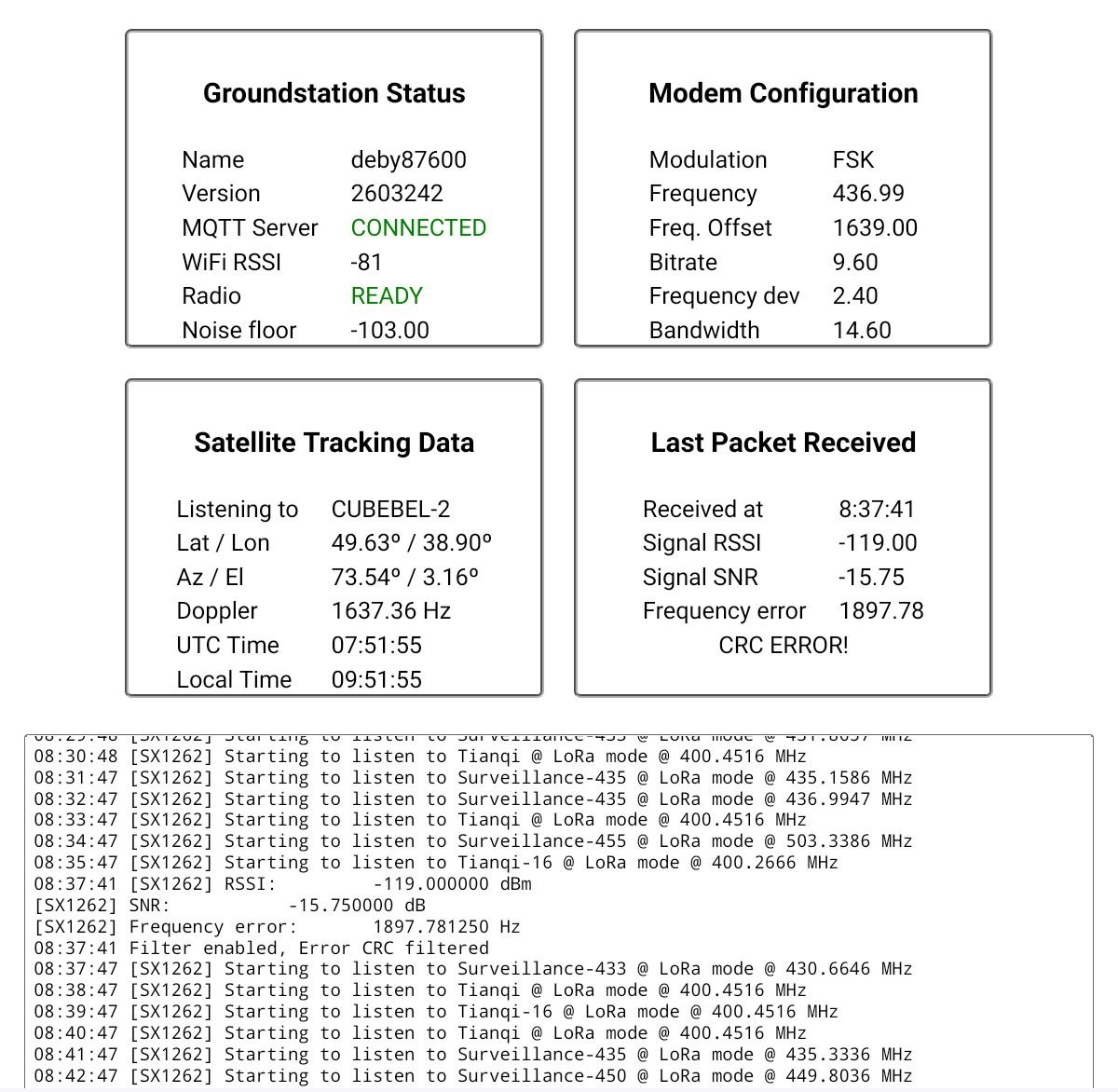
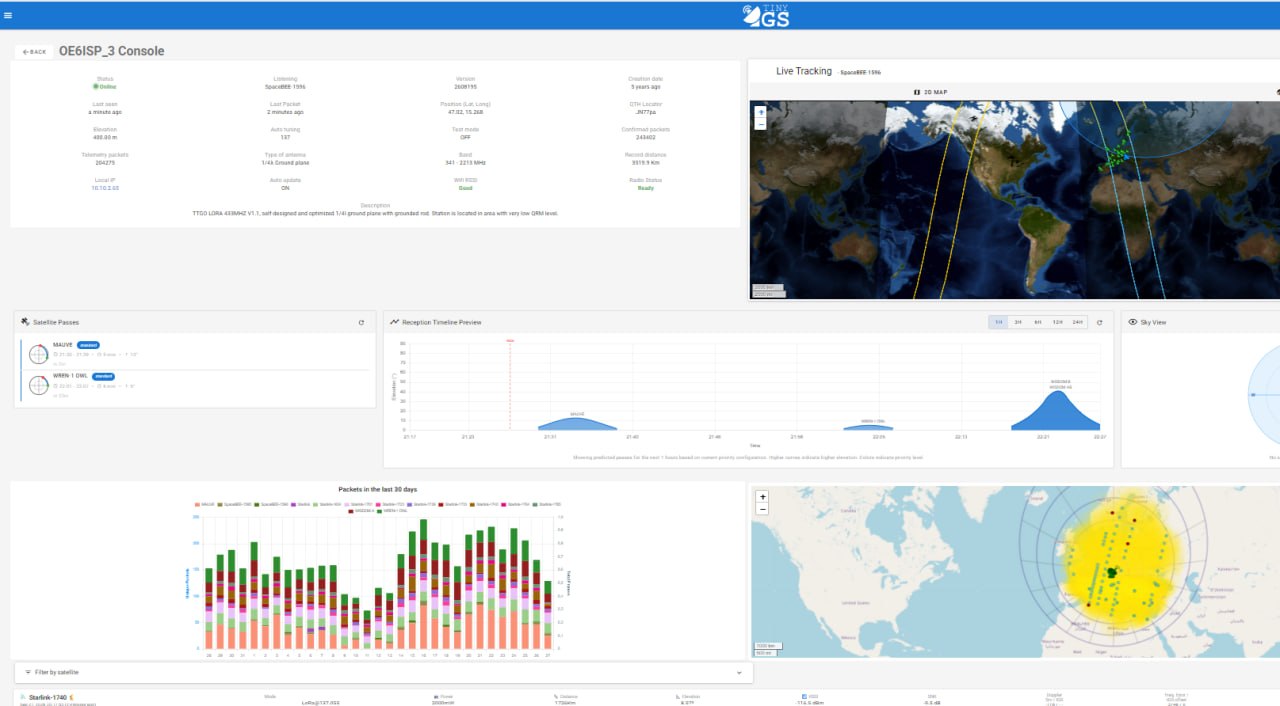
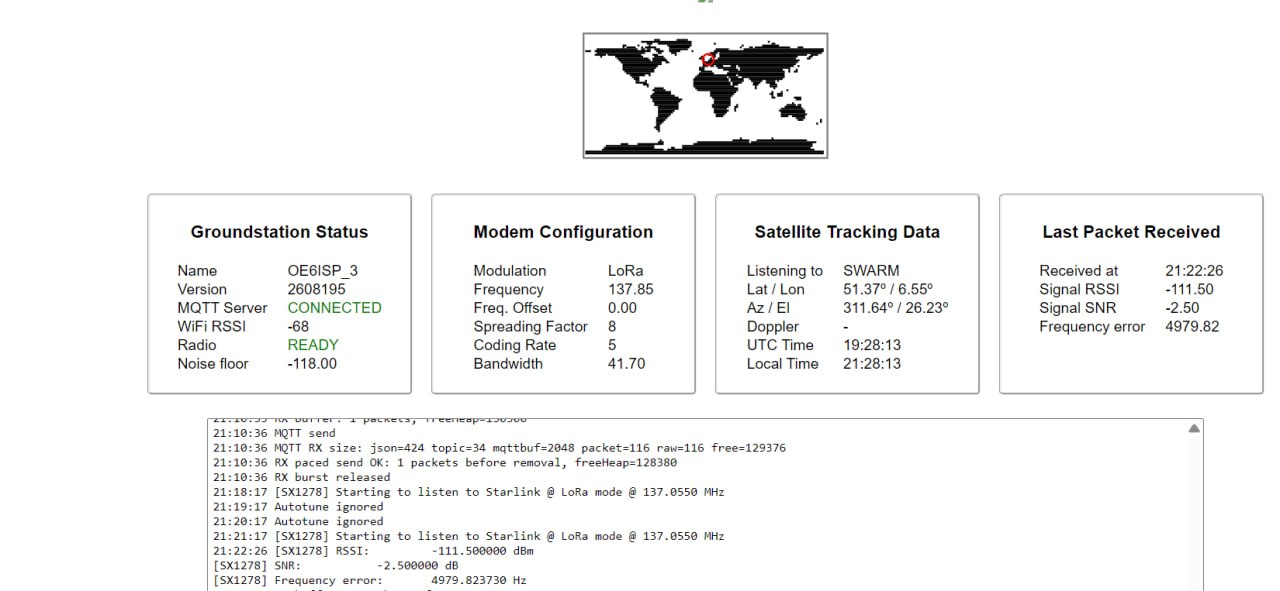
- yury7006 reported that one station’s elevation was automatically set to 0 m while a second station at the same position showed 364 m. Another member explained that the elevation value is read from a database and is not relevant for satellite track calculations, since orbital altitude is around 400 km compared with ground elevation of only a few hundred meters. The mismatch persisted even after changing and reverting the position. Meanwhile, new stations came online: Mustafa Abdullah announced a newly installed station and widyaleaf25 shared that a new station was already receiving a flood of Tianqi packets, using SentX AI to sort through the logs. Alan installed a new ground station and asked how to view packet activity graphically; Stefan explained the station page and local board console, sharing screenshots and noting the console is only accessible from the same subnet. 🔗
- Bob asked about the antenna type setting for his Diamond X30A, noting he currently had it set as Discone. Notsure7 clarified that the antenna is a 5/8 wave for UHF and 1/2 wave for VHF, has an N connector, and offers great cost/performance. Bob also sought suggestions for displaying TinyGS station results on a kiosk for a public museum display, noting the default PiAware page works well but the TinyGS station page is too complex for that use case. 🔗
https://app.tinygs.com/station/ComputerMuseum@mEcaBfbghPpi-Dic
Beta Firmware Testing
- krunaljethva expressed interest in testing Ethernet support on a board after an admin confirmed it is supported. Another member encouraged testing and reporting results, noting that a binary is not yet available in the installer but can be built and uploaded for the board if needed. Earlier in the week, sincos364 suggested adding Ethernet instead of Wi-Fi to an outdoor setup so that power could be supplied via PoE. 🔗
https://t.me/tinyGScom/78484/232085
Antenna Building
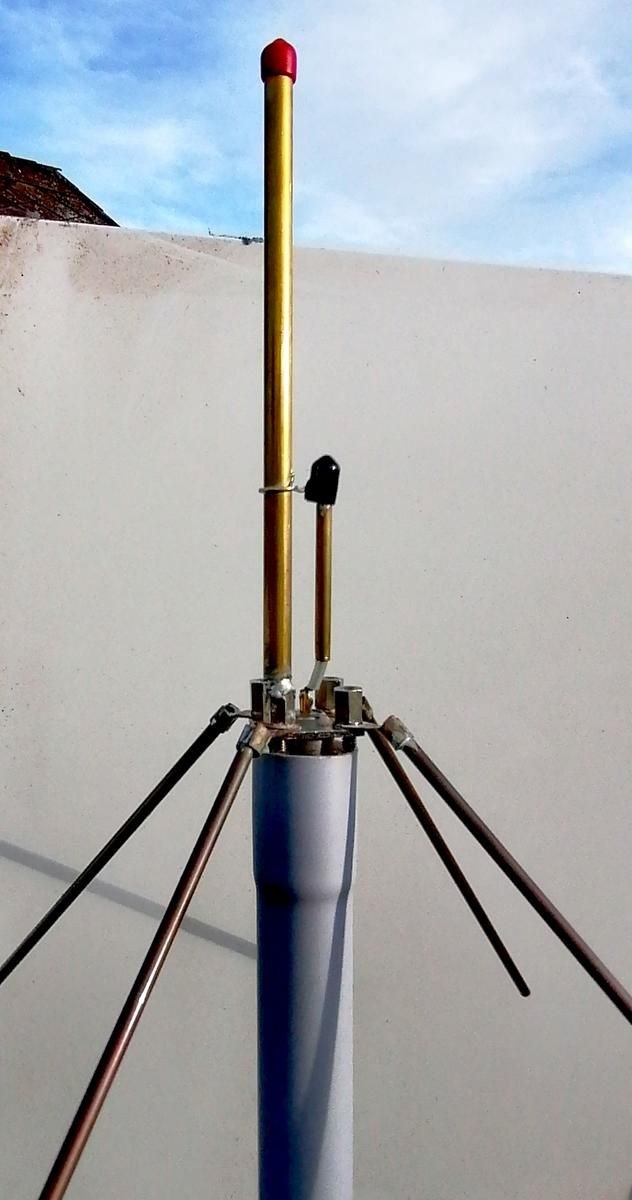
- Don shared their first day on TinyGS after building the quarter-wave antenna from the tutorials. They forgot to trim the element and four radials, leaving each about 30 mm oversized, and placed the antenna on the loft floor. Despite that, they logged 101 confirmed packets in under seven hours from Redditch, UK, with the furthest satellite received at 3,312 km in Turkey. Another member congratulated them, noting they had accidentally built an excellent antenna and advising trimming the element to 165 mm with ground radials at 170–175 mm for even better performance. The discussion also noted that while a QFH can give more continuous signals on high FSK passes, a groundplane typically yields the highest overall packet count due to its wider range. 🔗

New Satellites
- K4KDR asked for help gathering details about GUARANISAT-2, which is scheduled for the upcoming Transporter-18 mission and will include two-way LoRa communications. No frequency or LoRa parameters have been published, and it is unclear whether the payload uses generic LoRa or LoRaWAN. The previous GUARANISAT-1 used unlicensed 433.000 MHz LoRa. Later in the week, K4KDR reported that the final build would have NO LoRa, which was disappointing but expected that other satellites will carry LoRa in the future. 🔗
- gcarpi emailed details of UTNH-Sat, which is planned for launch on Transporter-18 on October 1st, so it can be added to the list of new satellites. The note was directed to the maintainer who manages satellite additions. 🔗
Technical Problems
- Stefan/OE6ISP reported being unable to edit the descriptions of their OE6ISP_x stations. After applying changes with save, the description text disappeared and auto-update could not be turned off on station #9. The issue was shared as a technical problem affecting station management. 🔗
Featured Conversations
- Operators investigated a puzzling drop in packet reception, tracing potential causes from cable and connector integrity to water ingress, nearby noise sources, and autotune priority settings. The discussion revealed that Tianqi satellites can appear in surveillance mode even when blocked, and that an incorrect console frequency offset can disrupt FSK reception. A reset of priorities to defaults ultimately resolved one station’s issue, highlighting the value of systematic troubleshooting.
- A newcomer’s untrimmed quarter-wave antenna, placed on a loft floor, still logged 101 packets in under seven hours and reached a satellite 3,312 km away. Follow-up advice recommended trimming the element to 165 mm and radials to 170–175 mm, while noting that a groundplane often captures more overall packets than a QFH. In parallel, members debated feedline losses, comparing RG6 and RG58, and suggested moving the station close to the antenna using a long power cable to avoid coax attenuation.
- New satellite tracking leads included GUARANISAT-2 on Transporter-18, which was initially expected to carry two-way LoRa but later confirmed to have no LoRa in the final build, and UTNH-Sat, also set for Transporter-18 on October 1st. The community also helped new operators get oriented, explaining the difference between the TinyGS station page and the local board console, and shared resources on the Tianqi constellation’s role as China’s largest LEO NB-IoT network.
Latest Cubesats News

Mission ShakthiSAT lets girls from 108 countries launch 12U CubeSat - NewsBytes
Mission ShakthiSAT, led by Space Kidz India, unites girls from 108 countries to build and launch a 12U CubeSat on India’s SSLV rocket. Participants gain hands-on spacecraft engineering experience instead of only textbook learning. Partners include the Egyptian Space Agency and University of South Alabama, supporting international teamwork. Backed by India’s Ministry of External Affairs, the mission aims to break down aerospace barriers and expand opportunities for young women in space tech.

The Argentine Army Prepares to Put Its First Nanosatellite into Orbit - Pucará Defensa
The Argentine Army is preparing to launch the ETNS, a nanosatellite developed by CITEDEF, as a technological demonstrator. It is scheduled for late October 2026 aboard a SpaceX Falcon 9 on the Transponder 18 mission, as a secondary payload arranged through a Spanish-based company. The project completed testing and aims to validate CITEDEF’s ability to design, integrate, launch, and operate a space platform. Backed by the Argentine Army, it seeks to build domestic space know-how for future defense applications such as communications, data transmission, and geospatial intelligence.
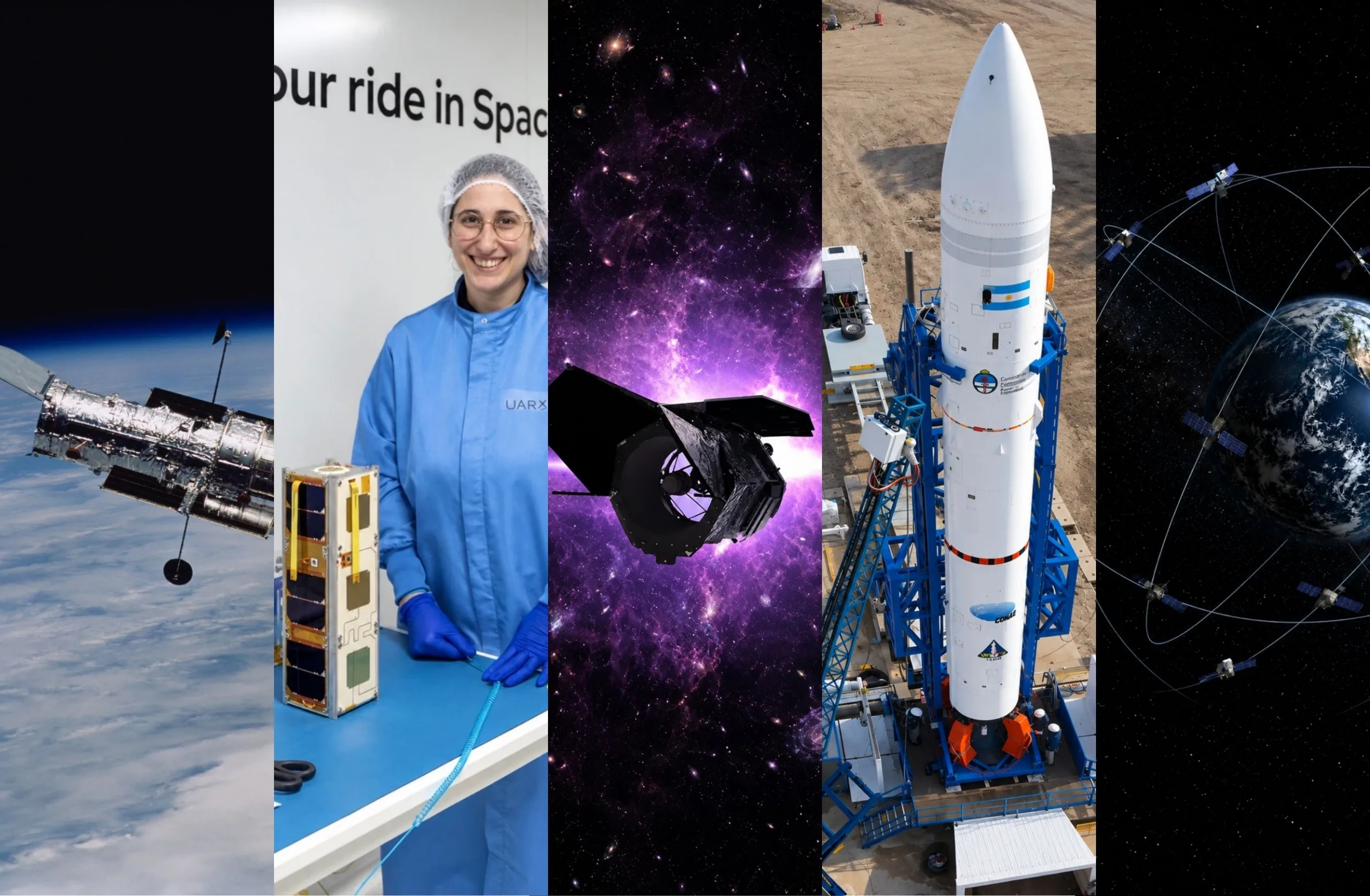
Argentina plans $194.169 billion for CONAE, advances with its first CubeSat…
Argentina’s 2027 budget proposal allocates 194.169 billion pesos to CONAE, but only 10.901 billion for space access including Tronador, and the program remains stalled since late 2025. UNLP’s USAT-1 CubeSat completed final preparation in Spain and will launch on SpaceX’s Transporter-18 in October. The U.S. confirmed orbital space-control weapons and conducted Apollo Maneuvers 2026, its first live-fly exercise with real satellites. SpaceX hit 700 Falcon launches, NASA activated Roman’s Wide Field Instrument, and Webb and Hubble jointly studied 27 trans-Neptunian objects.
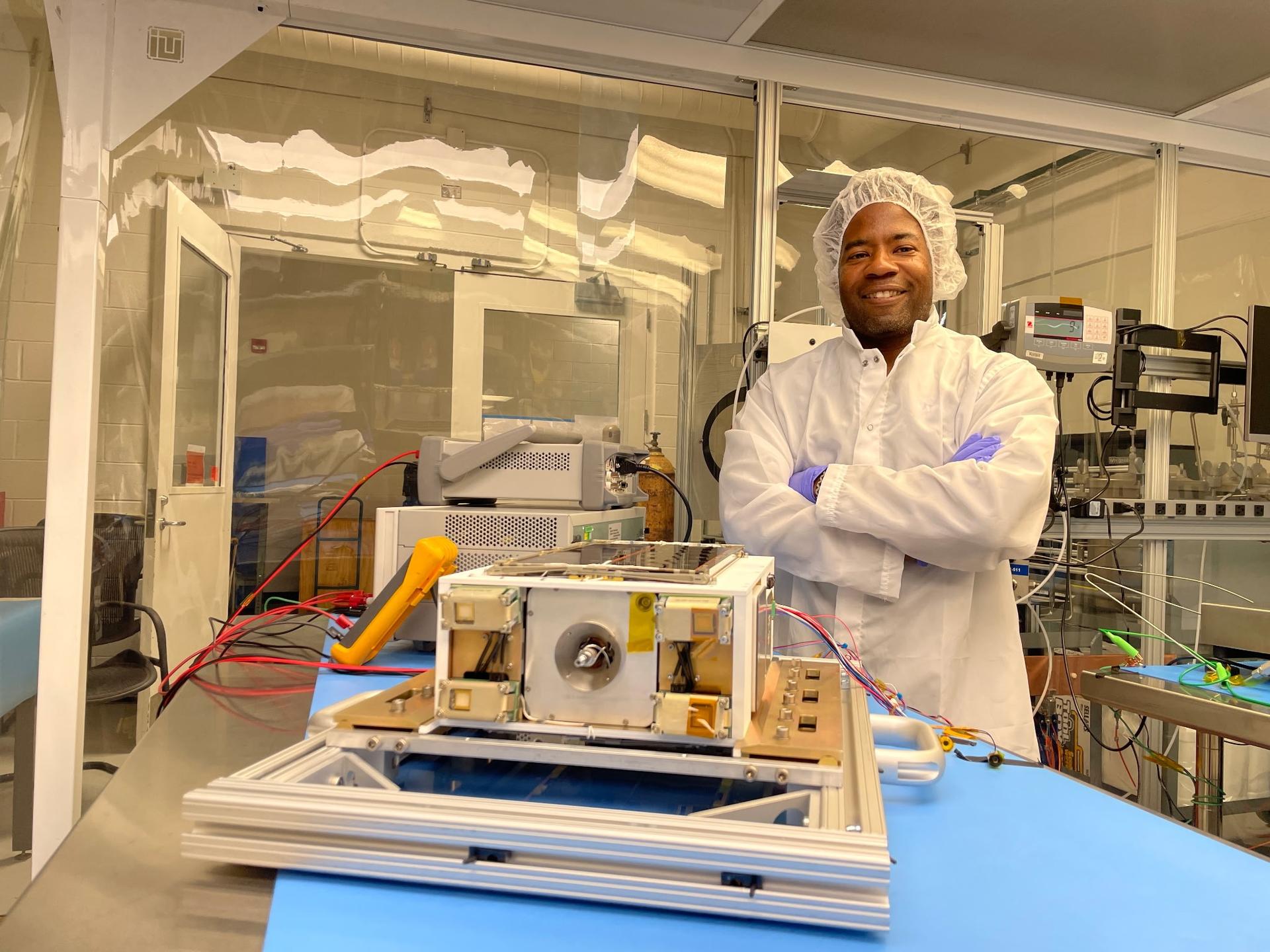
NASA Tests Dual Mode Propulsion CubeSat Ahead of Launch
NASA Marshall engineers completed environmental and physical testing of the ASCENT Propulsion Dual Mode CubeSat ahead of launch. The spacecraft uses a single non-toxic ASCENT fuel tank to feed both a high-thrust combustion engine and low-thrust electrospray thrusters, cutting mass and volume. The mission involves NASA Marshall, MIT, Plasma Processes, and Georgia Tech, and is managed by NASA’s Small Spacecraft & Distributed Systems. It is scheduled to launch no earlier than October 1 on a SpaceX Falcon 9 from Vandenberg Space Force Base for a nine-month dual-mode propulsion demonstration.
Cornell University successfully deploys free-flying light sails in orbit - EurekAlert!
Cornell University’s Space Systems Design Studio deployed two free-flying light sail experiments, Alpha CubeSat and Sailing to the Stars, to the ISS in late 2025. Alpha CubeSat, a NASA-funded 1U CubeSat, deployed its light sail in low Earth orbit; its ChipSats transmitted complete data packets to ground, a first for such small spacecraft. Sailing to the Stars tested six light sails in ISS microgravity using 3D-printed deployers, hard-drive reaction wheels, and TV-remote commands to evaluate deployment dynamics. Both missions completed major objectives, paving the way for future ChipSat-sail missions with steering, orbit-raising, laser propulsion, and interstellar travel goals.

Facing orbital threats, Parabilis tests DOTS, a toaster-sized engine that …
Parabilis Space Technologies completed a hot-fire test of DOTS, a 2U hybrid propulsion module intended to make military CubeSats maneuverable. DOTS combines solid fuel with liquid oxidizer—nitrous oxide and propane or ethane—using cold-start and non-toxic, indefinitely storable propellants. The system reportedly gives a 6U CubeSat several hundred m/s of Delta-V, over 1,000 mph in minutes, and outperforms existing CubeSat propulsion. An in-orbit demonstration is expected no earlier than 2027 after delivery to Space Systems Command’s System Delta 89; Parabilis seeks a flight partner.
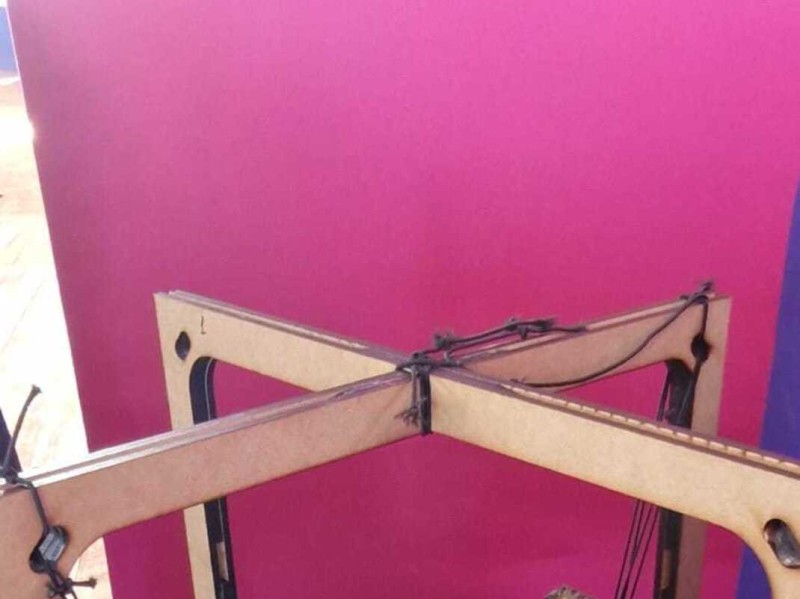
Sesi students develop nanosatellite
Students from Sesi Itapetininga built a functional CubeSat nanosatellite that collects air quality and environmental data, including CO2, humidity, temperature, pressure, and luminosity. The project won the Latin American Space Challenge (LASC) in September in Iacanga, São Paulo, after development since 2021 and testing for vibration and electromagnetic interference. The device uses an ESP32 microcontroller, sensors, an accelerometer, and a 3D-printed casing with low-cost components; data can be stored on a memory card. The next stage is launch by stratospheric balloon, pending resources, plus improving radio communication with a ground station.

Hera’s Juventas CubeSat coming in for Dimorphos landing - ESA
Juventas, a shoebox-sized 6-unitXL CubeSat, is targeting a landing on the asteroid Dimorphos. It carries the smallest radar instrument ever flown in space. The radar will perform the first sounding inside an asteroid before touchdown. After landing, Juventas will measure Dimorphos’s gravity field to see if it changes during its orbit around Didymos.
C3 Constellation: China plans lunar CubeSat constellation - Golem.de
The provided content contains only Golem.de cookie consent, tracking, and privacy notices. It does not include the article text about China’s planned lunar CubeSat constellation. No details are available on the C3 constellation, its purpose, timeline, or participants. A substantive summary cannot be generated from the supplied material.

NASA and Boeing share new details about Starliner development - Fess.hu
NASA and Boeing will hold a press conference on Monday, September 28 at 15:00 EDT to discuss Starliner development and regular crewed flights to and from the International Space Station. NASA’s live broadcast page will provide viewing details, and Crew-13-accredited media can attend in person at Kennedy Space Center and ask questions. Participants include NASA Administrator Jared Isaacman, Low Earth Orbit Program manager Dana Weigel, astronaut Woody Hoburg, and Boeing Commercial Crew program manager John Mulholland. The conference will review Starliner’s current development status and outline future space program plans, especially crewed missions to the ISS.
What’s next
Join the TinyGS Telegram channel to participate in these discussions and contribute to the project. Whether you are troubleshooting a station, testing a new antenna, or tracking a new satellite, your experiences and insights can help others build and improve their stations!