tinyGS
· TinyGS Community · 11 min read
Weekly Newsletter - September 13, 2026
Front-end filtering took centre stage this week as the community weighed SAW filters against Chebyshev high-pass alternatives for 433 MHz reception, and compared Lilygo boards for tracking low-band satellites around 137 MHz. Meanwhile the satellites from the recent Norwegian ISAR launch began reporting in, with FramSat-1 already delivering telemetry on every pass, while a station struggling with CRC errors got practical noise-floor and antenna advice. From group-delay curves to a brand-new station coming online with a little help from friends, it was a week that balanced hard RF engineering with the community spirit of getting newcomers on the air.
Highlights
General
- EA1RJ introduced himself as Ricardo, HAM call sign EA1RJ, receiving from grid square IN71oo and testing a LILYGO T3 board together with a discone antenna, an LNA and a SAW filter. 🔗
- ASW shared his own experience with a SAW filter whose roughly 20 MHz bandwidth centred on 433 MHz proved far too sharp, causing the loss of all Tianqi satellites transmitting in the 400 MHz range; the thread continued with Stefan/OE6ISP adding that SAW filters are not only too narrow-banded for this purpose but most of them also have very poor group-delay behaviour that completely destroys the signal, and recommending a 5th order Chebyshev high-pass — for example a Diamond diplexer using the 70 cm path only — as the best solution for 433 MHz front ends. 🔗
- A user announced that station SHIRAKAMI was finally up and running thanks to patient help from an experienced member, noting that they had struggled with Telegram a couple of times and almost gave up, and introducing themselves as a complete beginner eager to learn from the community. 🔗
- Helmi asked whether the metal mesh of a window would affect antenna placement and considered putting the antenna outside, and it was clarified that the screen was made of synthetic fibre, so indoor reception worked fine. 🔗
New Satellites
- agurkmix asked about the chances of receiving the satellites from the recent Norwegian ISAR launch, mentioning TriSat-S, FramSat-1, Sat1, CyBEEsat and Plattform 6; the community confirmed that FramSat-1 is already active and delivering telemetry on every pass, while SpaceteamSat1 and CyBEEsat have been silent so far; the discussion also clarified that FSK signals can be received with SX1262-based TinyGS stations, although FramSat-1 lacks the conventional 10101010 preamble that makes tuning easier. 🔗
https://network.satnogs.org/observations/14950168/
Technical Problems
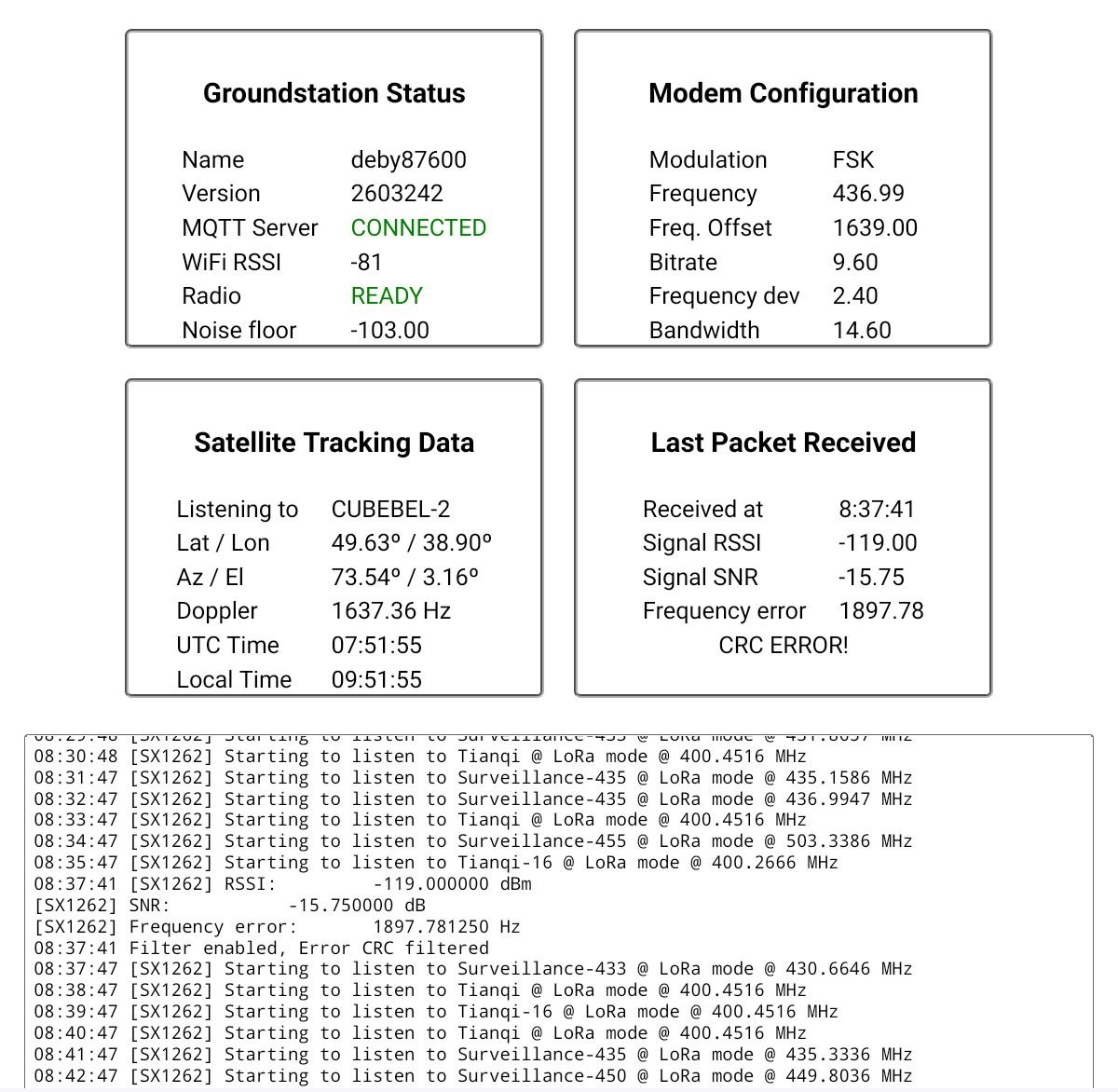
- Erich shared a photo of a reception full of CRC errors and received a detailed diagnosis pointing to a high noise floor at around -103 dB, with possible causes including cable or antenna problems, a broken board, or nearby interference from sources such as PV plants, PCs and communication towers; after it emerged that the setup was using the tiny internal antenna from the enclosure, he was advised that a simple quarter-wave groundplane would perform far better and only needs a clear sky view rather than a high mounting position, and the plan was to try a better location and build a proper antenna. 🔗
https://www.qrz.com/db/OE6ISP - sierra1y asked what hardware to use for 137 MHz reception, specifically whether a T-Beam BPF or a T3 LoRa would work, and later confirmed he had found and ordered the recommended boards. 🔗
- Stefan/OE6ISP recommended the TTGO SX1278 for 140 MHz, available only in the CN Lilygo store, explaining that although all Lilygo SX1278 boards can work at 137 MHz, the 433 MHz versions lose some dB because of an input filter designed for the higher frequency while a 140 MHz board offers optimal performance; he added that improving a 433 MHz board with an LNA and filter is not worth the cost, and shared a link to the Lilygo LoRa3 product. 🔗
https://lilygo.cc/products/lora3?variant=45154589835445
Antenna Building
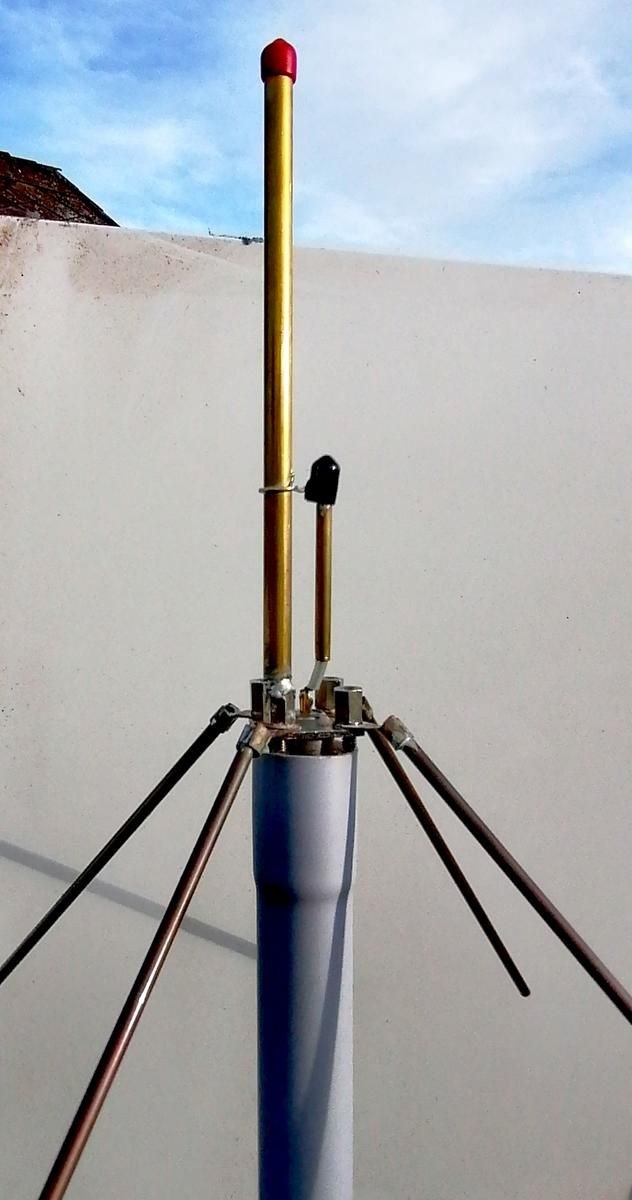
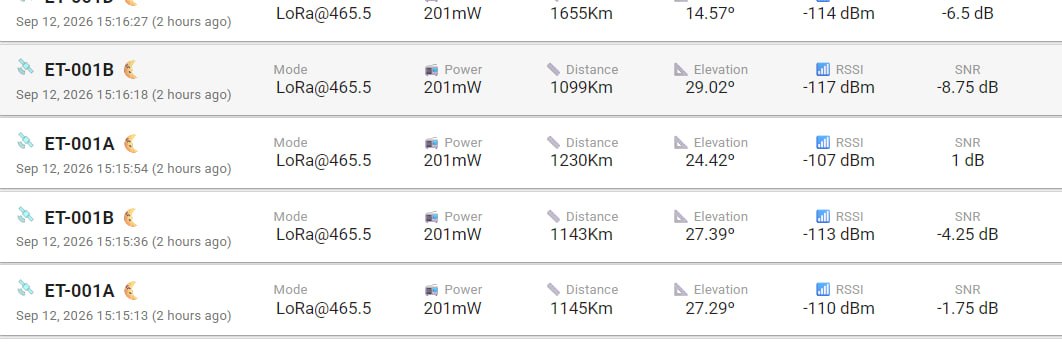
- Stefan/OE6ISP gave detailed feedback on an indoor antenna setup, noting that 180 packets in 12 hours was very good, clarifying that the antenna was a quarter-wave radiator with a counterweight rather than a dipole, and suggesting the addition of a choke or balun for decoupling from the feedline; he also recommended trying a vertical position with the radiator on top to catch more ground reflections, mentioned that an asymmetrical groundplane could add 1–2 dB of gain while suppressing back-side noise, and later shared a photo showing a +1 dB SNR improvement for an ET001 running 200 mW TX power. 🔗
Featured Conversations
- The community took a close look at front-end filtering for 433 MHz reception, with members reporting that commonly available SAW filters are too narrow-banded for TinyGS work and can hide useful passes entirely. A roughly 20 MHz bandwidth centred on 433 MHz was found to cut off the Tianqi satellites transmitting in the 400 MHz range, turning filter selection into a balancing act between rejecting interference and preserving the full spread of satellite frequencies. Beyond bandwidth, the group raised a less obvious but equally damaging issue: poor group-delay behaviour in many SAW filters, which distorts the signal even when the frequency falls inside the passband. A 5th order Chebyshev high-pass, such as a Diamond diplexer used on the 70 cm path only, was recommended as a more suitable alternative for 433 MHz front ends.
- New satellites from the recent Norwegian ISAR launch are already keeping the network busy, with FramSat-1 confirmed as active and delivering telemetry on every pass while some of its fellow smallsats remain silent. Observations were shared for several of the launched payloads, and the community noted that decoding is proving trickier than usual because the new bird transmits FSK without the familiar 10101010 preamble. The good news is that FSK signals can still be received with SX1262-based TinyGS stations, so existing hardware remains capable of following the newcomers. Members were encouraged to keep watching for the quieter payloads to wake up.
- A discussion on 137 MHz hardware clarified the trade-offs between Lilygo boards for low-band satellite tracking. While all SX1278-based boards can work at 137 MHz, the 433 MHz versions suffer some dB loss because their input filter is designed for the higher frequency, whereas the 140 MHz variant offers optimal performance and is available through the CN Lilygo store. Members concluded that upgrading a 433 MHz board with an external LNA and filter is not worth the cost compared with simply choosing the right board from the start. Links to the recommended LoRa3 product were shared so newcomers can order the correct hardware directly.
- Antenna building advice continued to flow, with detailed feedback on an indoor setup that distinguished between a quarter-wave radiator with counterweight and a true dipole, and recommended chokes or baluns for decoupling from the feedline. Suggestions included trying a vertical orientation with the radiator on top to catch more ground reflections, and adding an asymmetrical groundplane for 1–2 dB of gain and back-side noise suppression. One member reported a measurable +1 dB SNR improvement on an ET001 running 200 mW TX power after adjustments, while another beginner station, SHIRAKAMI, finally came online with patient help from the community after nearly giving up during onboarding.
Latest Cubesats News
Enhancing Free Space Optical CubeSat (FSOCS) Communication Links Using Low-Complexity LDPC Decoding Techniques
Researchers propose a low-complexity, low-power LDPC decoding scheme to improve free-space optical CubeSat (FSOCS) communication links. The hard-decision bit-flipping method aims to improve the performance-complexity tradeoff compared with existing LDPC decoding techniques. The work targets intersatellite optical links and atmospheric optical channels. The study was published in Scientific Reports and reported by 生物通.
Exolaunch Deploys First Ever 16U Smallsat Into Geo Using Spacex Falcon Heavy
Exolaunch deployed the first 16U small satellite into geostationary orbit aboard SpaceX’s Falcon Heavy, marking a milestone for smallsat launch capabilities. The 16U CubeSat format measures about 60 cm x 30 cm x 30 cm and enables larger payloads than traditional small satellites. The mission demonstrates that small satellites can access GEO, traditionally dominated by larger spacecraft, with potential for telecommunications and commercial space growth. Challenges remain for GEO smallsats, including space debris, thermal management, radiation exposure, and communication latency.

PARUS-T1: Satellite of the Day, 13 Sep 2026 - KeepTrack.space
PARUS-T1 is a 3U CubeSat built by Tunisian student group PYRAS and operated jointly with TASA, launched January 14, 2025, on a SpaceX Falcon 9 rideshare from Vandenberg. The 4 kg satellite, cataloged as COSPAR ID 2025-009S, was deployed into a sun-synchronous orbit of roughly 470 x 490 km at 97.39 degrees inclination. No specific payload or mission purpose is publicly documented, but the satellite remains active and has shown no major on-orbit events since deployment. Over an 89-day observation window, its semi-major axis decayed by 4.8 km at about 54 meters per day, consistent with normal atmospheric drag for a 3U CubeSat and leaving years of orbital life.
China plans 30 CubeSats to investigate the space between Earth and the Moon
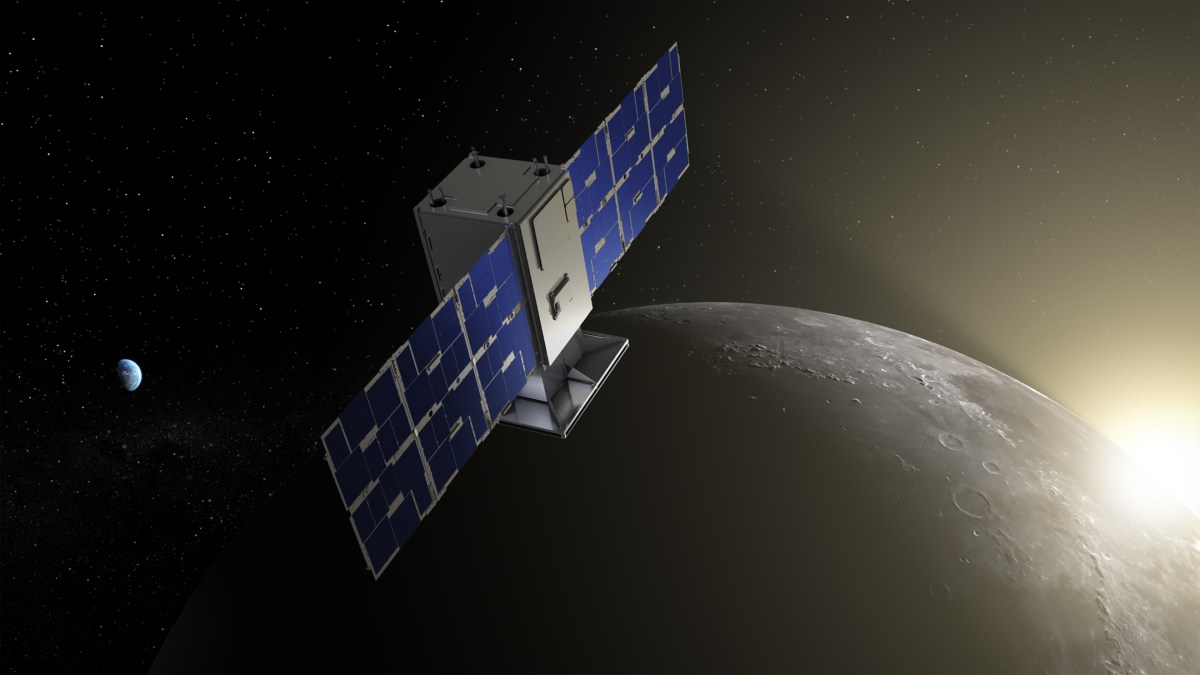
China is leading the Cislunar CubeSat Constellation (C3), a proposed network of 30 12U CubeSats for the Earth-Moon region, with deployment planned in six phases and completion targeted around 2030. The satellites are expected to carry standardized Chinese payloads such as high-energy particle detectors, magnetometers, and gamma-ray burst monitors, offered free to international partners. The distributed constellation aims to study space weather, magnetic fields, and energetic particles in the cislunar environment, while also improving localization of gamma-ray bursts. Institutions from Thailand, Serbia, Egypt, Senegal, and Indonesia are involved, with support from China’s Deep Space Exploration Laboratory and APSCO.

New RTU MIREA CubeSats: Why the University Is Building RADAR and MONITOR Satellites
RTU MIREA is developing two new CubeSats, RTU MIREA RADAR and RTU MIREA MONITOR, under the federal project “Personnel for Space.” RADAR is a 3U CubeSat with a star tracker and solar panels, intended to test high-precision attitude determination and control algorithms. MONITOR is a 16U CubeSat with a laser payload, designed to test controlled optical signals from orbit, ground registration, pointing, and laser control for a satellite-Earth optical link. Students and young researchers are developing onboard systems, integrating payloads, and testing the spacecraft through the Department of Radioelectronic Systems and Complexes at RTU MIREA’s Institute of Radioelectronics and Informatics.
INPHOMIR project, miniaturized optical systems for CubeSat nanosatellites, drones and autonomous vehicles
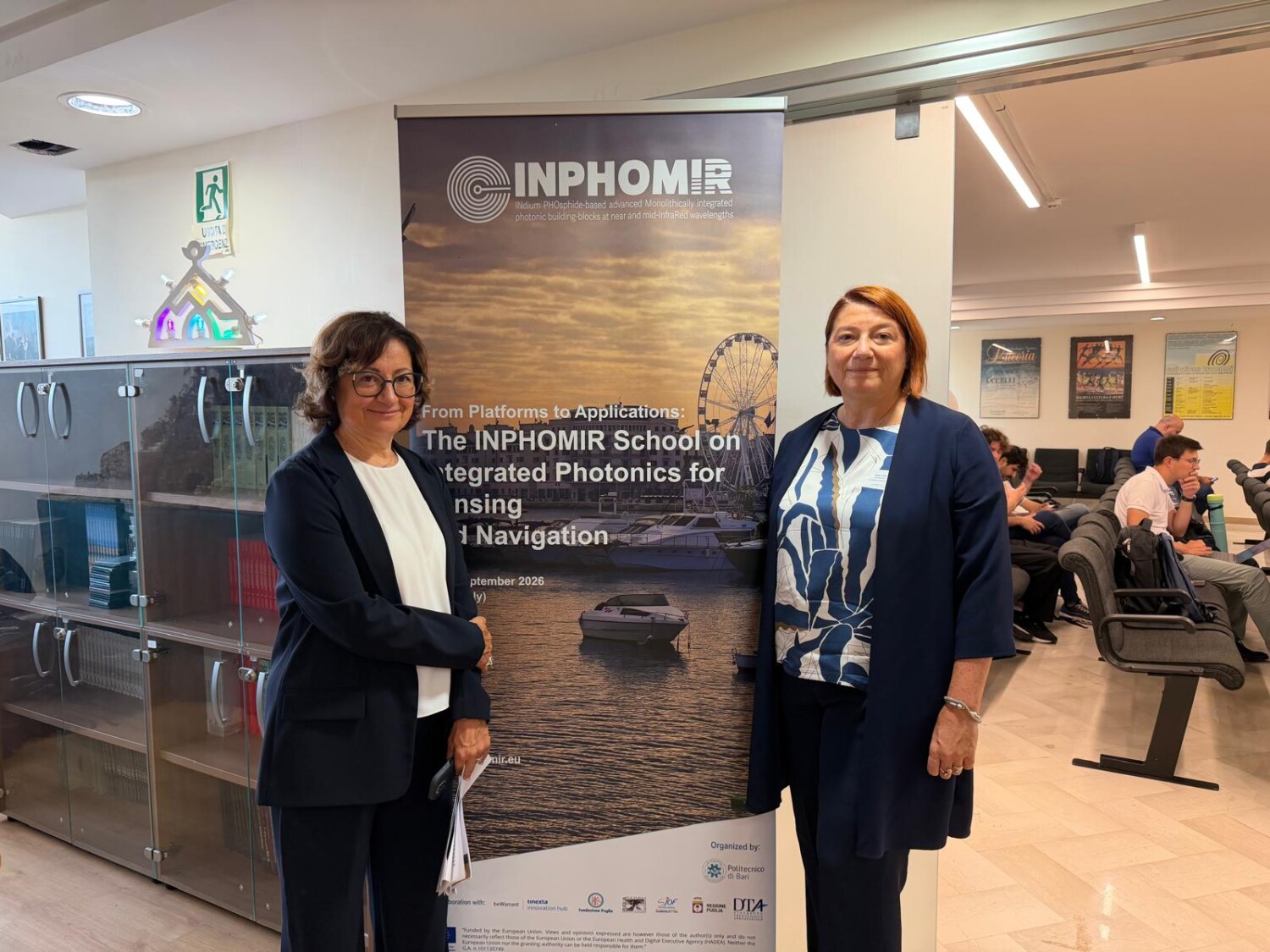
The INPHOMIR Training School is being held September 7–11 in Bari at the Fondazione Puglia under the title “From Platforms to Applications,” for PhD students, young researchers, master’s students, and professionals. The Horizon Europe-funded INPHOMIR project (2023–2028, €500,000 EU contribution) is coordinated by GEM Elettronica with partners including Politecnico di Bari, Technical University of Munich, and Eindhoven University of Technology. It aims to develop indium phosphide-based photonic integrated circuits (PICs) that miniaturize complex optical systems for CubeSat nanosatellites, drones, and autonomous vehicles. The program includes 26 specialist lectures, keynotes, European project presentations, a poster session, and technical visits to SITAEL and the Grottaglie Airport Test Bed.
SESI Itapetininga students develop functional satellite to monitor air quality
Students at SESI Itapetininga, with SENAI students, built a 10 cm³ CubeSat nanosatellite designed to monitor air quality in São Paulo through remote sensing. The project, guided by teacher Rodrigo Raffa and developed by Luigi Barros Rechinelli, Luísa Valim de Souza, Lívia de Góes Rocha and Maria Dulce Moraes Martins, advanced through the 3rd Brazilian Satellite Olympiad, passed validation and mechanical/magnetic stress tests, and was approved for launch. It received an award at the Latin American Space Challenge on September 2–3 in Iacanga, São Paulo. The next phase is to establish communication between the satellite and Earth via a ground station using radio waves.

Measuring Solar Storm Resistance via ‘SNIPE’ CubeSat Orbital Changes / YTN Science
A research team from the Korea Astronomy and Space Science Institute analyzed orbital changes of the SNIPE CubeSat, which orbits at a low altitude of about 550 km. During the May 2024 super solar storm, atmospheric density around the satellite surged to more than double normal levels, causing its altitude to drop by roughly 300 meters. The results closely matched NASA’s precision satellite observations, confirming that atmospheric density changes can be tracked using only satellite orbit and attitude data. This approach eliminates the need for expensive measuring equipment to monitor space weather effects.

The First Spacecraft Launched To Orbit From Europe - Hackaday
Isar Aerospace launched its Spectrum rocket from Andøya Space in Norway, marking the first orbital launch from European soil. The rocket carried five CubeSat payloads selected through the German space agency’s Microlauncher Competition. The satellites include projects from universities and companies such as TriSat-S, FramSat-1, Sat1, CyBEEsat, Platform 6, and Let It Go. Isar Aerospace is also developing a launch facility in Nova Scotia, Canada, for lower-inclination orbits and Canadian launch capability.

City in Morocco assembled from orbital images: Russian satellite helped create 3D model of Agadir
Geoscan created a 3D model of Agadir, Morocco, using images from the InnoSat16 small satellite. Specialists combined frames via photogrammetry and produced a smooth flyover video of the region. InnoSat16 launched from Vostochny Cosmodrome on July 25, 2025, as Russia’s first 16U CubeSat. Its panchromatic camera reaches 2.5 meters per pixel from about 500 km, and two Cyclops cameras also monitor systems and can capture Earth imagery or video.
What’s next
Join the TinyGS Telegram channel to take part in satellite tracking, station troubleshooting and antenna experiments. Whether you are choosing a front-end filter, picking the right board for low-band reception, or bringing your very first station online, your questions and insights help the whole network grow stronger — see you in the chat!