tinyGS
· TinyGS Community · 10 min read
Weekly Newsletter - April 5, 2026
Welcome to the TinyGS weekly community newsletter. This edition covers the most relevant technical discussions, antenna experiments, and collaborative problem-solving from the past week, highlighting the community's ongoing efforts to improve satellite tracking stations and share knowledge.
Highlights
Technical Problems
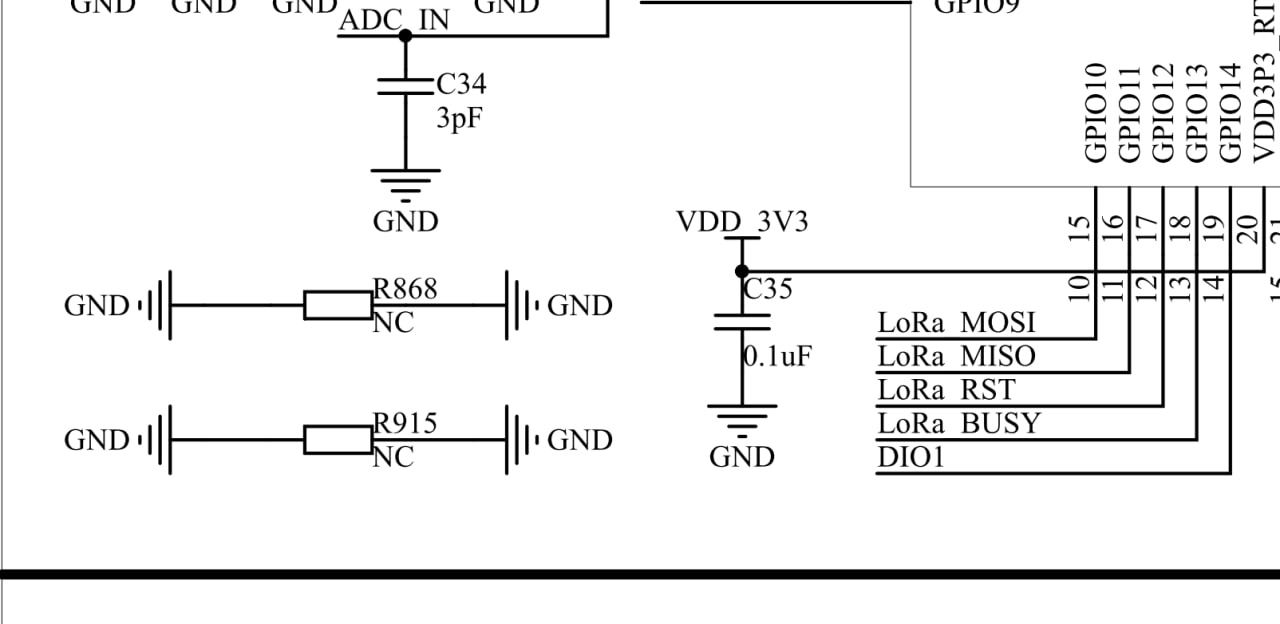
- VK2CPR reported an issue with a Lilygo V1 6.1 board where the OLED screen remained black after a successful initial load, searching for solutions related to board selection during the download process. 🔗
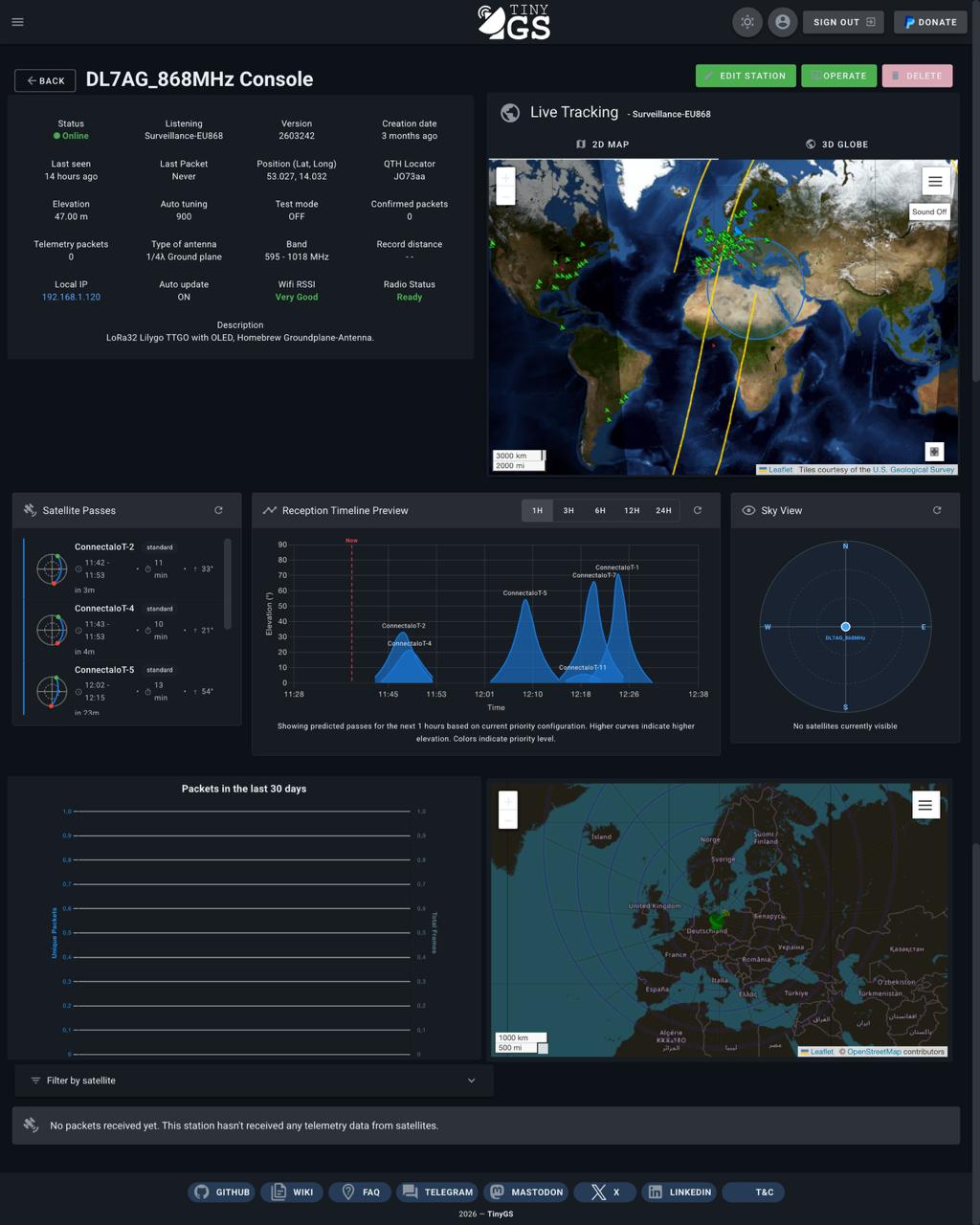
- Chris_DL7AG set up an 868 MHz station but was unable to receive or record any satellites during passes since setup, suspecting a configuration error and sharing an image of their setup for help. 🔗
- gayathritm reported being unable to receive any packets despite a good noise floor and multiple satellite passes, while a nearby station was successful. After community troubleshooting, the issue was identified as the station being incorrectly configured as a Heltec V1 board in the dashboard instead of V2, causing an IRQ pin mismatch. The user planned to update the configuration to resolve it. 🔗
https://app.tinygs.com/station/Gayathri_STARFYP@JXK_Qe7fdYEgN-cb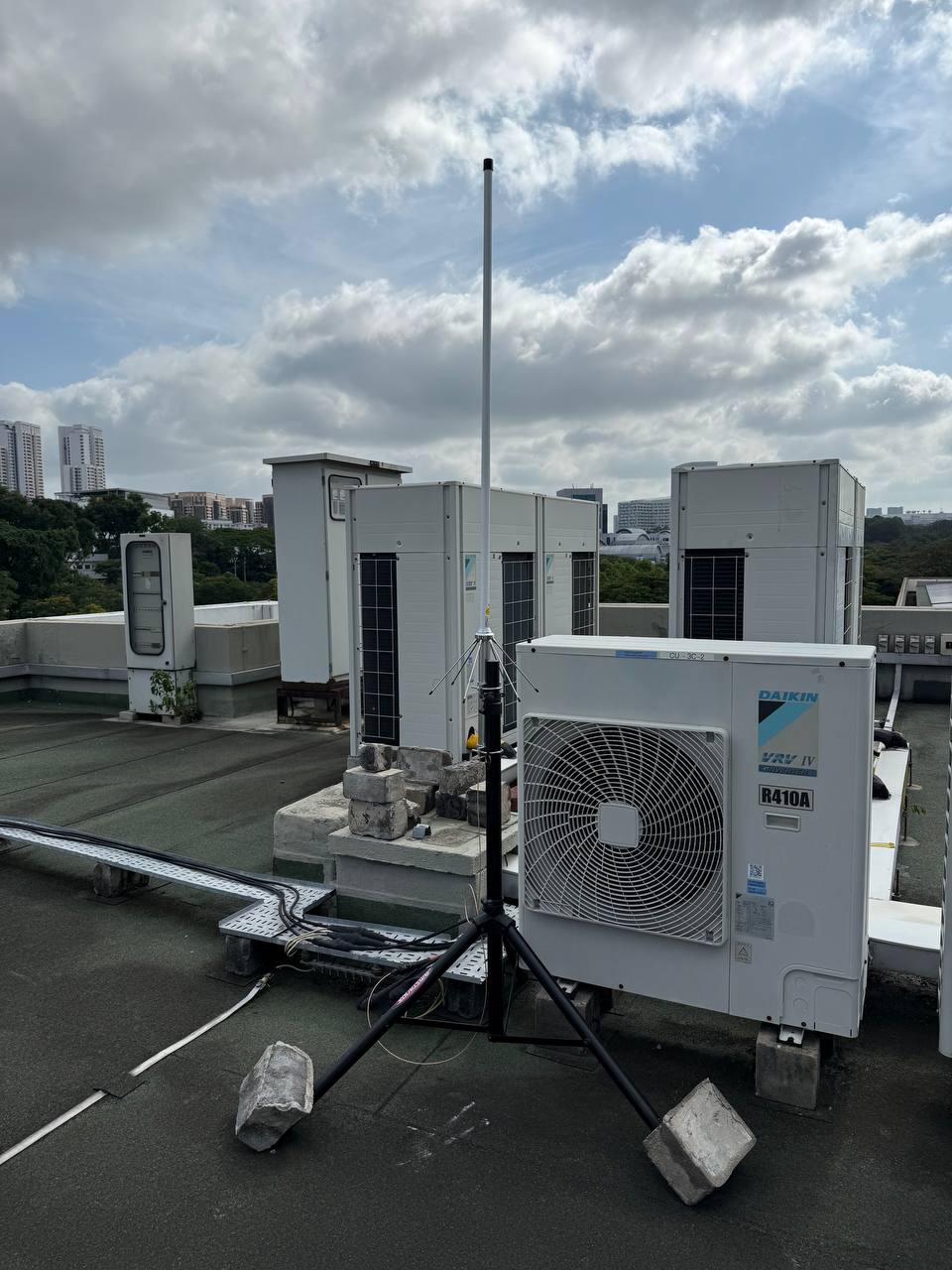
- Jon was new to TinyGS and asked for board recommendations after installing it on a 433 MHz LilyGO T3 v1.6.1, noting the OLED display was blank. After receiving advice, they successfully installed the firmware on a 433 Heltec V3, which resolved the display issue and created a new station. 🔗

- Voltor4 discussed challenges with receiving packets on 868 MHz using a Heltec V3 board, despite trying various antennas, LNAs, and filters. They noted high noise floors from cell towers and shifted to troubleshooting with SatNOGS for waterfall analysis and exploring specific satellites for band observation. 🔗
https://db.satnogs.org/transmitters/?downlink_low=800000000&downlink_high=900000000
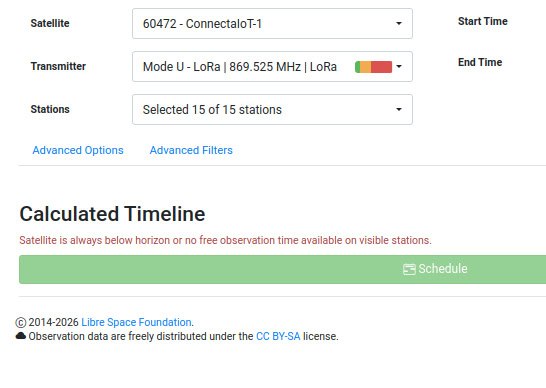
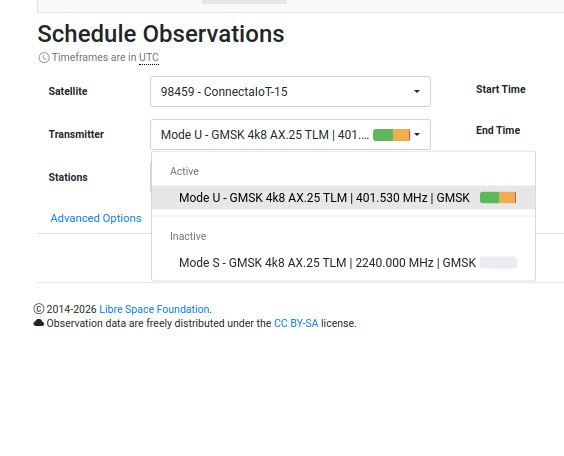
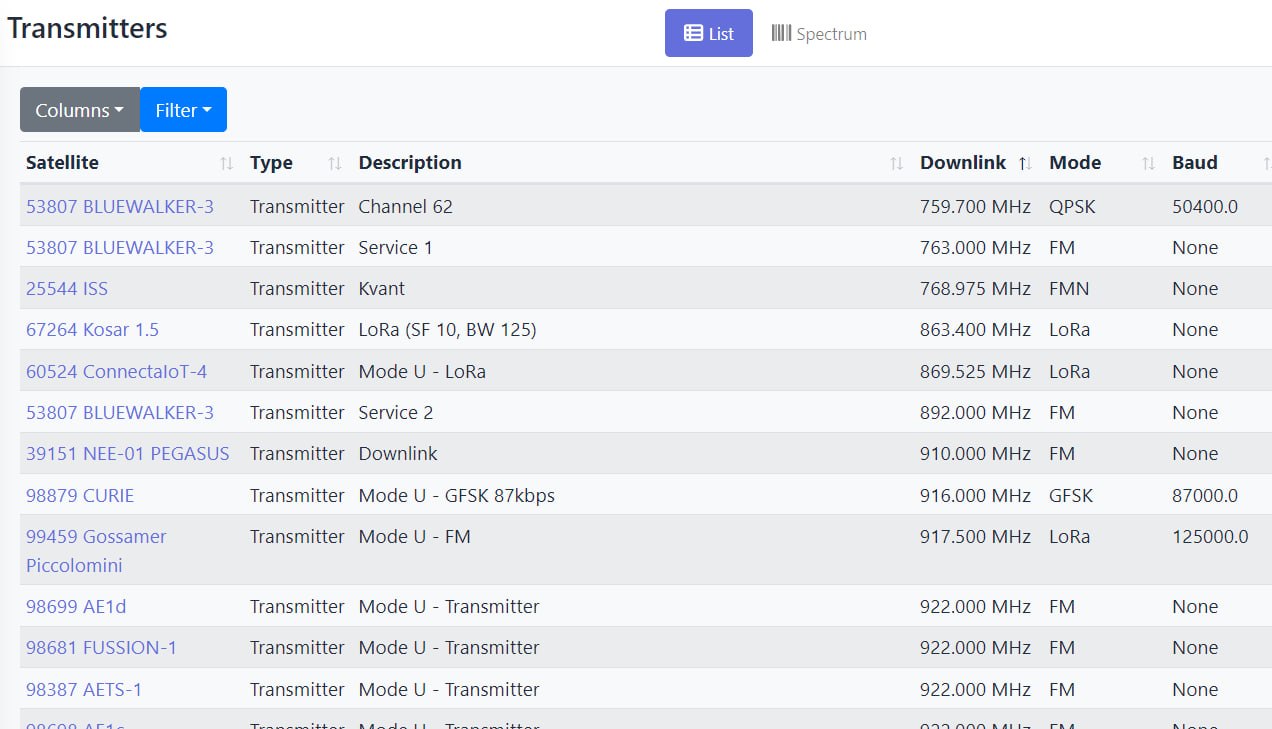
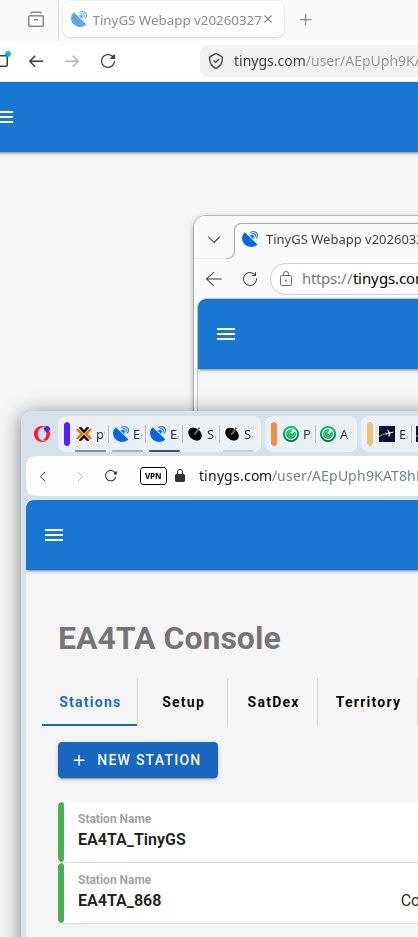
- Stefan/OE6ISP provided a detailed analysis of issues affecting 800/900 MHz reception, citing higher free-space loss, busy LoRaWAN bands in the EU, and increased cable losses. They recommended low-loss configurations, tracked yagis, and explained complexities of comparing different boards like Heltec V3 and Lilygo TTGO. 🔗
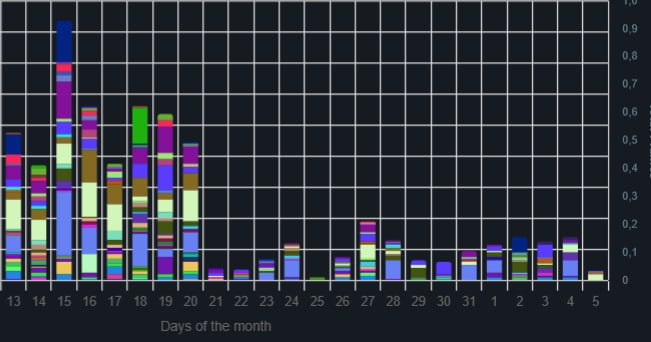
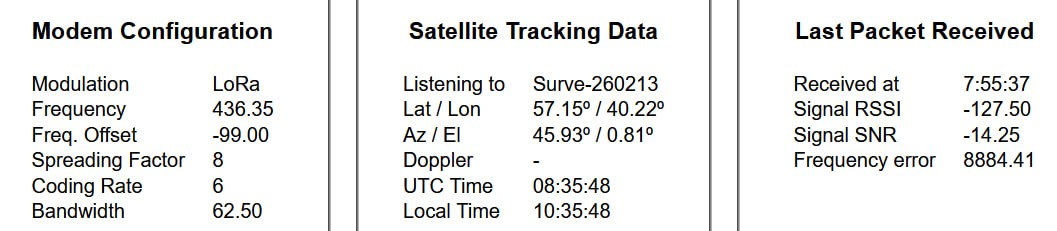
- Nicola reported a drastic drop in the number of satellites received, noting a stable ‘Freq. Offset’ of -99.00 and ‘Doppler’ at 0, and observed the algorithm preferring satellites with very low elevation. Stefan/OE6ISP explained that frequency offset is calculated from reference satellites and is not critical for LoRa, and that negative elevations are likely due to inaccurate TLEs. 🔗
Antenna Building
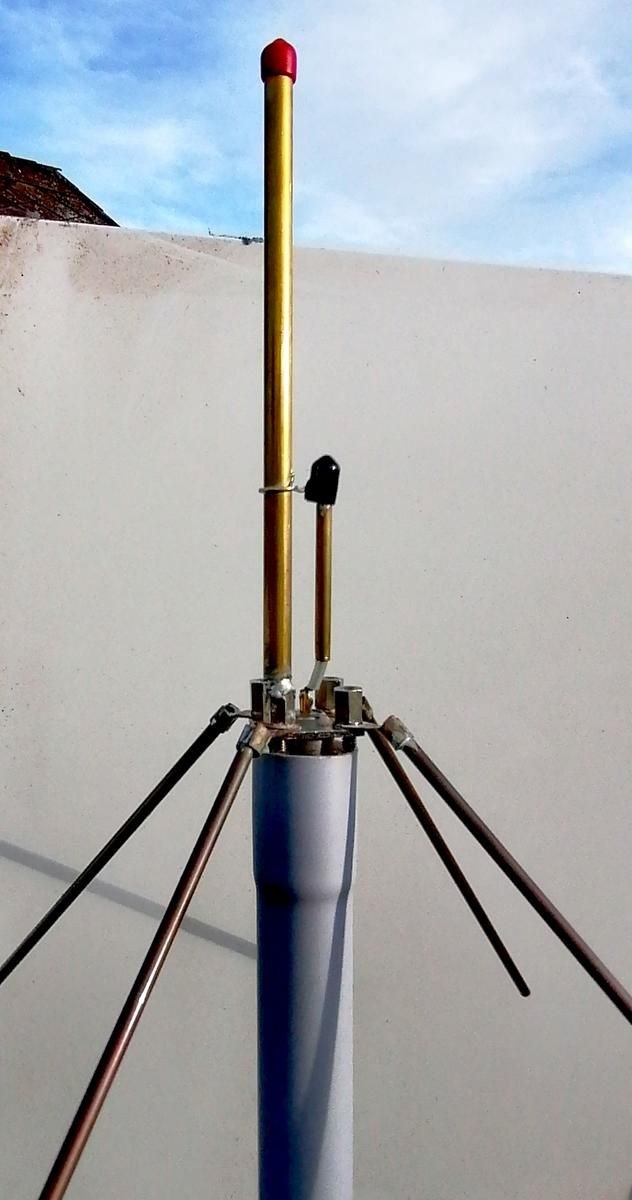
- metrologyrocks asked if anyone had tried Moxon antennas, specifically a 3D-printed pattern, and shared a link to a model. received feedback from other users who had tested it, with mixed results on performance compared to simple dipoles or ground planes, discussing the antenna’s compact size and directional pattern. 🔗
https://www.printables.com/model/1313115-tc3ec-433mhz-moxon-antenna
https://makerworld.com/en/models/1379081-433-mhz-moxon-antenna-1-1-swr#profileId-2269516
https://www.dxengineering.com/parts/msq-eb432rk70cm - Nick discussed modifying a Chinese Diamond 7900 antenna to compare it with a Moxon, noting that a stocked collinear antenna with an amplifier receives 2,500 to 3,500 packets per day. shared experiences with various antenna types, having tried QFH and Lindenblad with poor results, and settled on a collinear for 2m, a Moxon and a Yagi for 70cm, and a bi-quad for 35cm. 🔗
- Helmi provided feedback on antenna radiation patterns, explaining that a terrestrial-optimized antenna like a stocked 3*5/8 Lambda radiates very flat and is not useful for satellite reception from above. suggested a ground plane (GP) might work better and emphasized practical testing over simulation, sharing his own station setup with seven stations using dipoles, GPs, and QFH antennas. 🔗
Share your setup
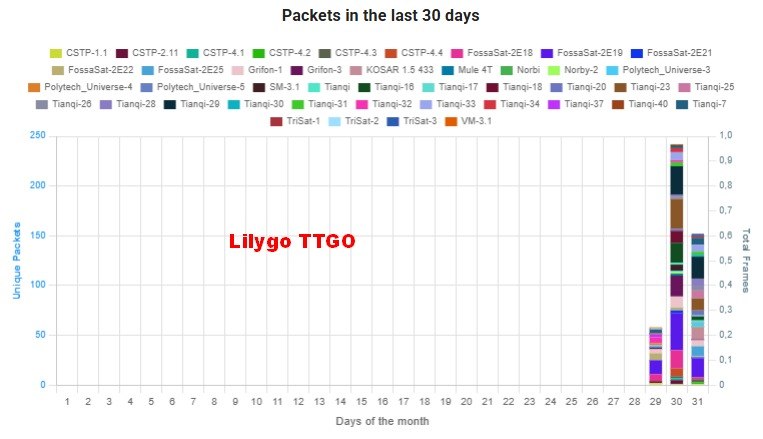
- LarsSM0TGU shared a comparison between a Heltec V3 and a Lilygo TTGO 32 v2 using the same antenna with an RX splitter, noting that the Lilygo decoded almost double the amount of unique packets. asked for comments on the results and later questioned if their Heltec board might be faulty. 🔗
https://app.tinygs.com/station/OE6ISP_6@1760298214
https://app.tinygs.com/station/OE6ISP_8@1760298214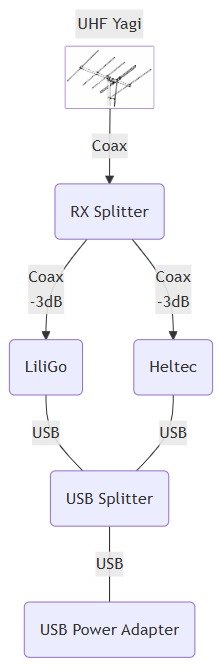
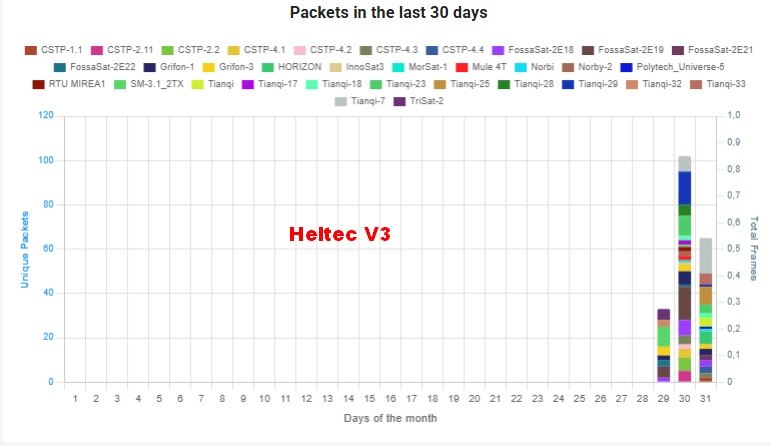
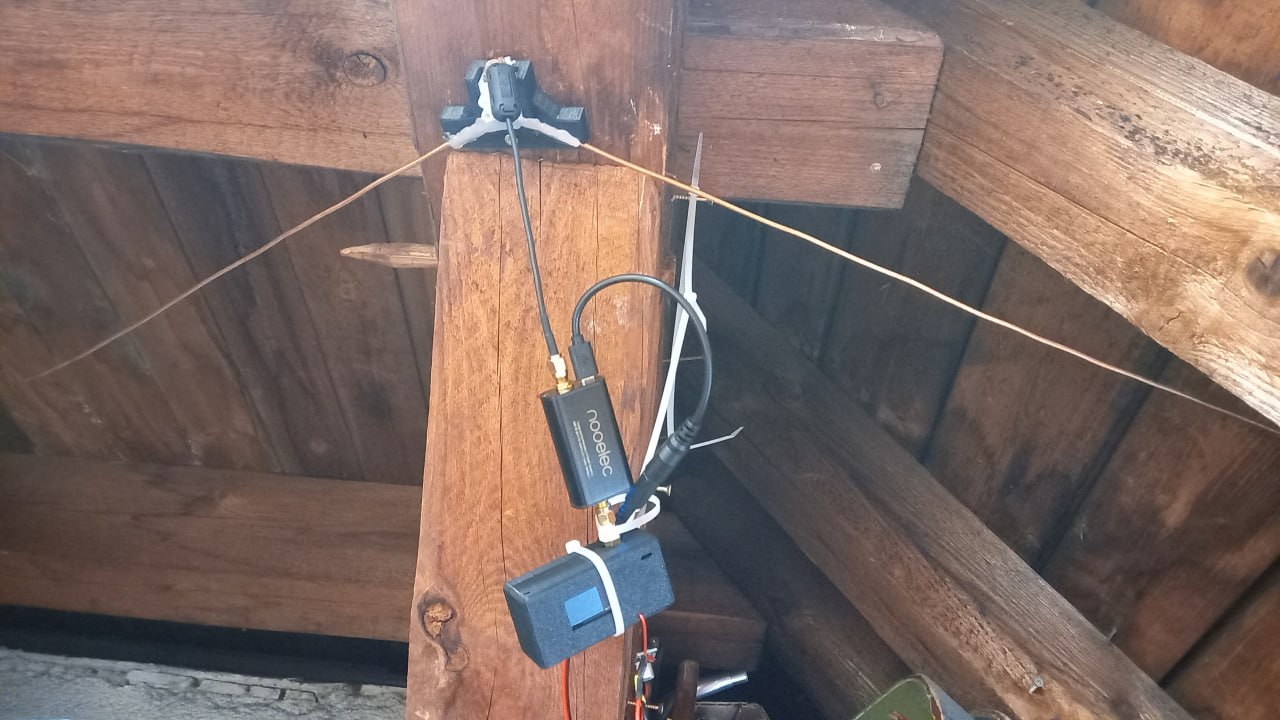
- metrologyrocks shared photos of an initial indoor antenna setup, excitedly reporting successful reception of some data. 🔗
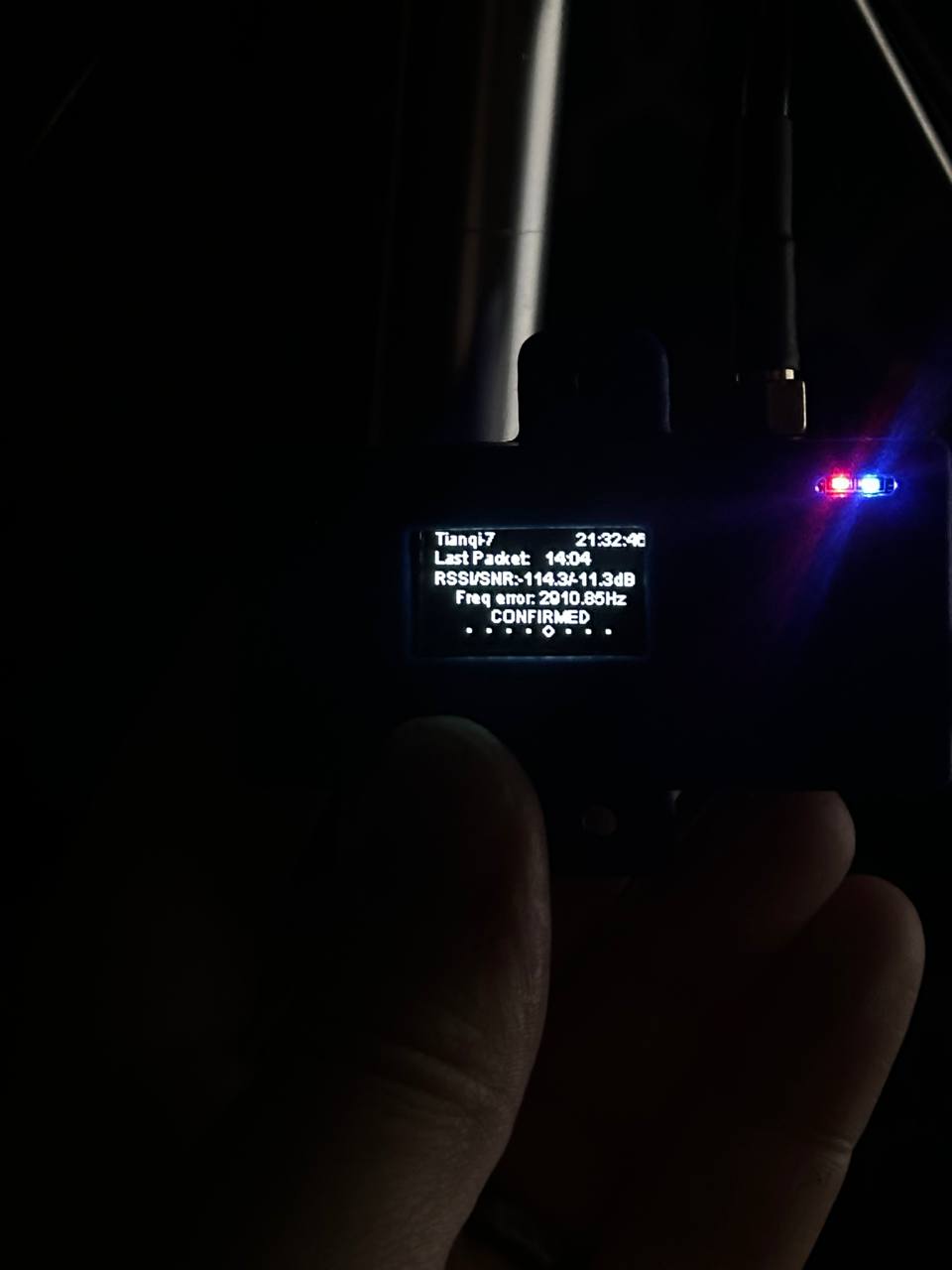
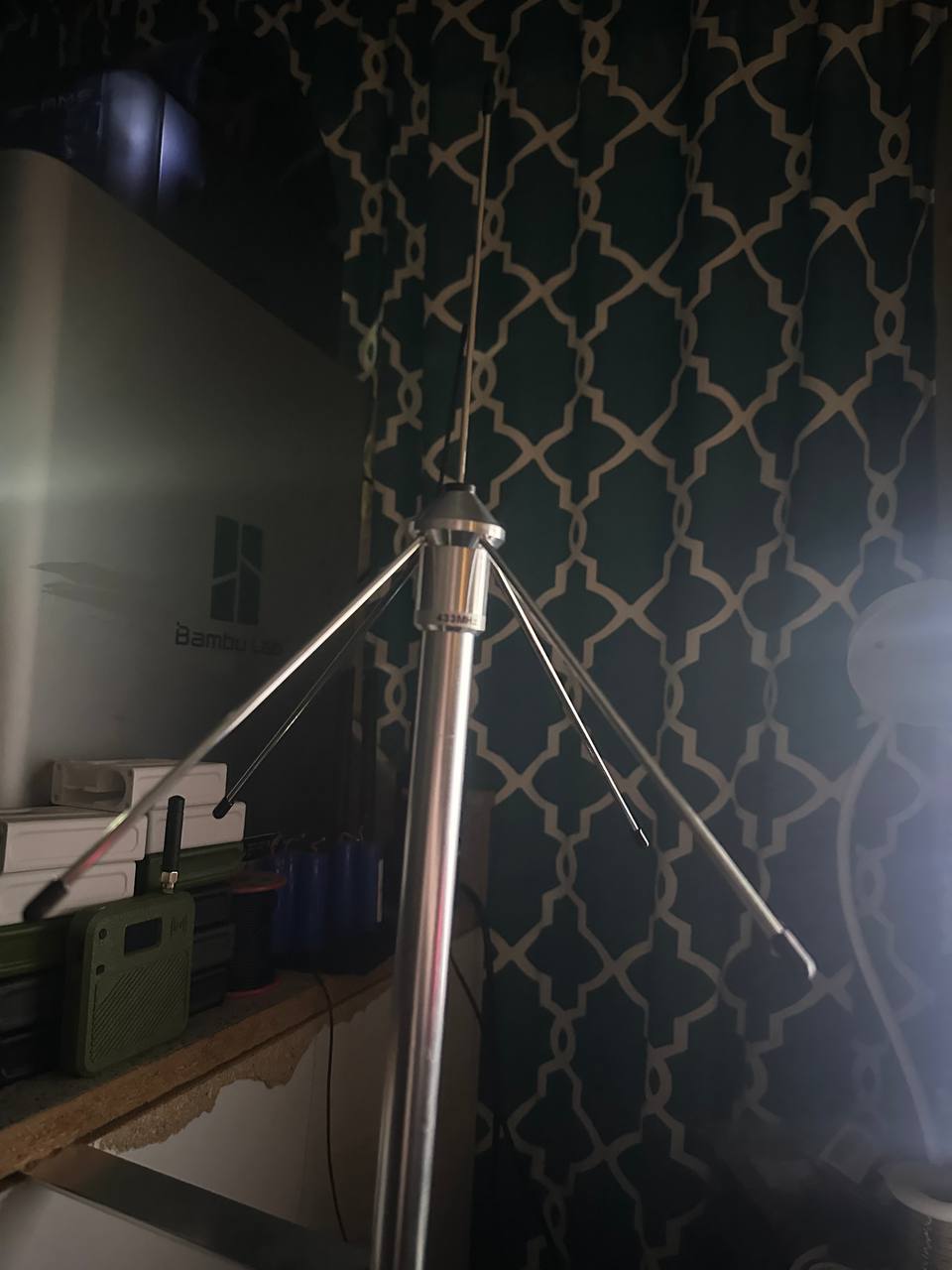
- Stefan/OE6ISP shared an unexpected hardware issue, noting corrosion on a connector as a surprise cause of reception problems, posting a photo of the oxidized component and speculating about the solder used. 🔗

General
- Jon raised a question about the legality of transmitting in the 400-401 MHz band using the !p (ping) command, given their ham license privileges. were advised that radio regulations are local and operators must ensure compliance, with a recommendation to use the ‘Test satellite ISM 433.3’ profile for safe testing. 🔗
- gmag11 initiated a conversation about watching the Artemis II launch, with several community members joining in to express excitement and share impressions. the discussion included a wish for a LoRa beacon on the Orion spacecraft to enable tracking. 🔗
- ubabematrix shared a 3D satellite tracking tool discovered during a local amateur radio club meeting, suggesting it could be useful for TinyGS presentations. also shared a link to a DIY satellite antenna rotator project designed by a school station. 🔗
https://satellitetracker3d.com/track
https://sarcnet.org/mini-satellite-antenna-rotator-mk1.html
New Satellites
- G4lile0 announced a new supported satellite from the Transporter-16 Rideshare mission, providing a link to the FossaSat-2E25 page on the TinyGS website. 🔗
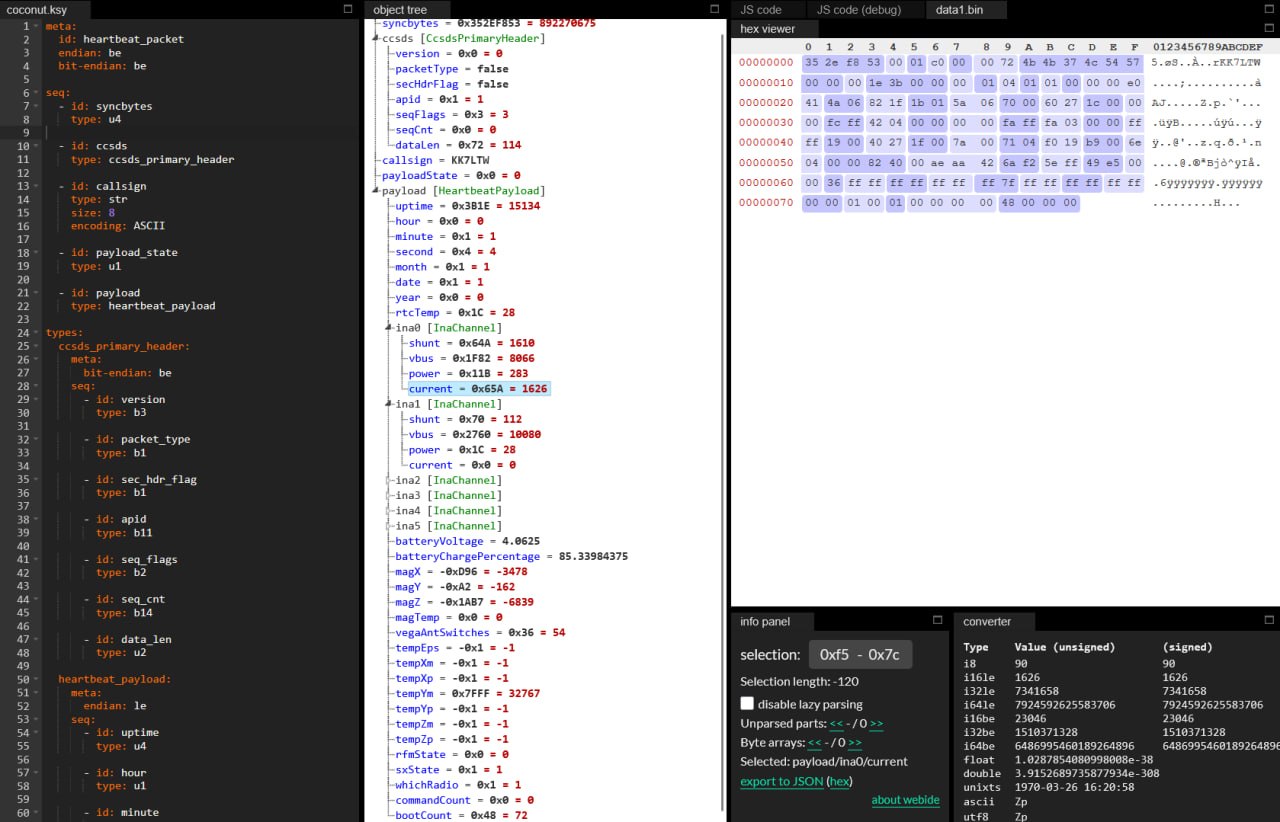
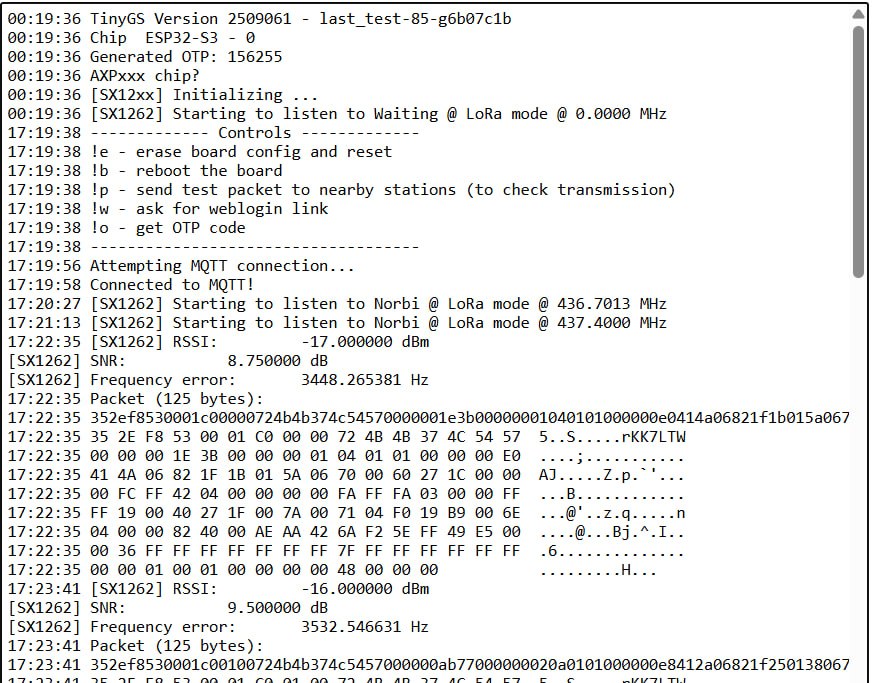
https://app.tinygs.com/satellite/FossaSat-2E25 - Tyler shared that they were able to get packets with a TinyGS station using manual tuning and decode them with the Kaitai web IDE, asking if there was a way to test both together in TinyGS. also shared images of their setup or results. 🔗
Balloons
- PE2BZ requested enabling a LoRa balloon for tracking, which was floating at 5000 meters and transmitting on 432.662 MHz in LoRa mode 2 using the default UKHAS format. shared a telemetry string from the balloon. 🔗
- PE2BZ shared a link to a balloon tracking page on SondeHub. another user provided a TinyGS station link as a placeholder to see which stations were listening for the balloon and shared related packet and satellite pages. 🔗
https://amateur.sondehub.org/#!mt=Mapnik&mz=5&qm=3h&mc=38.59916,26.00464&f=PE2BZ-11
https://app.tinygs.com/station/PC4L@197889195
https://app.tinygs.com/packet/019d4d5d-8481-73ba-a081-0b6cf3673c0e
https://app.tinygs.com/satellite/PC4L-L
Featured Conversations
- The community engaged in extensive troubleshooting of common hardware issues, from blank OLED screens on Lilygo and Heltec boards to configuration mismatches that prevent packet reception, highlighting the importance of correct firmware and dashboard settings for station functionality.
- Antenna performance was a major topic, with members sharing practical experiences comparing Moxon, collinear, Yagi, and ground plane designs, emphasizing that terrestrial-optimized antennas often perform poorly for satellite tracking and advocating for simple, well-tested setups.
- Technical challenges on the 868 MHz band were explored in depth, discussing factors like high free-space path loss, interference from LoRaWAN networks, and the critical role of low-noise amplifiers and precise antenna systems to capture weak satellite signals.
- Discussions around satellite tracking metrics clarified concepts like frequency offset and Doppler compensation, explaining how these are calculated from TLEs and why anomalies like negative elevation receptions often stem from inaccurate orbital data rather than propagation phenomena.
- The community shared valuable external resources and celebrated milestones, including a new supported satellite announcement, tools for 3D tracking visualization, DIY antenna rotator projects, and collective excitement for major space events like the Artemis II launch.
Latest Cubesats News

The Argentine microsatellite Atenea successfully completed its mission on Artemis II and provided data…
The Argentine microsatellite Atenea successfully concluded its 20-hour mission as part of NASA’s Artemis II, transmitting all programmed data to ground stations in Córdoba and Tierra del Fuego. It measured radiation levels and tested electronic components in extreme environments from low Earth orbit to deep space. Atenea set a national record by operating over 70,000 kilometers from Earth, validating long-range communication and navigation systems. The collected data will support future, more complex missions, marking a milestone for Argentina’s space program and international cooperation.

NASA selects Atmospheric Oxygen CubeSat mission for development | CU Boulder Today
NASA has chosen the AtmoCube mission for further development. The CubeSat will measure atmospheric oxygen to study Earth’s upper atmosphere. It is led by the Laboratory for Atmospheric and Space Physics at CU Boulder. The mission aims to improve understanding of atmospheric escape and space weather.

All the Space Events, Conferences, and Meetups Worth Your Time in April 2026
April 2026 features key policy, tech, and networking events globally, from Paris to Colorado Springs. Discussions focus on standards, PNT resilience, small-sat architectures, and space-enabled connectivity. The Artemis program remains the primary driver of tangible orbital progress. Other events serve as strategic forums for negotiating the alliances and plans supporting such launches.

Space: Greek cubesat Optisat in orbit, developed by Planetek Hellas of the Italian group D-Orbit
The Greek microsatellite Optisat was launched aboard a SpaceX Falcon 9 rocket from Vandenberg, California. Its mission is to demonstrate secure, high-speed optical satellite communications and onboard processing of Earth observation data. Developed by Planetek Hellas under an ESA contract, it aims for data transmission rates up to 1 Gbps. The project fosters collaboration with Greek and European partners to advance dual-use space technologies.

Korea’s CubeSat Deploys to Test Space Semiconductors - Businesskorea
South Korea’s K-RadCube CubeSat was deployed into high Earth orbit aboard Artemis II. It will measure radiation in the Van Allen belt and test semiconductor durability in extreme space conditions. The satellite carries Samsung and SK hynix chips to verify their performance under high radiation. Data collected will aid in astronaut shielding design and future space exploration missions.
13th Cal Poly CubeSat Launches into Space
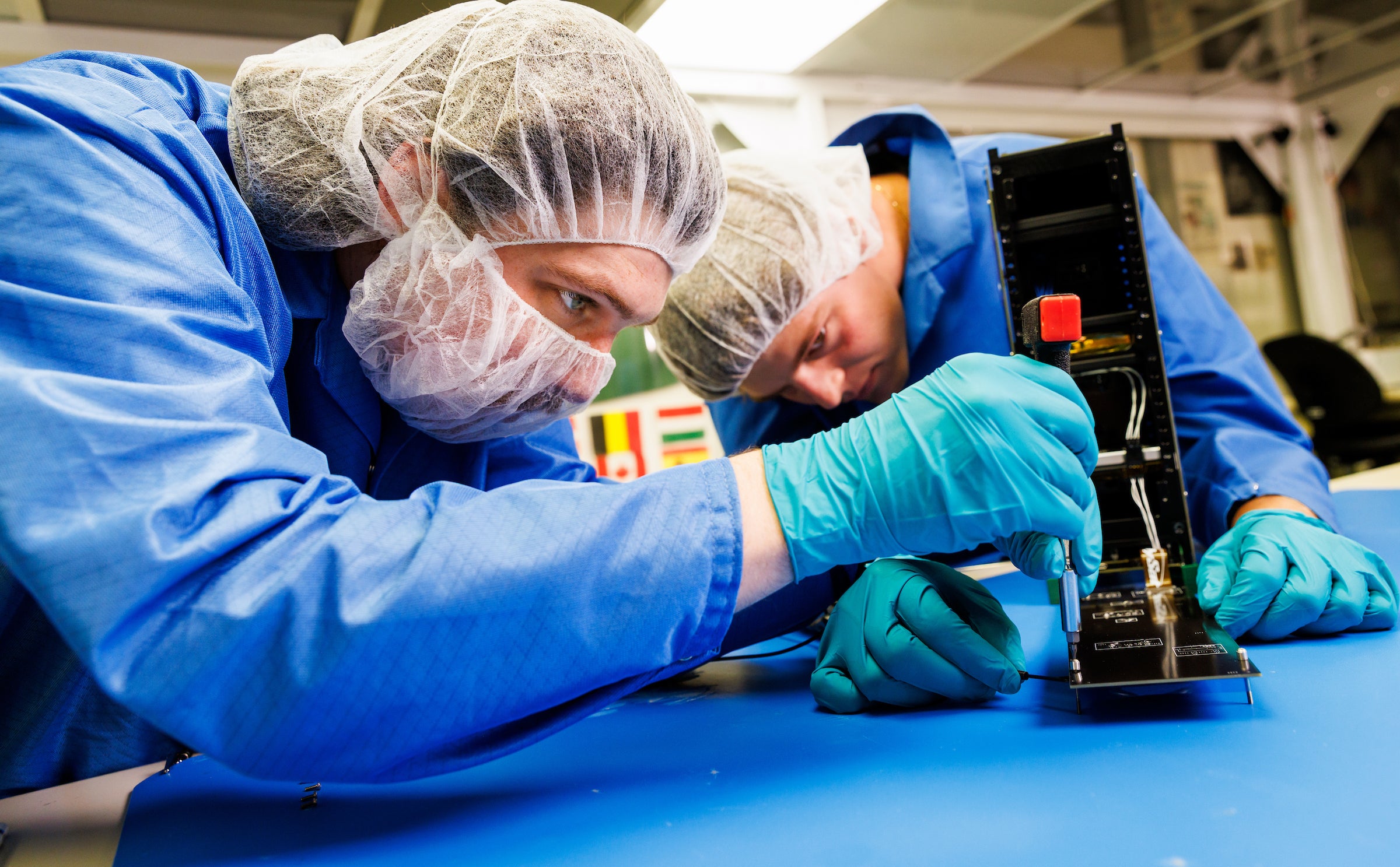
Cal Poly’s 13th CubeSat, a shoebox-sized satellite, launched aboard a SpaceX Falcon 9 rocket from Vandenberg Space Force Base. It carries two student-built payloads to test a radiation-hardened computer chip and a long-range radio device in low Earth orbit. Students and faculty watched the early morning launch, now monitoring the satellite daily from campus. The mission honors astronaut Sally Ride and builds upon Cal Poly’s legacy in CubeSat development.
Taiwan’s CubeSat trio reaches orbit, signaling a new phase for the space startup ecosystem
The Taiwan Space Agency successfully launched three 8U CubeSats into orbit. The satellites, named Bellbird-2, Black Kite-2, and Albatross-2, were developed by Taiwanese manufacturers. This launch represents the second batch from the agency’s Startup CubeSat Program. It marks a significant advancement for Taiwan’s domestic space startup ecosystem.

NGA launches quantum sensor into orbit - Janes
The NGA launched an advanced quantum magnetometer on a cubesat via a SpaceX rideshare mission to collect Earth’s magnetic field data. This sensor, developed with SBQuantum and Spire Global, aims to provide constant data to update the World Magnetic Model. The model is critical for military and commercial navigation, currently relying on periodic snapshots from other missions. The launch is part of the MagQuest initiative to develop more resilient geomagnetic data collection methods.
Antofagasta in Orbit: Region Drives Historic Project to Develop Its First Satellite
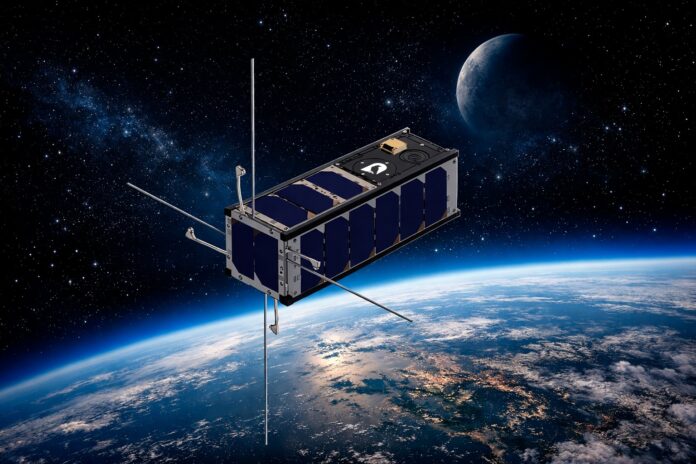
The Antofagasta Region is developing Chile’s first regionally-built satellite, a CubeSat for climate and territorial monitoring. Led by CINNDA and funded by the regional government, it aims to address mining waste, extreme heat, landfills, and natural disasters. The project includes training programs to build local aerospace talent, involving students from various technical fields. This initiative marks a step toward technological decentralization and positions Antofagasta as an emerging hub in Chile’s aerospace sector.

SpaceLocker launches ‘Out of the Box’ cubesat carrying five client payloads - Telecompaper
SpaceLocker’s first satellite, a 16U cubesat named ‘Out of the Box’, has been successfully launched into orbit via SpaceX. The approximately 20 kg satellite is carrying five client payloads. One key payload is the ‘Sterna’ computer by EDGX, which will operate as a space-based edge computing platform using Nvidia technology. The mission marks the French start-up’s entry into orbital operations with commercial and technological demonstration payloads.
What’s next
Join the TinyGS Telegram channel to participate in these discussions and contribute to the project. Your experiences and insights can help others build and improve their stations!