tinyGS
· TinyGS Community · 9 min read
Weekly Newsletter - April 19, 2026
Welcome to the TinyGS weekly community newsletter. Here are the most relevant discussions and developments from this week, covering hardware comparisons, antenna advice, station troubleshooting, and collaborative opportunities with new satellite missions.

Highlights
General
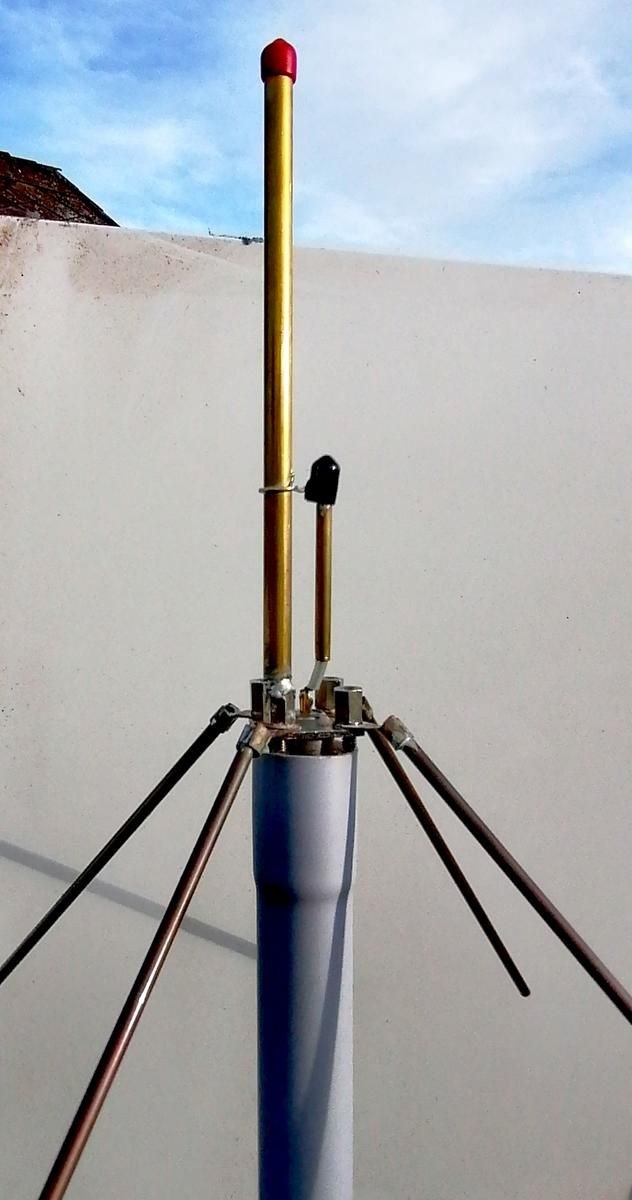
- HJ4CL asked about the Heltec V3 board’s capability to decode both LoRa and FSK, and whether other boards offer the same functionality, also inquiring about receiving space weather telemetry. SandroSartoni joined to ask if the default antenna was adequate for starting. Stefan/OE6ISP provided detailed answers, clarifying that the SX1262 chip handles LoRa and FSK well, while other chips have restrictions, and that space weather data is typically on separate channels. He strongly recommended against the default antenna, suggesting a groundplane build instead. 🔗
https://www.qrz.com/db/OE6ISP - Rick shared a performance comparison, noting that switching from a LilyGO T3 v1.6 board to a Heltec Wireless Tracker increased daily packet reception from 400 to 700 on the same antenna. He inquired if the difference was due to the SX1262 chip’s dual decoding capability, which was confirmed. The discussion also noted that T3 boards can have frequency stability issues. 🔗
- LZ inquired about the best hardware for FSK reception, asking if there was something better than the Heltec V3 and why there was no standard configuration for it on their TTGO board. After clarification that TTGO and Heltec are different, they asked if loading firmware on a Heltec would automatically enable the option and if a TCXO would help. Stefan/OE6ISP and Peter confirmed the Heltec V3 is the best option, is plug-and-play with a configuration available, and has a built-in TCXO crucial for FSK due to low drift. 🔗

- Voltor4 asked the community for opinions on using two separate ground plane antennas versus a TV splitter for simple installations without an LNA. Based on personal experience, they later reported that using two separate antennas resulted in a slightly better SNR and a much cleaner waterfall display compared to sharing a single antenna. 🔗
- Mike provided an update on a potential TinyGS presentation for a local club. He had given a talk on building a 6m Moxon antenna for meteor scatter and then introduced the group to TinyGS, successfully sparking interest in space communications. 🔗
- DK6OC shared that they once ran a well-attended workshop on TinyGS, which included a presentation on the basics and a practical session where participants programmed a ground station and built their own ground plane antennas. They mentioned the possibility of running another workshop in the future. 🔗
Technical Problems
- Voltor4 asked for advice on the optimal azimuth to point a fixed antenna for Connecta satellites, specifically wondering if aiming towards Turkey was necessary. Stefan/OE6ISP provided a comprehensive response, explaining the ideal direction depends on location. Based on experience in Austria, they recommended a 5-element yagi pointed south with an elevation between 20 and 40 degrees, noting that SSO orbits mean north could also work and that a fixed 5-element yagi often outperforms a larger 12-element one without tracking. 🔗
- Peter reported inconsistent behavior between his stations in Thailand, where received packets were visible on the local console but not on the web console. He noted test and surveillance packets were forwarded via MQTT but not displayed online. Helmi explained that the lack of displayed packets might be due to no satellites transmitting on 868 MHz in Thailand, as ConnectaIoTs only operate in Europe. He clarified that test and surveillance packets are generally not shown on the web console and identified a discrepancy in the station’s last packet time as a known bug scheduled for a fix. 🔗
- Cozmo discussed testing antenna placement by observing noise floor changes on an SDR with constant gain. They noted the current mount was on a vent pipe and were considering a ridge mount for better roof placement to analyze signal performance. 🔗
New Satellites
- Harrish introduced their CubeSat mission and expressed interest in collaborating with TinyGS for their ground segment. They sought integration for global data reception, support for decoding telemetry, guidance on protocol optimization for compatibility, and optional data routing via MQTT/API. Helmi directed them to review the last 20+ posts in the thread and the wiki for comprehensive information. 🔗
https://t.me/c/1448773154/78478/205103 - G4lile0 offered to add a new satellite to the testing database, requesting the satellite info, a Kaitai file, and a link to test packets. 🔗
Balloons
- PE2BZ inquired if anyone was listening for their ‘pc4l’ balloon, believed to be at 5400 meters altitude. They provided an update that its last known position 8 days ago was over southern Ukraine with spoofed GPS, but it was shown on a map in Peru at an altitude below the mountains. G4lile0 activated surveillance mode and requested an approximate location to aid reception. PE2BZ later expressed hope for detection and offered to free up surveillance mode if needed. 🔗
Featured Conversations
- The community extensively discussed hardware selection, concluding that the Heltec V3 board with its SX1262 chip and integrated TCXO is currently the optimal choice for reliable FSK and LoRa satellite reception, outperforming other boards that may suffer from frequency drift.
- Antenna configuration was a key topic, with practical advice shared on using multiple independent ground plane antennas to improve signal-to-noise ratio and waterfall clarity over using a splitter, and recommendations for fixed yagi orientation to maximize coverage of specific satellite orbits.
- A new CubeSat mission team reached out to explore integration with the TinyGS network, seeking collaboration for global telemetry reception and guidance on protocol compatibility, highlighting the project’s growing role in the small satellite ecosystem.
- Members shared successful outreach efforts, including a detailed workshop on TinyGS fundamentals and antenna building, and a presentation to a local radio club that generated significant interest in satellite communications.
- Technical support was provided for station troubleshooting, clarifying regional differences in satellite visibility, explaining the handling of test packets, and confirming known software bugs slated for future updates to improve user experience.
Latest Cubesats News
NASA CubeSats Advance Space Weather, Tech Research
NASA launched multiple CubeSats to test thermal protection, improve space communications, and study Earth’s atmosphere. The AEPEX CubeSat investigates energetic particles to enhance space weather understanding, which impacts satellites and radio. Other payloads will refine the World Magnetic Model and demonstrate technologies for radiation sensing and rapid spacecraft deorbiting. These rideshare missions provide a cost-effective way to accelerate innovation and strengthen the orbital economy.

NASA’s CubeSat Begins Groundbreaking Study of Radio Waves in Earth’s Space Environment
The CANVAS CubeSat mission studies how very low-frequency radio waves from lightning and human sources travel from Earth into space. It aims to understand how these waves affect high-energy electrons in Earth’s radiation belts, which impact satellites and ground systems. Equipped with specialized sensors, it measures wave energy and direction to improve space weather prediction models. The mission is part of NASA’s low-cost CubeSat Launch Initiative, advancing research and providing educational opportunities.
4D Systems’ Off-the-Shelf Serial Camera Module Supports Expleo’s ENSO CubeSat …
The uCAM-III imaging module from 4D Systems has achieved TRL9 after a successful two-year low Earth orbit mission. It operated aboard Expleo’s ENSO, a 1U CubeSat dedicated to research and development. This milestone validates the module’s performance and reliability in the space environment. The commercial off-the-shelf component has now been proven for use in orbital applications.

JAXA Sets Launch Date for April 23 for Eight CubeSats on “Innovative Satellite Technology Demonstration-4”
JAXA will launch eight CubeSats on April 23, 2026, using Rocket Lab’s Electron rocket. The mission is part of a program to demonstrate new hardware and technologies in space. Four of the satellites are re-flight attempts from a previous mission that failed to reach orbit. Their objectives include formation flying, ocean data collection, debris reduction, and Earth observation.

Moscow Region Schoolchildren Assembled and Launched a Satellite with a Telescope into Orbit
Students from Podolsk built a CUBESAT 3U satellite equipped with an optical telescope they assembled themselves. The “UmkA-1” satellite was launched from the Vostochny Cosmodrome aboard a Soyuz-2.1b rocket. It is currently the only operational Russian school satellite conducting full scientific observations from orbit. The students receive deep-space images, process data, and also transmit digital drawings from the satellite for radio amateurs worldwide to receive and decode.

Rocket Lab : CSD Satellite Separation Systems Power CubeSat Missions on Artemis II
Rocket Lab’s Canisterized Satellite Dispensers (CSDs) successfully deployed four CubeSats during NASA’s Artemis II crewed lunar mission. These CSDs housed and protected the satellites, releasing them flawlessly into high Earth orbit about five hours after launch. The systems underwent rigorous testing to meet strict safety standards for the crewed flight. Their performance enabled international CubeSat experiments that will aid future lunar and Mars exploration technologies.
“Ioffe-1” will carry the names and drawings of earthlings: “Geoscan’s” CubeSat launches in …
Geoscan is collecting names, drawings, and photos until October 15 to be placed on the “Ioffe-1” CubeSat, launching in winter 2026-2027. The satellite will join the “Supernova Hunters” constellation, equipped with a gamma-ray burst detector and a panoramic camera. The flight control center will select the 100 best drawings and broadcast them to Earth via amateur radio. This is Geoscan’s third such campaign, following previous missions that sent thousands of names into orbit and even recorded a gamma-ray burst from the early universe.

Technology CubeSat hitch-hiker on today’s HTV launch - SpaceWar.com
The ESA CubeSat GomX-3 launched aboard Japan’s HTV spacecraft to the International Space Station. It carries two receivers to monitor telecom satellite signals and track civilian aircraft traffic. The satellite, developed in Denmark, will undergo a six-month technology demonstration after deployment in September. CubeSats offer a faster, cheaper way to test new miniaturized space technologies.

PolySat Lab’s latest CubeSat mission in orbit - Mustang News
Cal Poly’s 13th CubeSat mission, SAL-E, successfully launched into orbit from Vandenberg Space Force Base. The student-run PolySat Lab designed and built the satellite, with teams handling structure, mechanisms, and communications. Students monitored the launch and now track the satellite from a ground station, overcoming numerous obstacles as a collaborative team. This mission represents months of work by students and alumni, serving as a foundational experience for future engineers.

The $55 Million Bet That Data Centers Belong in Orbit, Not Bunkers - Space Daily
TakeMe2Space secured $55 million to develop orbital data centers, starting with AI inference for Earth observation to reduce bandwidth costs. The company argues orbital infrastructure offers resilience against terrestrial threats and is necessary for future space expansion. Its initial focus is a niche market like agricultural monitoring, with a working cubesat already in orbit. The next step is launching a more advanced satellite to prove commercial viability before scaling to larger constellations.
What’s next
Join the TinyGS Telegram channel to participate in these discussions and contribute to the project. Your experiences and insights can help others build and improve their stations!