tinyGS
· TinyGS Community · 13 min read
Weekly Newsletter - May 24, 2026
This week, the TinyGS community tackled everything from antenna optimization and filter design to the fascinating possibility of LoRa Earth-Moon-Earth communication. A critical fix for decoding Tianqi satellites was shared, while Thailand's Satfinder project celebrated a massive expansion of the ground station network, and members dove into the technical details of the PY4 mission's data collection methods.
Highlights
General
- Richard tried to set up a new Heltec LoRa32 V3 board on the 868 MHz band but faced difficulties, while their 433 MHz setup was working flawlessly. Peter helped troubleshoot, suggesting to try the default credentials (admin/12345678) to access the local config page, and to use the same MQTT credentials as the 433 board, even selecting the 433 board as the board type during initial setup. After configuration, Peter recommended using the web page to set up the antenna and RX range, then enabling autotune 900. Richard confirmed the default password didn’t work, and Peter suggested a reflash might be needed, also noting that the OTP code appears on the local dashboard after boot. 🔗
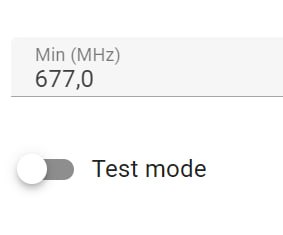
- Roberto_Santavenere noticed that the ‘Packets in the last 30 days’ graph on their station IU1TJV had not updated for a week. Stefan/OE6ISP explained that the station was in test mode, which prevents packet counting, and provided guidance on how to change it by editing the station settings. After updating the configuration, Roberto confirmed the issue was resolved and thanked Stefan for the help. 🔗
- Andreas asked about scientific papers describing TinyGS being used to collect GNSS data from satellites for orbit determination. Stefan/OE6ISP responded that several satellites transmit GNSS data, pointing to the PY4-cluster mission which used GPS data, and shared a link to a project summary paper. Andreas thanked for the resource and confirmed understanding that PY4 satellites beaconed down GPS data which was used for orbit determination, referencing a TinyGS packet as an example. Stefan/OE6ISP confirmed that the PY4 team calculated their own TLEs from downlinked data, independent of Norad observations, and directed to his QRZ page for more details. 🔗
https://digitalcommons.usu.edu/cgi/viewcontent.cgi?article=5862&context=smallsat
https://app.tinygs.com/packetIna/5a66cf03-b7c4-4724-9a67-0dae0961ae0c
https://www.qrz.com/db/OE6ISP - siamcreative shared great news about the Satfinder project in Thailand, led by K’Watchara, which provides hands-on satellite communication training for teachers and students, resulting in a 500% increase in ground stations in Thailand, all named with the SatFinder_XXX format. 🔗
http://wifinder.in.th - Aadish asked whether TinyGS expects all packets to use a standard protocol like AX.25 or HDLC, or if custom framing is acceptable as long as decoding documentation is published, referencing the docs’ note about obscured payloads being dropped. 🔗
- Andreas inquired about how the PY4 mission collected its data, looking for an API to retrieve data via Python script. Stefan/OE6ISP pointed to the mission’s Python software on GitHub and explained that there were multiple redundant paths: TinyGS and Satnogs for telemetry, plus custom Python scripts on Raspberry Pi for uplink/downlink of payload data. 🔗
https://github.com/maholli/PY4_gs - Stefan/OE6ISP shared an interesting video from Scott Manley about small satellite technologies. 🔗
https://www.youtube.com/watch?v=Ua_8XgmOMF4
Where to buy
- Sergey offered a batch of leftover hardware for a symbolic 1 USD plus shipping within the continental US, including Heltec and LilyGO ESP32 LoRa modules, LNA modules, helical filters, and a power supply filter board, with local pickup available in San Jose, California. Jon expressed interest in purchasing the bundle, and Sergey confirmed the sale and said he would DM Jon. 🔗
https://www.amazon.com/dp/B09JLNYMGV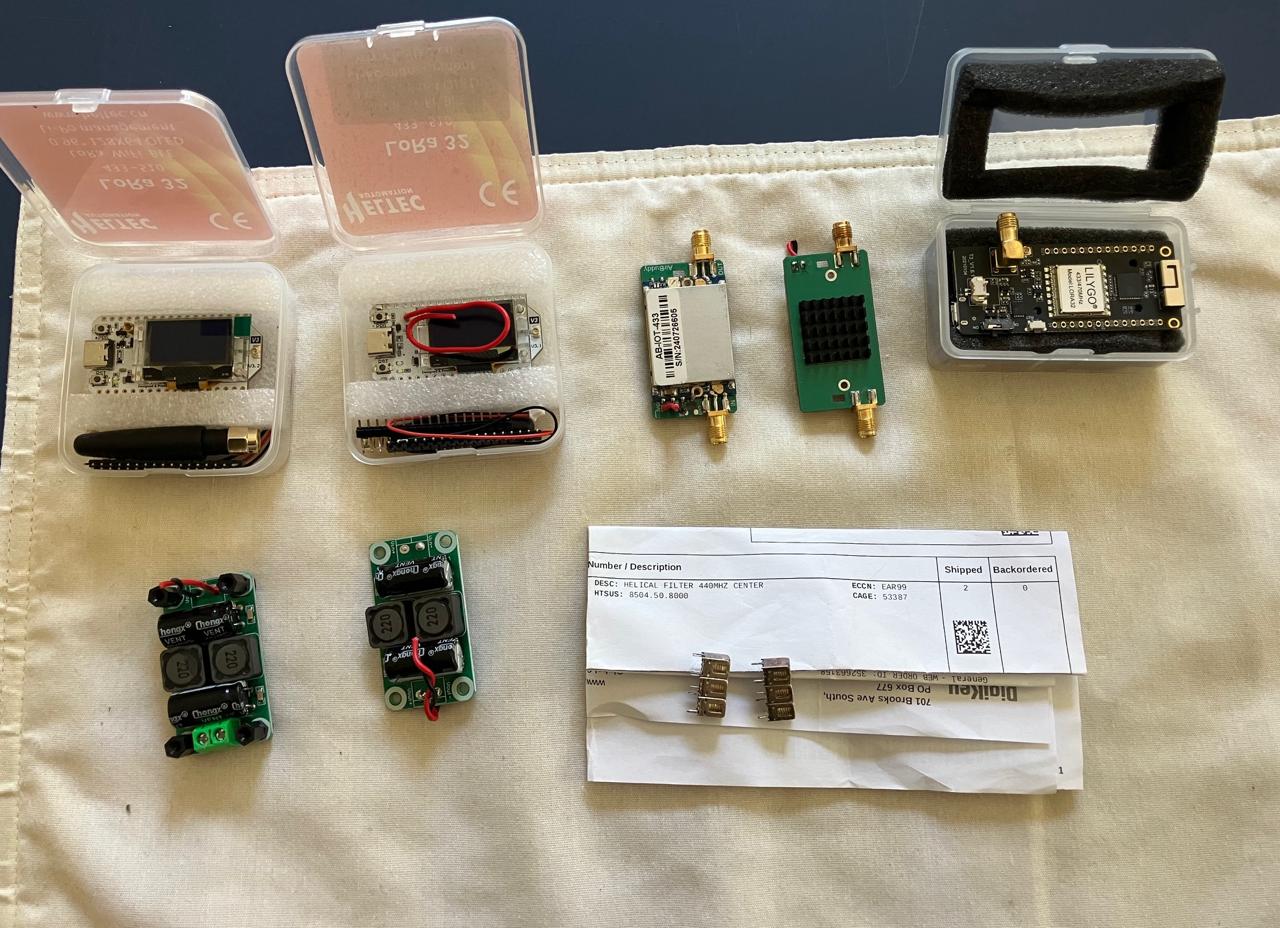
Share your setup
- Stefan/OE6ISP shared an effective and inexpensive high-pass filter design for reducing noise floor on a station. After experiments with bandstop stubs, they calculated a 5th-order Chebyshev high-pass filter using an online calculator. The filter, built with lumped components, reduced the noise floor by 8 dB on station OE6ISP_2, with less than 0.5 dB passband loss using good capacitors. In response to a question from SandroSartoni about why a high-pass filter was used instead of a bandpass, Stefan explained that local interference from a strong TETRA tower motivated the design, and they are also working on a low-pass filter for the upper end to create a combined bandpass. SandroSartoni then asked about the upper frequency limit for lumped components and whether microstrip filters would work. Stefan replied that 400 MHz is manageable with high-Q capacitors, noting that Chebyshev filters have poor group delay (which affects LoRa) and that Butterworth might be better. They mentioned stripline filters as a future project, emphasizing the goal of creating an effective solution with simple means: just a few capacitors and coils. 🔗
https://www.changpuak.ch/electronics/chebyshev_highpass.php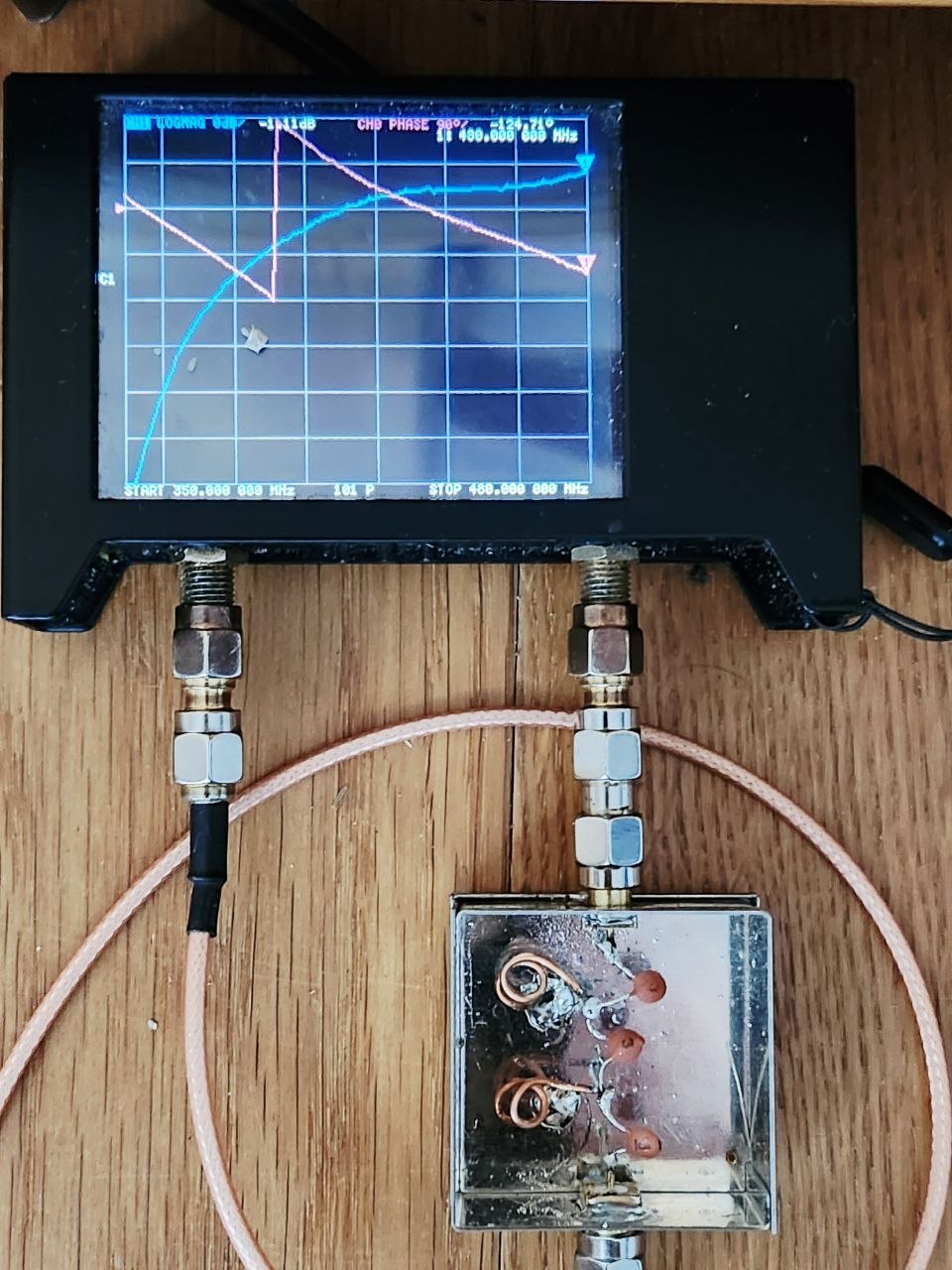
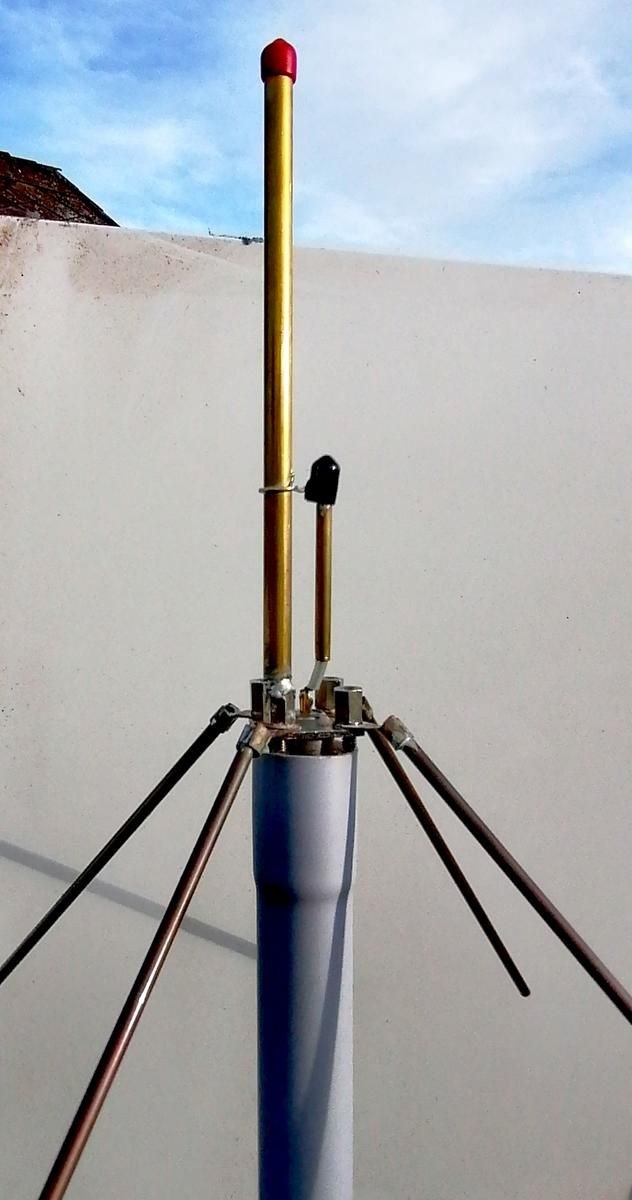
- Juan Pablo replaced the Heltec stock helical antenna with a dual-band (144–430 MHz) generic antenna shared with a radiosonde receiver. Although the splitter introduces about 3.5 dB of attenuation on each output, the change has been beneficial for TinyGS, while the impact on radiosonde reception has been barely noticeable. 🔗
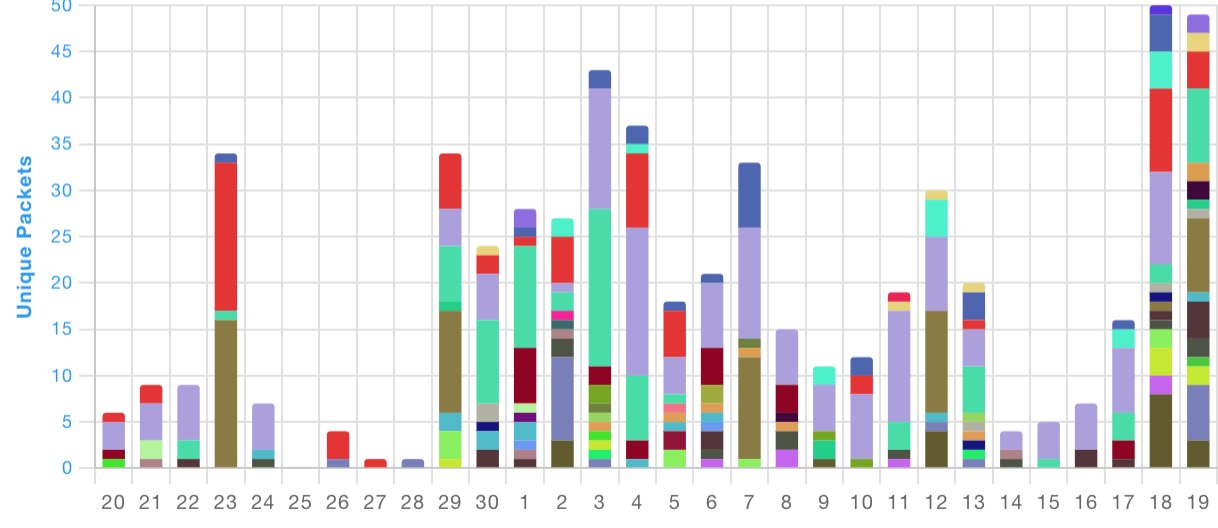
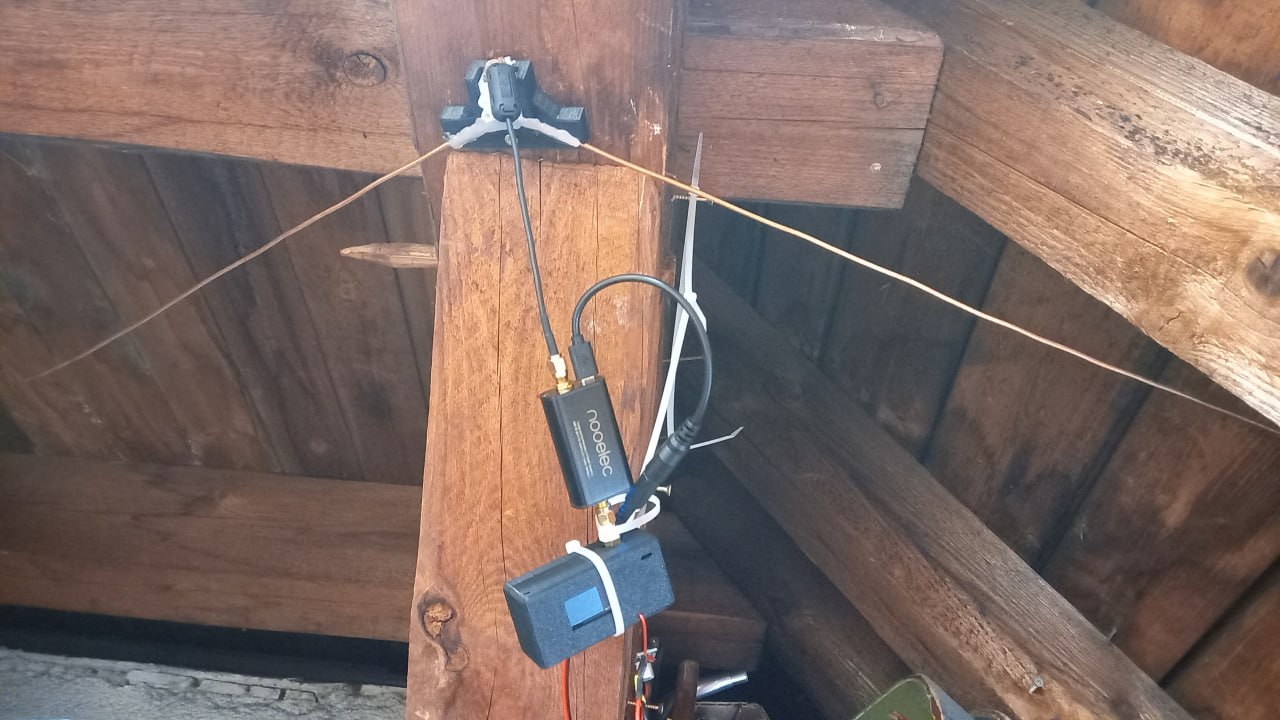
- Stefan/OE6ISP shared an improvement to their station OE6ISP_1 by moving the LNA directly to the antenna, eliminating the loss from 1.5 meters of cable, noting that there is always another 0.5 dB to be found. 🔗
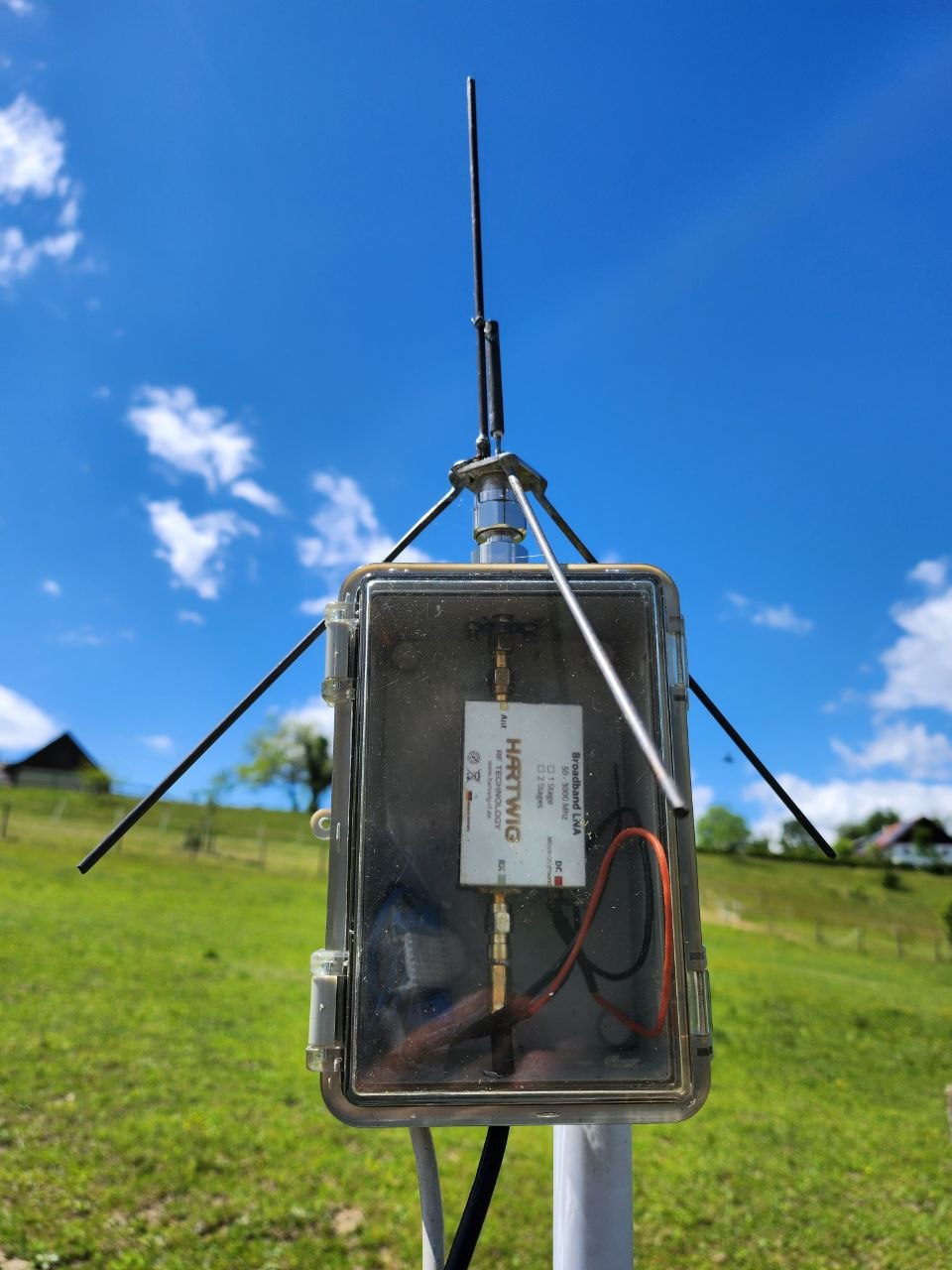
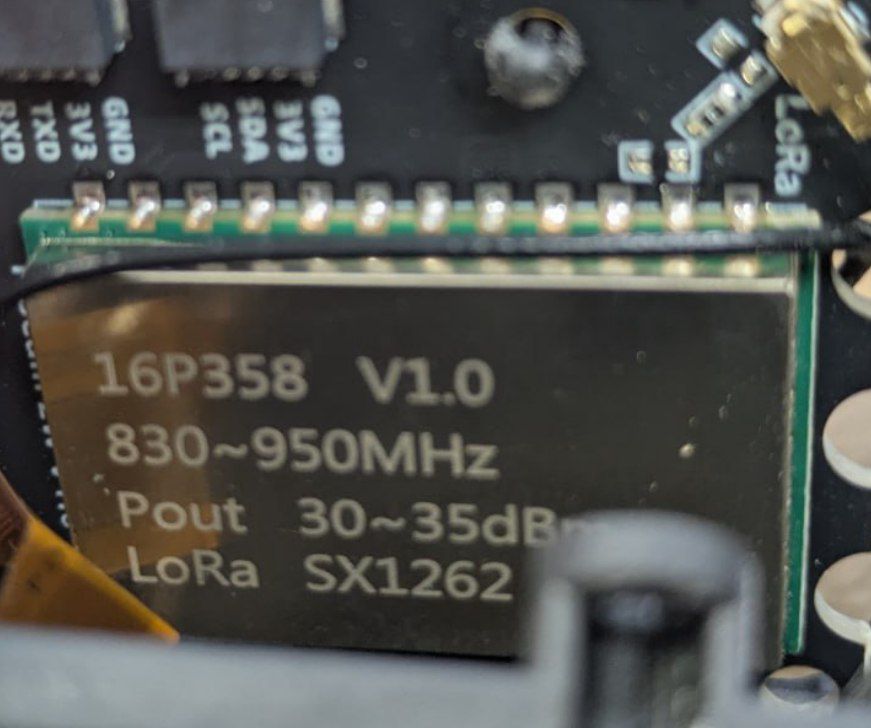
- Stefan/OE6ISP shared a photo of his antenna setup, mentioning he was active on the moon with very good conditions, and that when parked to the south, the antenna is connected to two TinyGS stations (oe6isp_6 and 8), with the tracker available for TinyGS if needed. This sparked a discussion about the feasibility of using LoRa for Earth-Moon-Earth (EME) communication. Jon asked Stefan if he is able to do moonbounce using LoRa, suggesting it might be practical with that antenna and lower rate LoRa settings. Stefan responded that his own echo is around -27dB, likely insufficient, and mentioned the TX bandwidth of the PA as another problem, but offered to try receiving if someone can transmit, calling it an interesting experiment. Jon suggested using short LoRa packets at ultralow bit rates, sharing a link to a site claiming to have done it, and noted that at ultralow bps rates, a 170 dB link budget is practical. G4lile0 shared links to a Hackaday article and a YouTube video about moon bouncing and radar imaging with LoRa, expressing interest in replicating the experiment. Stefan acknowledged that SF12 and low bandwidth increase processing gain, and later mentioned he can transmit with 38dBm, but expressed skepticism about using less than 50W for such an experiment, comparing it to his 50W Q65 signals that come back at -27dB SNR. Jon noted that using a watt or two of power helps, and that two radios (one transmitting, one receiving) must be used, and shared a link to a discussion on the Ham-Radio-LoRa-APRS group. megazaic shared a photo of a T-Beam-1W, hinting at its capability. 🔗
https://engprojects.tcnj.edu/lora-eme/
https://hackaday.com/2021/12/03/moon-bouncing-and-radar-imaging-with-lora/
https://www.youtube.com/watch?v=N9Uv-oVUISg
https://groups.io/g/Ham-Radio-LoRa-APRS/message/368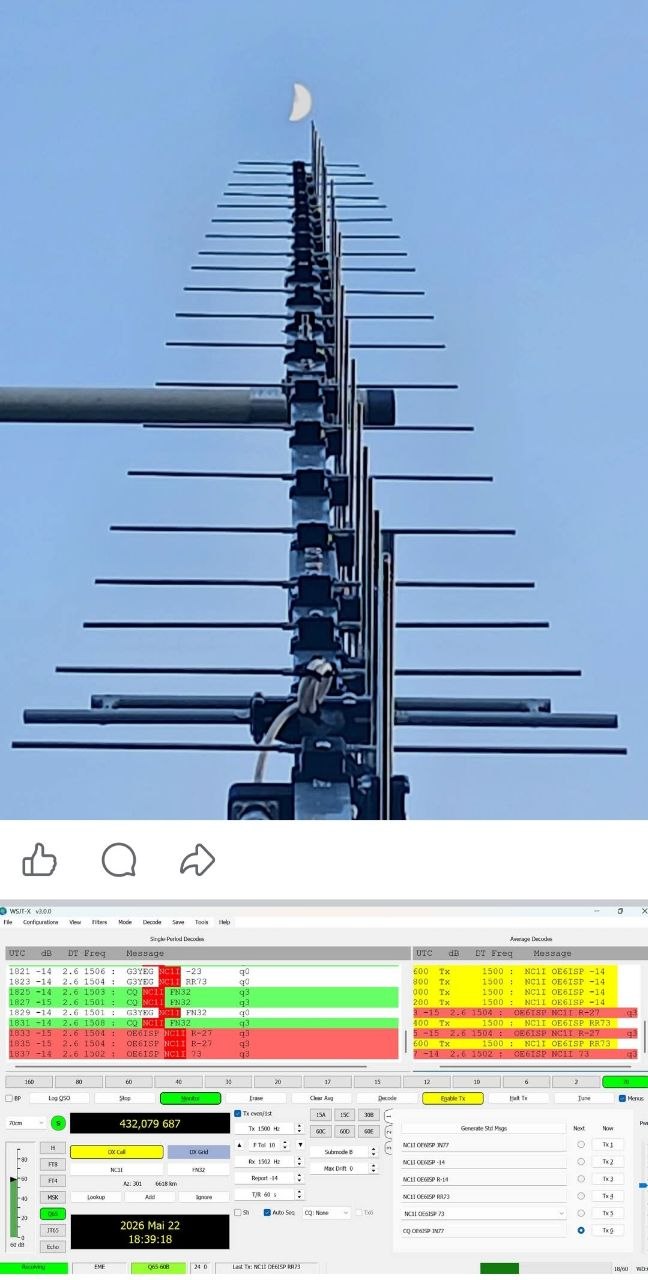
Antenna Building
- Catalin asked if anyone has used a parasitic Lindenblad antenna for ~440 MHz and whether it gives good results, theorizing it should be better than a ground plane antenna. Stefan/OE6ISP replied that a previous post mentioned it performs poorly and questioned why it would be better in this scenario. Helmi added that they tried it some years ago but changed back to a simple dipole and ground plane. Catalin later expressed gratitude for the advice, noting that the shared opinions based on results have clarified the direction to follow. 🔗
Technical Problems
- holysmoke_pdx asked about the MQTT topic to capture elevation, azimuth, distance, and lat/long data for satellites seen by their ground station. Helmi responded that these data are not transmitted via MQTT, and suggested calculating the information using TLE data or looking into the source code. 🔗
- KG4DRP asked how to change the WiFi configuration on their station, and Peter replied that the option is available in the local dashboard under configuration. 🔗
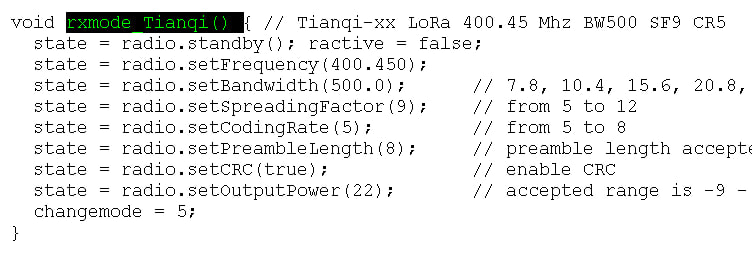
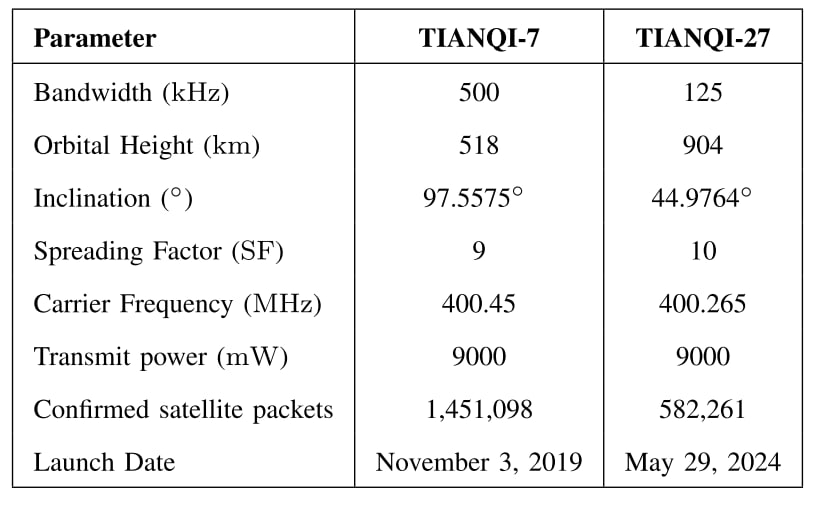
- gcarpi asked for help decoding Tianqi satellites on 400.265 MHz, getting only packets with invalid CRC using an ESP8266 with SX1278 and Nooelec LaNA, and requested correct configuration parameters. G4lile0 responded that for Tianqi satellites, it is mandatory to activate LDRO (LoRa Low Data Rate Optimization) by using forceLDRO(true). megazaic shared two photos with the caption ‘hmmmmm… 🤔’, likely showing related data or observations. 🔗
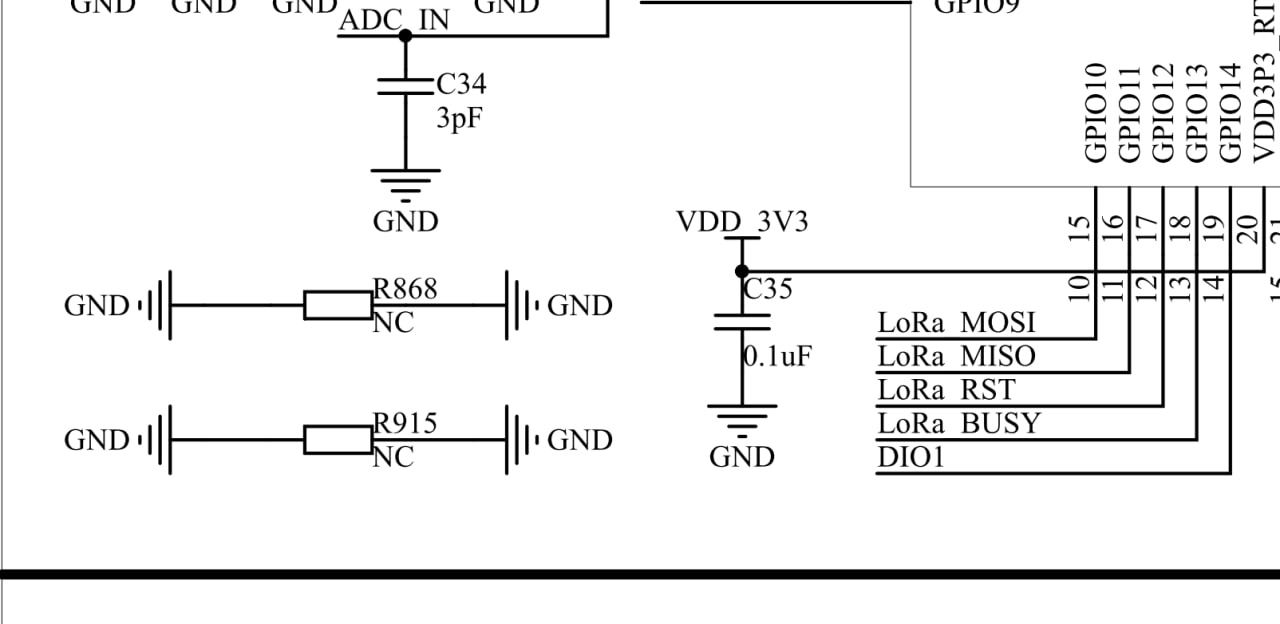
- Stuart reported issues getting Ebyte LR1121 boards to work with the web installer’s Ebyte hardware profile, noting that DIO0/DIO1 aren’t exposed to the ESP32 and DIO9 is used instead, but the switch state map in TinyGS code doesn’t match the Ebyte documentation. G4lile0 confirmed they are working on it and mentioned the beta or refactor/connection-layer branch already supports LR1121. Stuart clarified he was using the main branch, and G4lile0 later noted that the latest version of radiolib on the refactor/connection-layer branch isn’t working and requires debugging. 🔗
Balloons
- Piotr shared information about a balloon with Wenet at 437.2 MHz (no LoRa onboard) and a link to the project page, along with a live stream link. 🔗
https://skyedge.pl/
https://www.youtube.com/watch?v=a_rFp3z6768
Featured Conversations
- The community explored the use of TinyGS for GNSS data collection from satellites, with a focus on orbit determination. Members discussed the PY4-cluster mission, which beaconed down GPS data and calculated its own TLEs independently from Norad, showcasing the network’s capability for precise orbital tracking.
- Thailand’s Satfinder project, led by K’Watchara, has driven a 500% increase in TinyGS ground stations through hands-on satellite communication training for teachers and students. New stations follow the SatFinder_XXX naming format, significantly expanding local coverage and contributing more data to the community.
- A lively discussion emerged around the feasibility of using LoRa for Earth-Moon-Earth (EME) communication. Members debated link budgets, processing gain with SF12 and low bandwidth, and the potential to replicate known experiments, with offers to collaborate on receive and transmit tests.
- A member seeking to decode Tianqi satellites on 400.265 MHz received a critical tip: activating LoRa Low Data Rate Optimization (LDRO) using forceLDRO(true) is mandatory for successful reception, solving the issue of invalid CRC packets.
- The community explored effective filtering techniques for reducing noise in satellite reception, with a member sharing a simple and inexpensive high-pass filter design that achieved an 8 dB noise floor reduction using only a few lumped components. Discussions also covered antenna optimization, including moving LNAs directly to antennas to eliminate cable losses.
Latest Cubesats News

Astrolight and Aristotle University of Thessaloniki Commission New Optical Ground Station in Greece
Astrolight has completed the deployment of the Holomondas Optical Ground Station in Greece, supporting high-speed laser communication for Greek CubeSat missions. The station, developed under the PeakSat project led by Aristotle University of Thessaloniki and backed by ESA and the Greek Ministry of Digital Governance, enables data transmission at up to 2.5 Gbps. The system includes both ground and space segments, with ATLAS-1 laser terminals on the PeakSat and ERMIS-3 CubeSats launched in March 2026. This optical infrastructure aims to advance Europe’s connectivity capabilities, offering faster and more secure data links compared to traditional radio frequency systems.

NASA Opens New Opportunities to Launch CubeSats with Upcoming Artemis Missions
On May 21, 2026, NASA published a Request For Information (RFI) for research institutions, universities, and companies to launch CubeSats on future Artemis missions. Proposals are due by June 1, 2026, for potential secondary payloads on Artemis III, IV, and V. CubeSats will be deployed after Orion separates from the SLS rocket’s second stage, using a ring on the upper stage. NASA previously carried 10 CubeSats on Artemis I in 2022, including Italy’s ArgoMoon, which successfully documented satellite deployment.

FASTIFF | Three Seasons of Growth
Eli Fastiff reflects on three years covering Cornell women’s hockey for The Sun, starting as a beat writer and becoming a senior editor. He highlights the program’s unique community, passion, and a Frozen Four run featuring a triple-overtime win and record attendance. Fastiff also contributed to ESPN+ broadcasts and covered other sports like men’s soccer, softball, and baseball. He thanks editors, broadcast colleagues, coaches, athletes, and readers for their support and engagement.
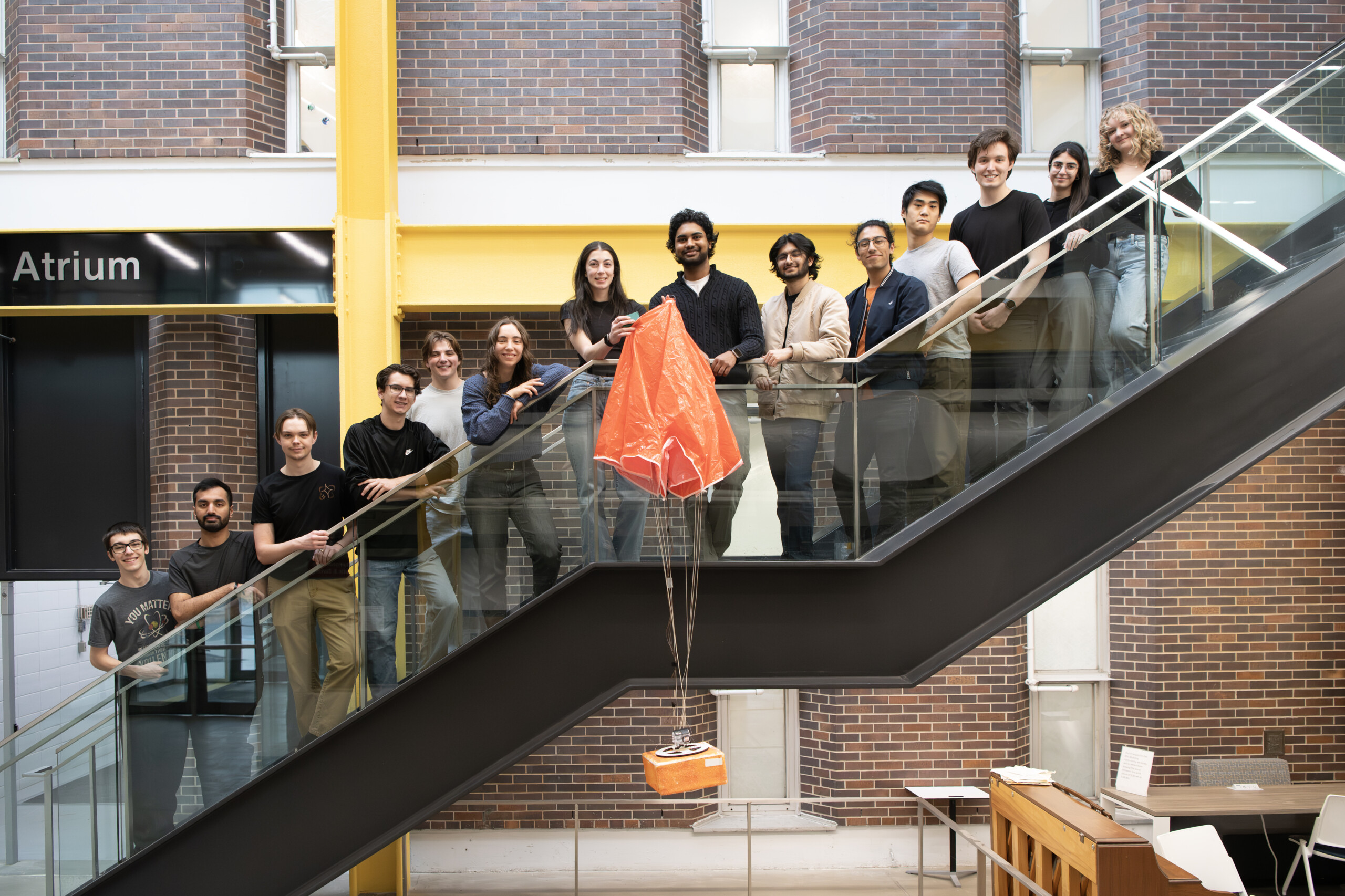
Inside CUonOrbit: Carleton’s Student Team Reaches New Heights
Carleton University’s CUonOrbit student club, with over 50 members, is developing the university’s first student-led 3U CubeSat for wildfire detection. The team has completed three high-altitude balloon launches, with HAB-3 reaching 10 kilometers in February 2026, and plans HAB-4 for summer 2026 targeting 26-30 kilometers. Members attended the Artemis II launch viewing and splashdown reception in 2026, invited by Space Canada, the Canadian Space Agency, and the U.S. Embassy in Ottawa. The club has engaged over 6,000 people through outreach events and collaborated with the European Space Agency.
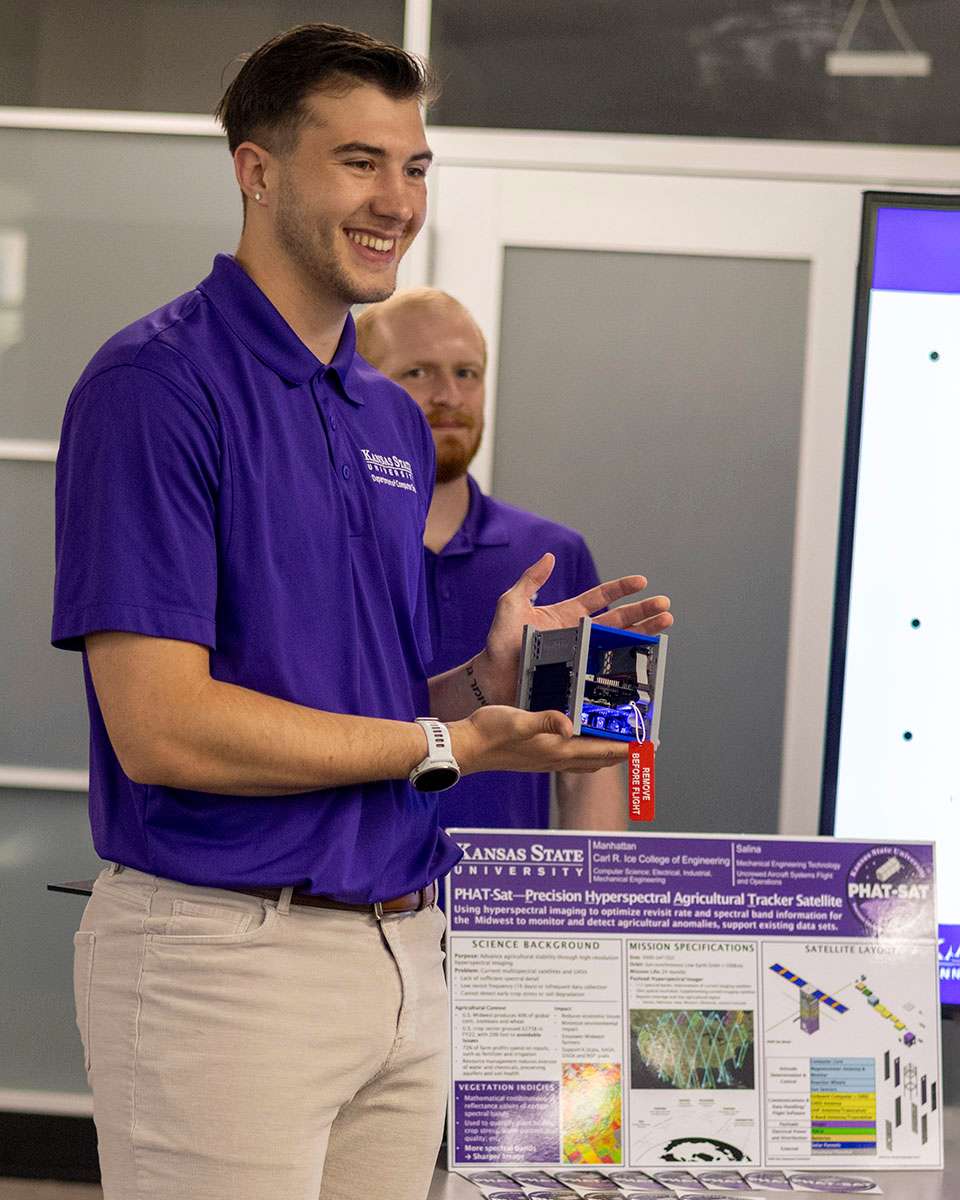
Oberlin student part of Wildcat Space Program satellite design at K-State - Hays Post
Kansas State University students in the Wildcat Space Program are designing and building CubeSats through a hands-on class led by professor Paul Snider. Two viable missions emerged: PHAT-Sat, a hyperspectral agricultural tracking satellite, and NuKAT, a neutron detector satellite tentatively set for launch in 2027. The program emphasizes cross-disciplinary collaboration across engineering and computer science departments, with students managing budgets, orbital paths, and system risks. The first mission requires around $200,000 in funding, and students are gaining real-world aerospace experience that is shaping their career paths.
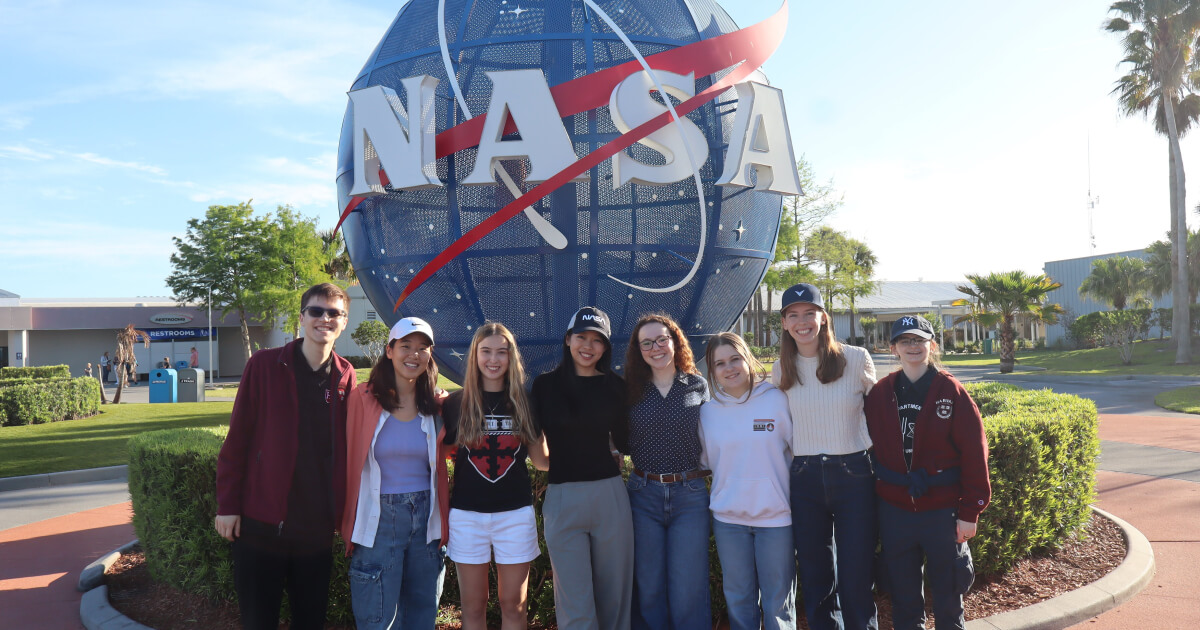
Aerospace Collective celebrates satellite launch
The Harvard Undergraduate Aerospace Collective (HUAC) launched its first student-built CubeSat, HUCSat, from Cape Canaveral on April 11. The satellite will test nitinol shape-memory alloy springs for solar panel positioning in space. The project was selected for NASA’s CubeSat Launch Initiative in 2023 and involved five subteams of undergraduate engineers. HUCSat is expected to deploy from the International Space Station in June, with plans for a second satellite by 2028.

3D Forensic Analysis of a CubeSat: Delamination Due to Catalyst Error
A CubeSat’s premature atmospheric disintegration was caused by delamination of its phenolic resin heat shield due to incorrect catalyst mixing. Forensic 3D analysis using CT scans and multiphysics simulation in Siemens NX and LS-DYNA revealed that a 5% variation in catalyst concentration reduced the polymer’s glass transition temperature, leading to stiffness loss and interfacial failure under extreme thermal stress. The study demonstrates that manufacturing process integrity is critical for material fatigue life in high-demand environments like atmospheric reentry. Predictive simulation must incorporate process tolerances to anticipate such failure modes and ensure micro-satellite reliability.
Controller for Nanosatellites - GazetaPrawna.pl
A team from the Warsaw Institute of Aviation, part of the Łukasiewicz research network, has developed a motor controller for nanosatellites using hydrogen peroxide as propellant. The controller works with a 98% concentration hydrogen peroxide drive, significantly increasing engine power. It is already being used to control engines on three 6U nanosatellites in the Piast Constellation, launched for the Polish military in autumn 2023. The invention has been nominated in the “Eureka! We Discover Polish Inventions” competition by Dziennik Gazeta Prawna.
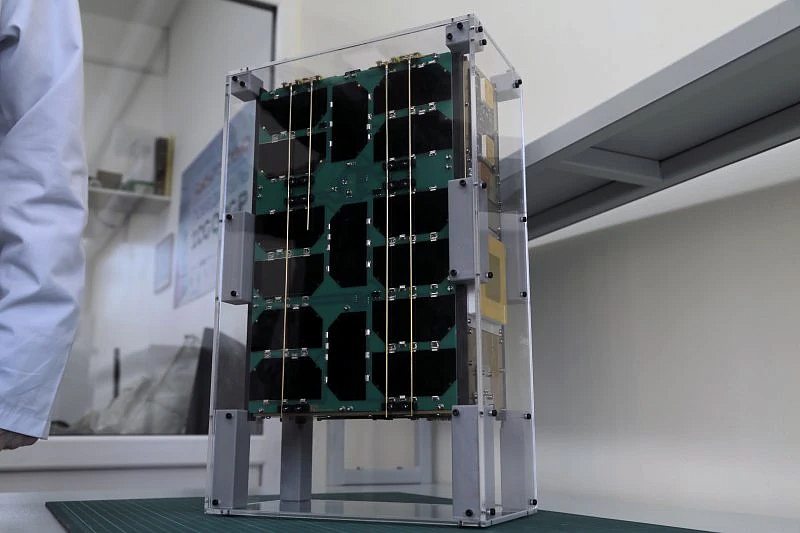
Amur State University Wins 7 Million Rubles for Five CubeSat Satellite Kits
Amur State University received a 7 million ruble grant under the federal project “Personnel for Space.” The funds will purchase five CubeSat satellite kits to teach satellite architecture. Participants will assemble, disassemble, and test the satellites, configuring control systems and payloads. At least 500 people are expected to train annually, with 100 receiving advanced certification.
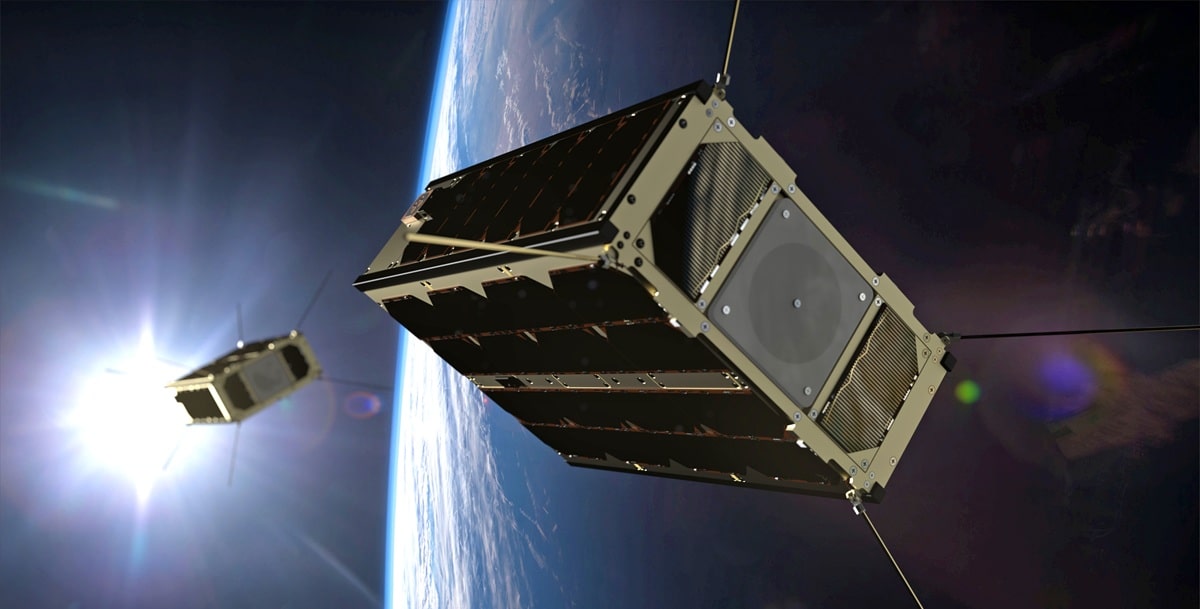
Tunisia’s First Military Satellite: The Story of an Unprecedented Strategic Shift
Tunisia has officially begun developing its first government and military Earth observation satellite, a 6U CubeSat under the direct supervision of the Tunisian Air Force. The project marks a strategic shift from private space initiatives to a state-led program, with a Chinese private company as the technical and logistics partner. The satellite will enhance border and coastal surveillance, agricultural monitoring, climate tracking, and natural disaster management. Tunisian authorities retain full control over data and sensitive operations, emphasizing national sovereignty.
What’s next
Join the TinyGS Telegram channel to participate in these discussions and contribute to the project. Your experiences and insights can help others build and improve their stations!