tinyGS
· TinyGS Community · 10 min read
Weekly Newsletter - July 26, 2026
This week the TinyGS community explored amplifier choices for satellite uplinks, compared antenna designs from V-dipoles to QFHs, and debated the performance of SX1262 versus SX1276 modules on higher frequency bands. A new satellite family (ET-001A-D) appeared, requiring decoder updates, while newcomers received guidance on Starlink reception and weather balloon payloads. Technical troubleshooting ranged from FSK decoding challenges to cable shielding effects, making for a week rich in both experimentation and collaboration.
Highlights
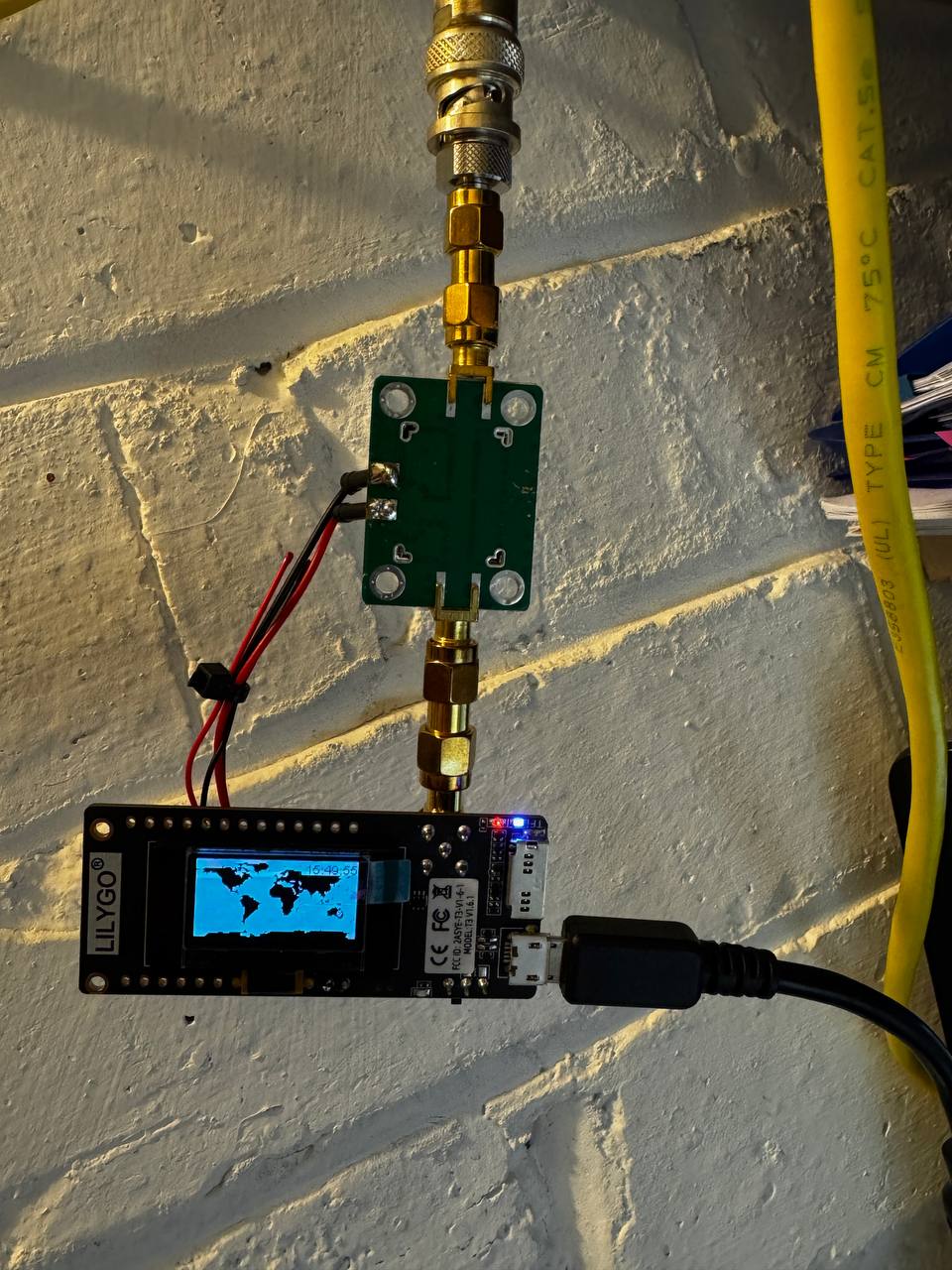
Share your setup
- Nick asked about the specific type and model of amplifier used in a setup, and received a detailed response from Stefan/OE6ISP about using unfiltered wideband LNAs from Hartwig RF with spf5043Z and 0.7dB noise, as well as a 0.23dB noise wideband amp. Stefan explained he buys them unfiltered and adds LC filters himself, noting they should only be used with DC-shorted antennas to reduce repair needs. Nick then inquired about a 10W PA and whether it was specialized for LoRa, and Stefan confirmed it works very well, appears to be class AB with 1dB compression around 36dBm. Nick also asked about using a DMR amp to boost LoRa signals, and Stefan noted that since LoRa uses constant envelope, it could work, though DMR amps are typically class C. Stefan suggested a quick test with two stations at least 20km apart. Nick expressed gratitude and asked if the configuration had been tested with a satellite, to which Stefan replied that terrestrial long-range tests were successful and he is confident it will work for satellites, planning to test with a cubesat in GMSK9600 first. Stefan promised to report progress, noting there may be two LoRa satellites available for uplink this year. 🔗
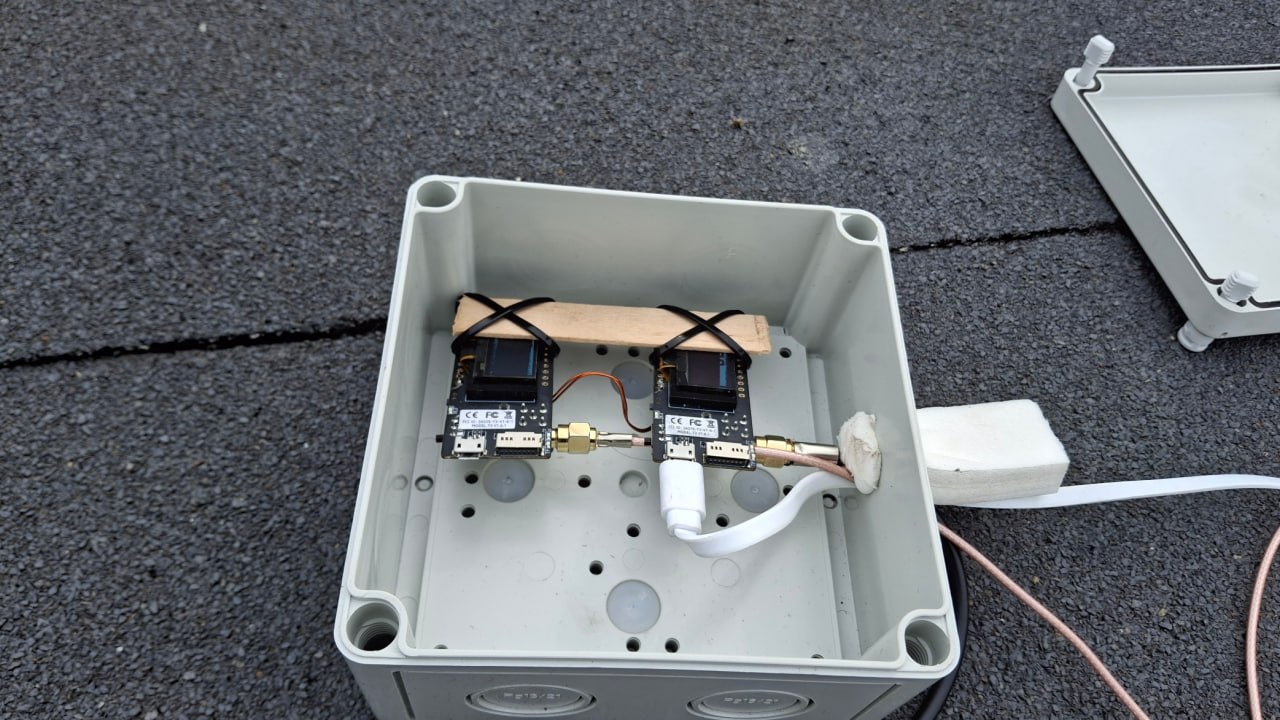
https://dk6jl.de/wordpress/produkt/breitband-vorverstaerkeremv-broadband-lna-emc/ - m0roj shared setting up a second station on ~430MHz as a temporary lashup before making it more permanent outdoors, using a 70cm turnstile antenna with approximately 20m of feedline. Stefan/OE6ISP asked why the LNA was placed at the board rather than at the antenna. 🔗
- Crispywaffle42 updated their station setup, now using a turnstile antenna for 433 MHz and a yagi for 868 MHz, and shared photos of the configuration. 🔗
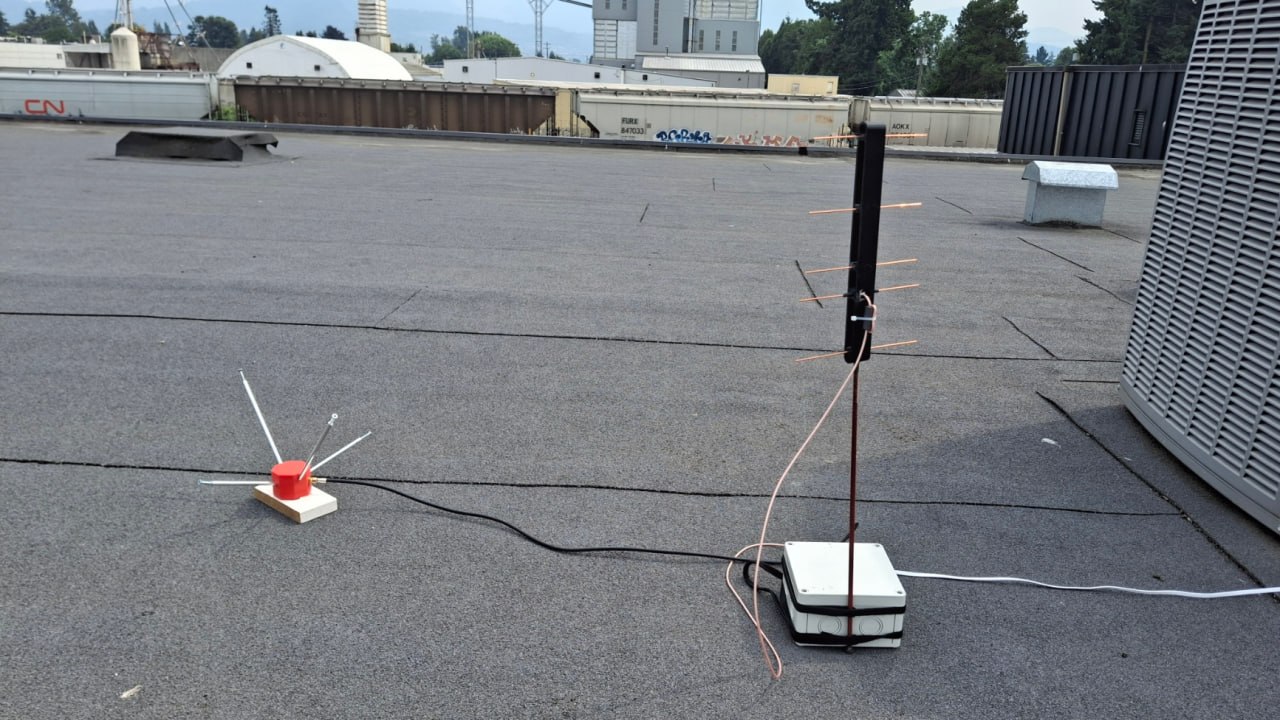
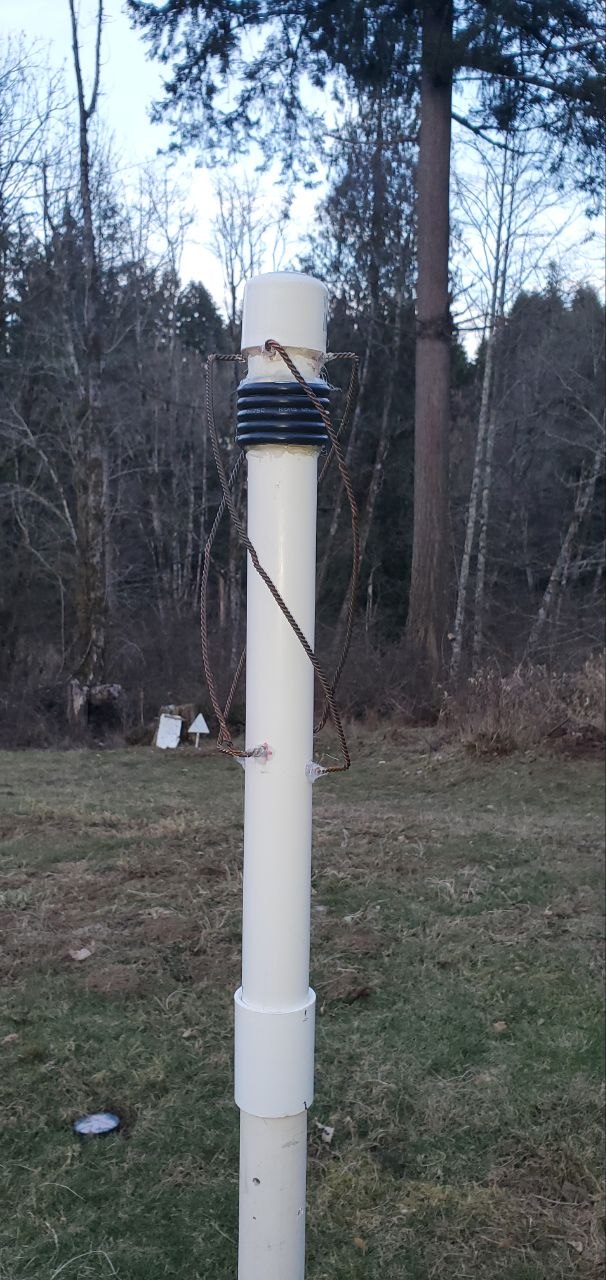
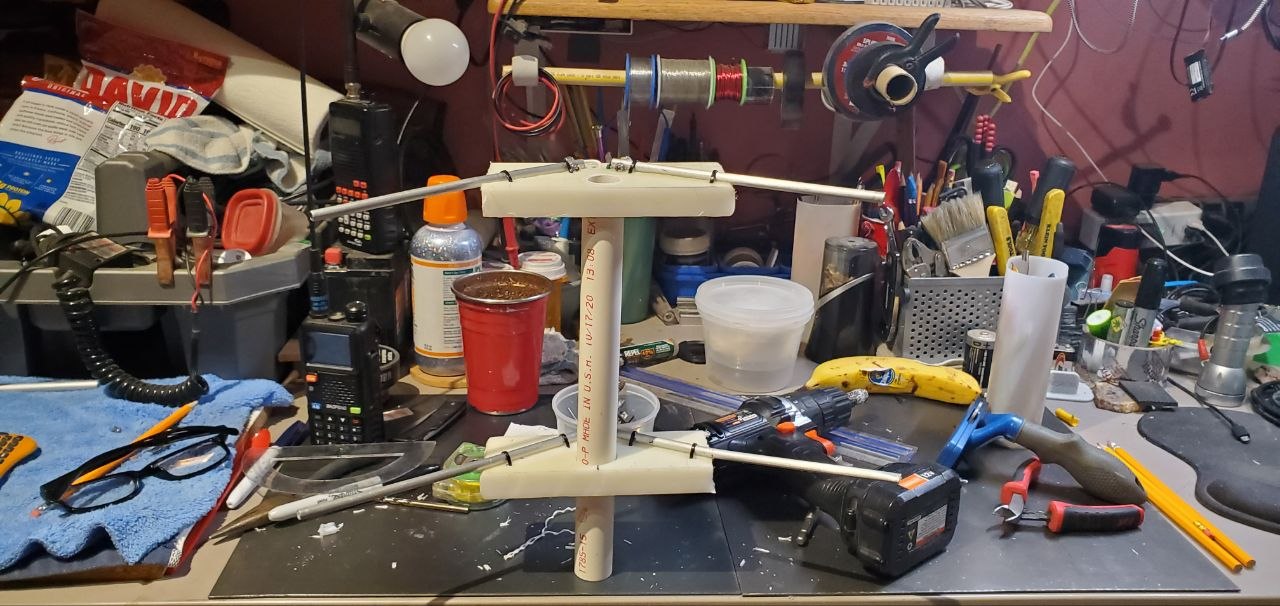
- PDXh0b0 shared their DIY 70cm QFH antenna setup and later built a V-dipole with a reflector, posting photos of both. They compared the V-dipole to the QFH, noting the V-dipole seems to catch more signals while the QFH works great for SSTV/data, performing better than a 70 cm 1/4 wave ground plane on the roof. 🔗
Technical Problems
- Matze tested a Heltec V3.2 on 868 MHz and found poor reception, while the same setup with a LilyGo T3 V1.6.1 showed much better results, including clear ConnectaIoT signals. They also reported that some logged receptions do not appear in the statistics, and noted that the Heltec interprets data differently, showing ‘Surveillance-EU868’ instead of CRC errors. Helmi pointed out that ConnectaIoTs operate at 869.525 MHz and other frequencies are likely LoRaWAN noise, and also noted that the backend software may have issues, as their 868/915 station shows incorrect packet counts and last-received timestamps. 🔗
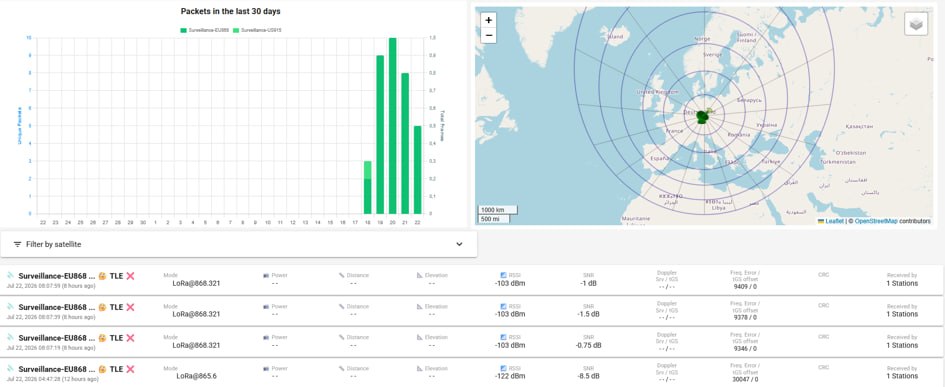
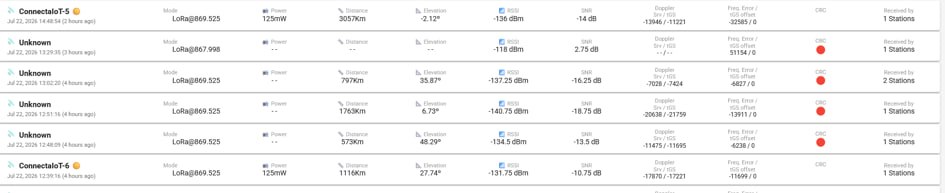
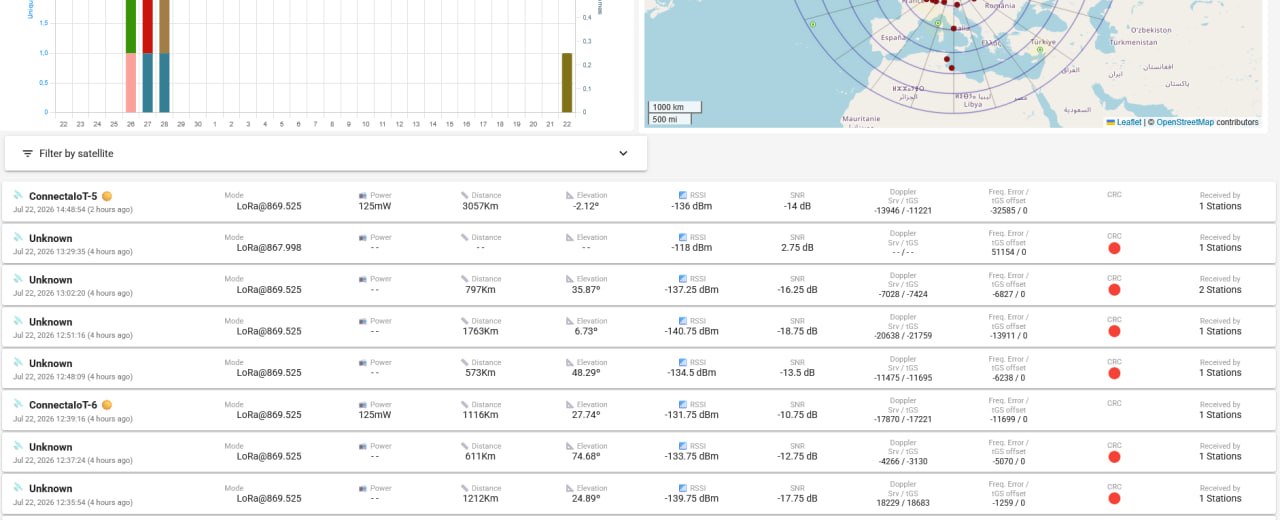
- Notsure7 discussed his stations running ESP32C3 with various radios, asked about FSK reception, and received clarification from Stefan that only the SX1262 can decode FSK but needs better SNR. The conversation then covered packet count differences between stations, with Stefan explaining the influence of antenna frequency range, horizon visibility, and cable shielding. He noted that replacing RG58 with H1000 might not improve loss but poor shielding could introduce noise, and shared an anecdote about RF escaping cheap cable at his HF station. 🔗
- Pascal a new member asked about equipment needed to decode LoRa frames from Starlink satellites on 137.055 MHz, and Helmi recommended the Lilygo T3 Lora 144 MHz board, noting that packets can be received but data is encrypted. 🔗
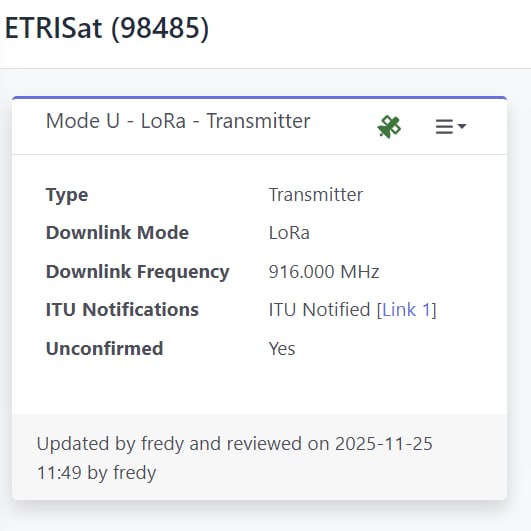
https://www.qrz.com/db/F4IKX - A user A user asked about receiving packets from NORAD-IDs 98485, 99459, and 98877 using a TinyGS station on 868-930 MHz. Stefan/OE6ISP replied that it might be possible but uncertainties exist about activity and LoRa parameters. Peter clarified that the correct ID was 98879, which uses Mode U GFSK 87kbps, and asked about receiving GFSK on 916 MHz with an SX1262 Heltec board. Stefan noted reports that the SX1262 underperforms compared to the SX1276 on 800/900 MHz, and shared his own struggles with FSK on 400 MHz, mentioning that he had successfully decoded several satellites. He also asked if Peter receives Connectas, but Peter responded that they do not pass over Thailand. 🔗
- Matze shared his experience with the SX1262 (Heltec V3.2), reporting that it does not work at all for reception at 869 MHz, while his SX1276 (LilyGoT3) works well. He asked if anyone else receives with the Heltec V3.2 on 869 MHz. 🔗
General
- Sko asked for help designing a LoRa cubesat for a grant fund project, specifically struggling with antenna choice and power requirements. Stefan/OE6ISP responded that 21dBm from a barefoot LoRa chip is insufficient for TinyGS stations, with commonly used TX-power for LoRa@433 being 27-29dBm, and recommended the AMSAT-UK spreadsheets for satellite design. Sko acknowledged the complexity and asked for previous examples and resources, and Stefan pointed to the Semtech LoRa calculator. Another user, Elbostan1, asked if a 3dBi antenna could be used with an SDR to capture cubesat telemetry, and Stefan explained it is not sufficient and the minimum requirement is a groundplane antenna with close to 3dBd, also asking what type of SDR was being used. 🔗
https://rns.recipes/forum/general/im-trying-to-make-a-reticulum-communications-cubesat-constellation-and-i-need-your-guys-help-brainstorming-idea
https://iaru.amsat-uk.org/spreadsheet.htm
https://www.semtech.com/design-support/lora-calculator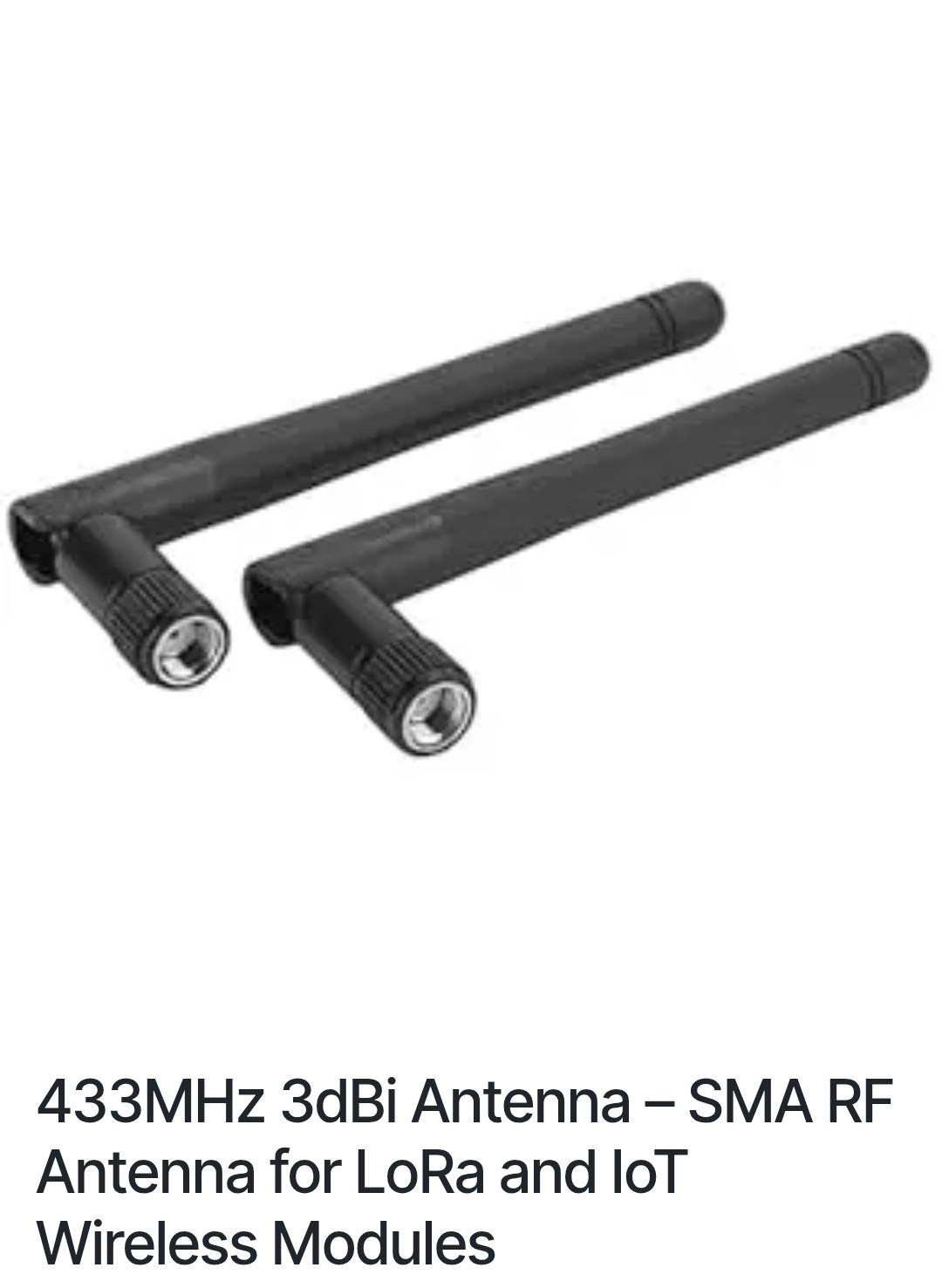
- PDXh0b0 asked about the invite button not appearing, and G4lile0 explained it becomes automatically enabled after a station has been active for about a month and has received enough packets, with an offer to add users manually if needed. 🔗
New Satellites
- XE3JCL shared a photo and hex dump of an unknown satellite, asking if anyone had received it before. Mathias confirmed receiving packets from the same satellite but couldn’t find any information about it. 🔗
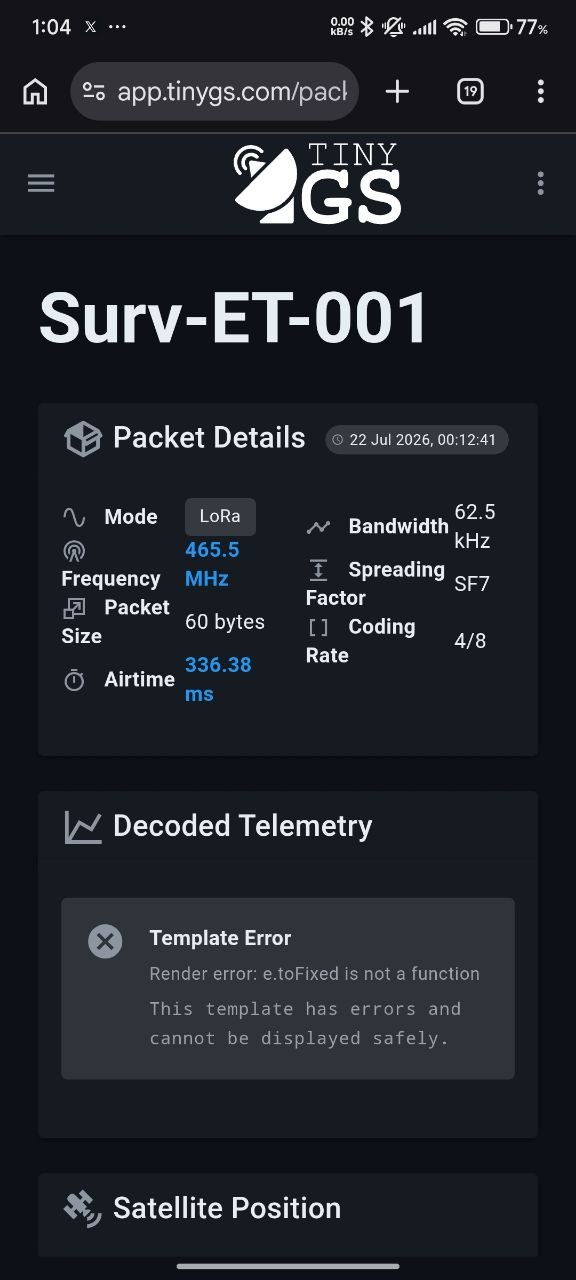
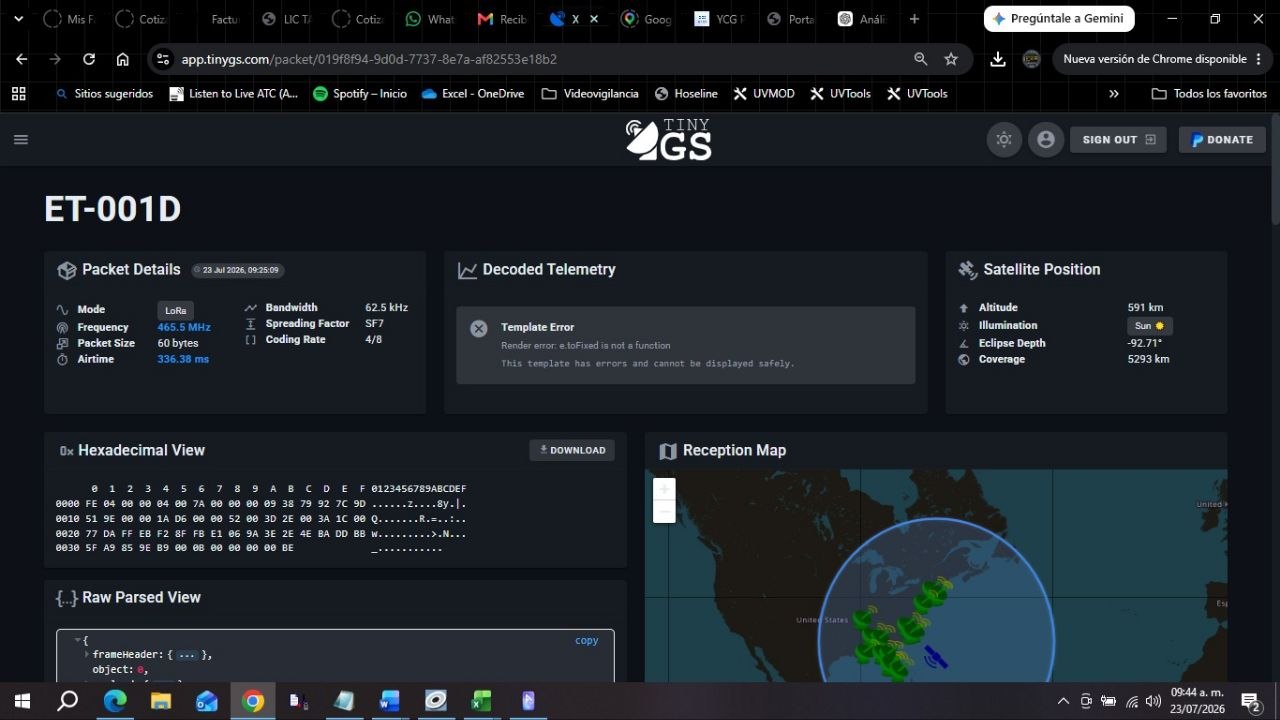
- G4lile0 mentioned that for the new four satellites (ET-001A, B, C, and D), a Kaitai decoder needs to be added to properly allocate each packet to the right satellite. Later announced the integration of the Kaitai parser, which now ensures packets are properly allocated to each satellite, improving data organization and accuracy. 🔗
- XE3JCL shared a photo and announced receiving a new satellite, expressing excitement about the new addition to their tracking capabilities. 🔗
Balloons
- satnambirdi asked for advice on hardware and tracking methods for a weather balloon payload using TinyGS, as they are new to the platform. 🔗
Featured Conversations
- A detailed discussion unfolded about amplifier choices for satellite uplinks, covering LNAs with different noise figures and power amplifiers. Experienced members shared insights on using unfiltered wideband LNAs with added LC filters, and discussed the suitability of class AB versus class C amplifiers for LoRa modulation, noting that terrestrial long-range tests have been promising.
- Members shared their antenna experiments, with one user testing a temporary setup before moving to an external ground-plane antenna, while another built a V-dipole with a reflector and asked for performance comparisons against a QFH design.
- A comparison between Heltec V3.2 and LilyGo T3 V1.6.1 boards on 868 MHz revealed significant reception differences, with the LilyGo performing better on ConnectaIoT signals. The discussion also highlighted data interpretation discrepancies and backend statistics issues.
- A new satellite family (ET-001A, B, C, and D) was introduced, requiring a Kaitai decoder to properly assign packets. Meanwhile, an unknown satellite sparked curiosity as multiple stations received its signals but found no information about it.
- The community explored the factors affecting packet count and station performance, such as antenna characteristics, horizon visibility, and cable shielding quality, with experienced members sharing detailed comparisons.
Latest Cubesats News

Fourteen Year Old Student Defies Odds to Secure Spot in World First All Girls Lunar Mission
Fourteen-year-old Kandula Jessie from Dhavaleswaram, India, earned a spot in Mission ShakthiSAT, the first all-girls lunar CubeSat program. She is the only participant from her state, competing against nearly 12,000 applicants from 108 countries. Jessie, a government school student and daughter of a carpenter, completed over half of 21 advanced training modules covering thermodynamics and satellite systems. Her hands-on training begins August 23 in New Delhi, with the CubeSat launch scheduled for October 11 from Sriharikota.
SPUTNIX Increases Data Transmission Speed from Nanosatellites 10-Fold to 100 Mbps
Russian private company SPUTNIX successfully tested a new software version for its X-band transmitter SXC-XTX-01, boosting data transfer speeds from small satellites by 10 times to 100 Mbps. The update was tested on nanosatellites conducting scientific, educational, and AIS missions in CubeSat 3U and 6U form factors. The software can be installed on both new and existing orbital spacecraft without replacing onboard equipment. This development adapts high-speed satellite communication technology previously used only on Earth remote sensing satellites for compact CubeSat platforms.
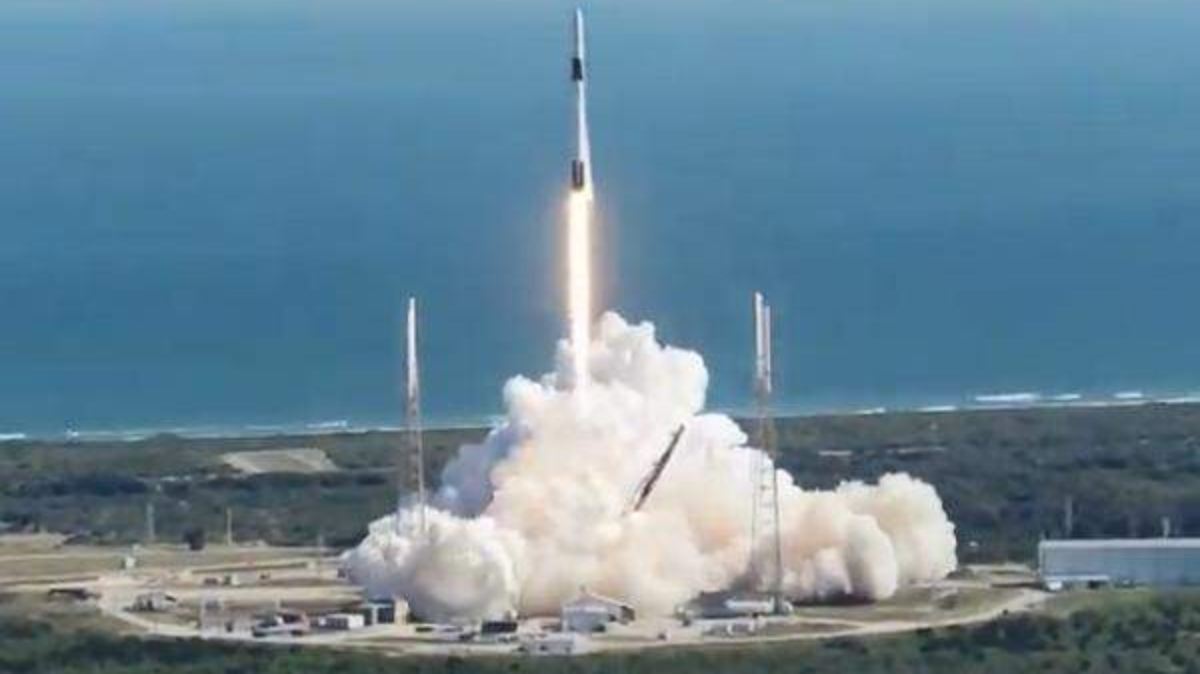
[Video] This was the launch of the Puebla satellite into space - El Sol de México
The Aztechsat-1 satellite was launched to improve communication and interconnection between Globalstar satellites and Earth. The project aims to assess the risk of developing breast cancer in any woman. UNAM seeks to validate technologies that could reach Earth orbit, while IPN will participate with algae, sargassum, and coffee projects. ITESO will test configurations of electronic systems.
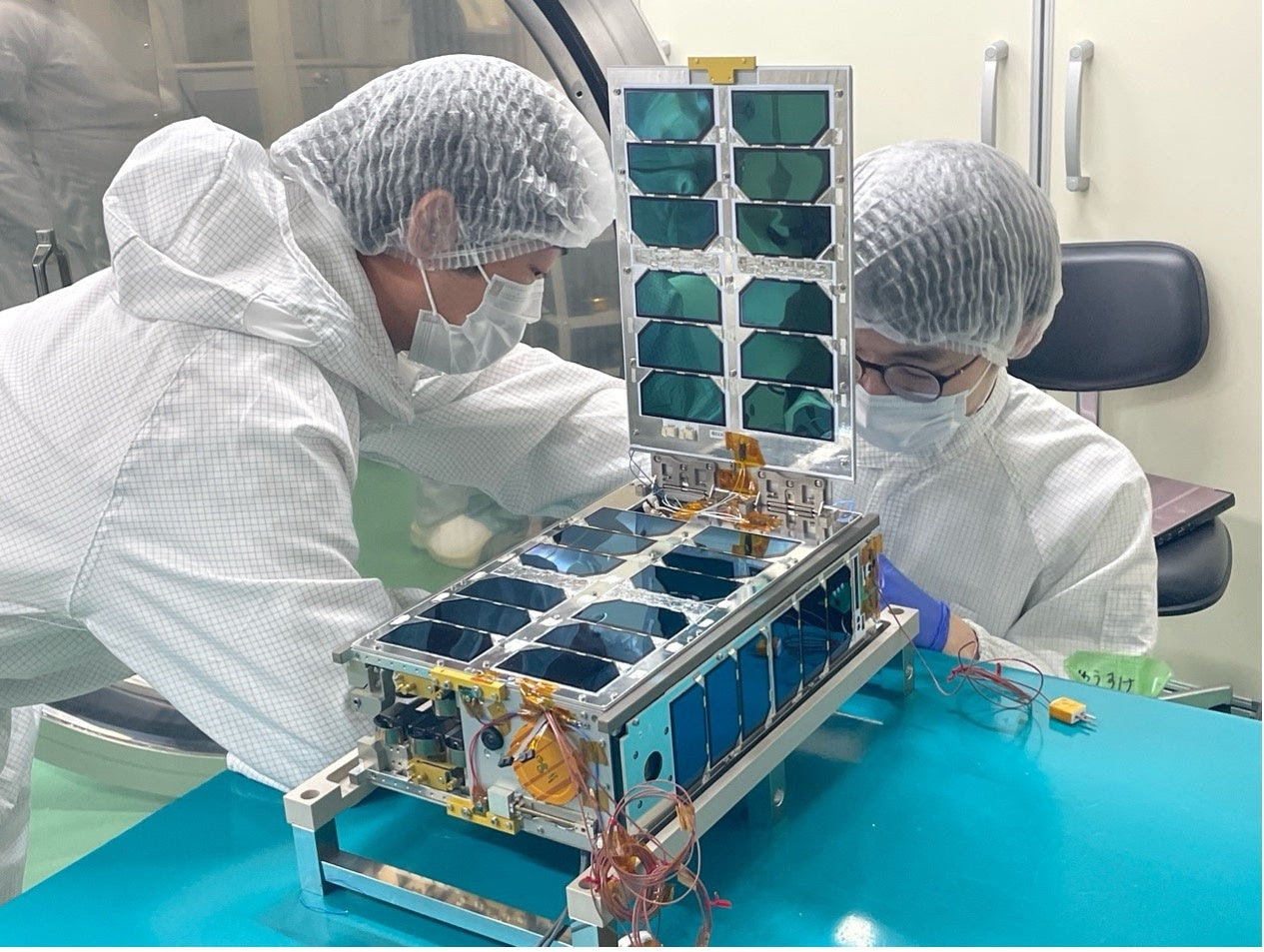
Ultra-Small Satellite “PRELUDE” Designed with Autodesk Fusion Enters Orbit and Begins Initial Operations - MONOist
The ultra-small satellite “PRELUDE,” designed and developed by a Nihon University research group using Autodesk Fusion, has been launched and deployed into orbit, entering its initial operational phase for on-orbit demonstration. The 6U CubeSat will observe ionospheric fluctuations that may precede earthquakes to explore their physical mechanisms and potential for probabilistic earthquake prediction. Students led the project from conception through design, analysis, testing, and integration, utilizing Fusion’s generative design and cloud-based collaboration. The satellite was launched on April 23, 2026, aboard a Rocket Lab Electron rocket as part of JAXA’s Innovative Satellite Technology Demonstration-4 mission.

REAL Instrument for CubeSat Measures Energetic Particles from Three Sides Simultaneously
The REAL instrument, launched on July 23, 2025, aboard a SpaceX Falcon 9, uses three sensor heads to observe energetic particles from 11 directions simultaneously. It covers an energy range from 40 keV to 2 MeV, enabling detection of fast electron microbursts lasting less than a second. This is the first such capability on a small CubeSat platform, overcoming the limitation of single-direction sensors that require slow rotation. The instrument continues to operate successfully, with recent sensitivity upgrades, paving the way for satellite constellations to monitor Earth’s radiation environment.
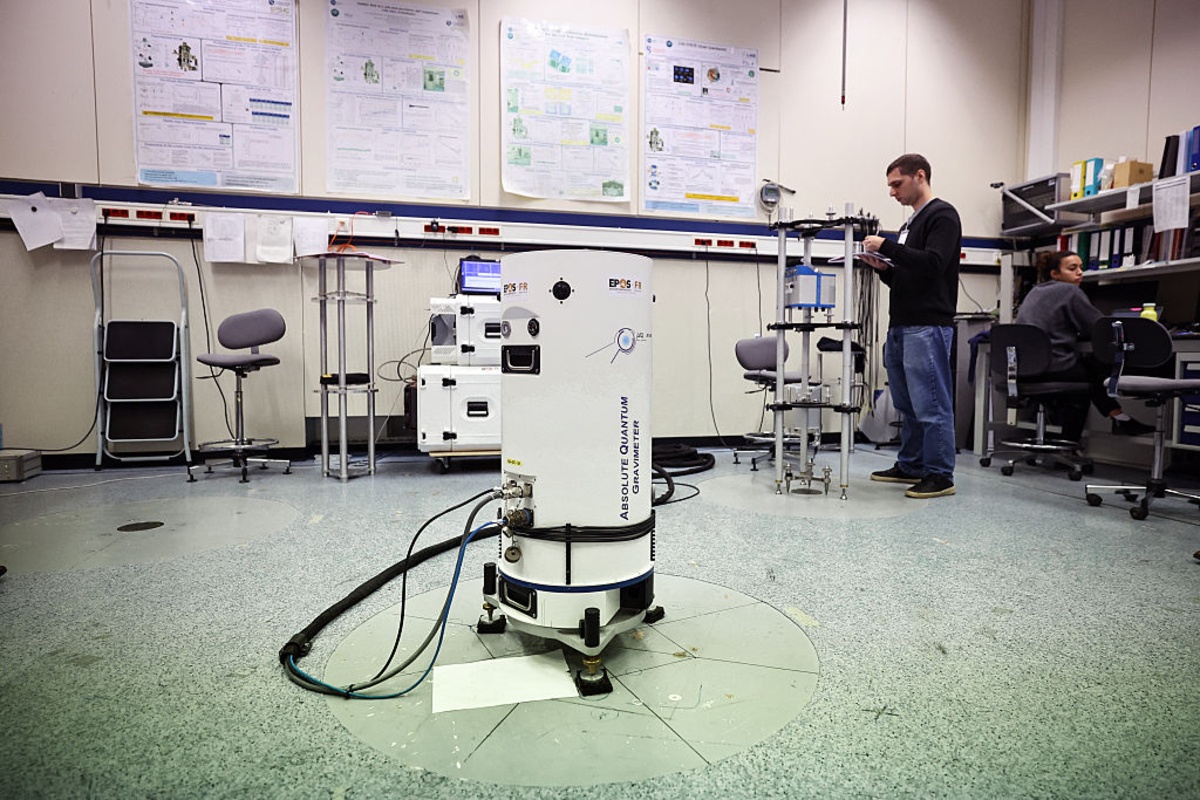
Solar Storm Warning Gap May Shrink From Minutes to Hours With New Deep-Space CubeSat
Imperial College London unveiled the MAGIC magnetometer, a miniaturized instrument for ESA’s HENON CubeSat, which could extend solar storm warning times from 15 minutes to 2-3 hours. HENON will orbit 15 million kilometers upstream of Earth, ten times farther than current monitors, to measure the critical Bz magnetic field component inside coronal mass ejections. The 23-gram sensor uses low-power AMR technology and has been validated during the May 2024 G5 geomagnetic storm. If successful, HENON paves the way for a future ESA SHIELD constellation of CubeSats, potentially saving billions in grid damage costs.
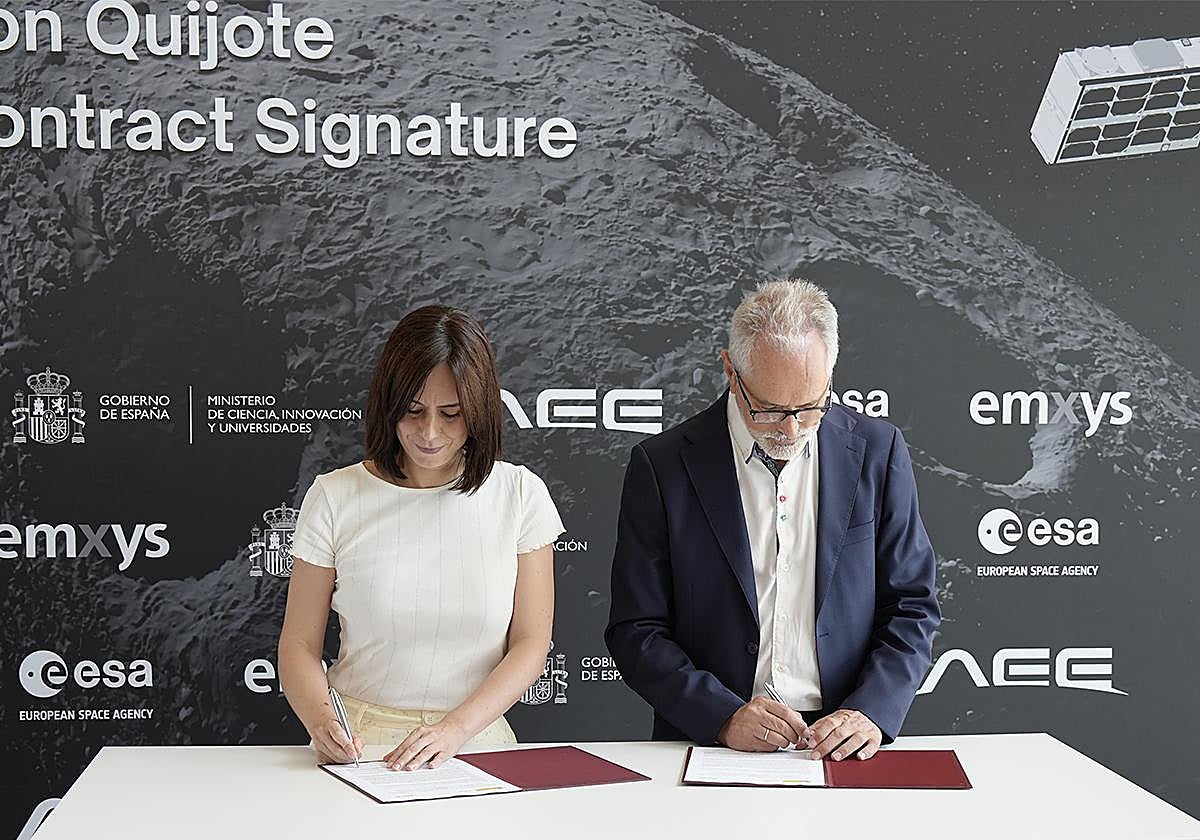
The Government invests 6.4 million euros in Elche to lead the first Spanish mission to land on an asteroid
Minister Diana Morant visited EMXYS in Elche and signed a 6.4 million euro agreement for the CubeSat Don Quijote, part of ESA’s RAMSES mission. The satellite will autonomously land on asteroid Apophis during its 2029 close approach to Earth, taking direct surface measurements. This investment positions Spain as a leader in planetary defense and autonomous space technologies. EMXYS, a university spin-off with over 30 aerospace projects, will design and build the micro-satellite.

The USAT 1 satellite from the UNLP Faculty of Engineering has begun its journey to space
The USAT 1, Argentina’s first university-built 3U CubeSat, was fully designed and constructed by engineers and students at the National University of La Plata (UNLP). It has arrived in Spain and will proceed to the United States for a launch scheduled in October. The project previously validated space technology developed at the Faculty of Engineering, enabling the ATENEA microsatellite to successfully participate in NASA’s historic Artemis II mission.
What’s next
Join the TinyGS Telegram channel to participate in these discussions and contribute to the project. Your experiences and insights can help others build and improve their stations!